Unlock Savings: Understanding Solar Panel Installation Cost US
solar panel installation cost US

Unlock Savings: Understanding Solar Panel Installation Cost US

Discover the true investment in solar energy for your home and how to maximize your return.

Get Your Free Solar Quote

Key Takeaways

  • ✓ Average solar panel installation cost in the US ranges from $15,000 to $25,000 before incentives.
  • ✓ The federal Investment Tax Credit (ITC) offers a 30% tax credit on solar system costs.
  • ✓ System size, panel type, and labor costs are primary factors influencing the total price.
  • ✓ Property value can increase by an average of 4.1% with solar panel installation.

How It Works

1
Initial Consultation & Site Assessment

A solar expert evaluates your home's energy needs, roof suitability, and sun exposure. This helps determine the optimal system size and layout for maximum efficiency.

2
System Design & Proposal

Based on the assessment, a customized solar system is designed, including panel type, inverter, and mounting. You receive a detailed proposal outlining costs, savings, and payback period.

3
Permitting & Installation

Once you approve, the solar company handles all necessary permits and paperwork. Certified installers then mount the panels, wire the system, and connect it to your home's electrical grid.

4
Inspection & Activation

After installation, local authorities inspect the system to ensure compliance and safety. Upon approval, your utility company provides permission to operate (PTO), and your solar journey begins!

Demystifying the Average Solar Panel Installation Cost in the US
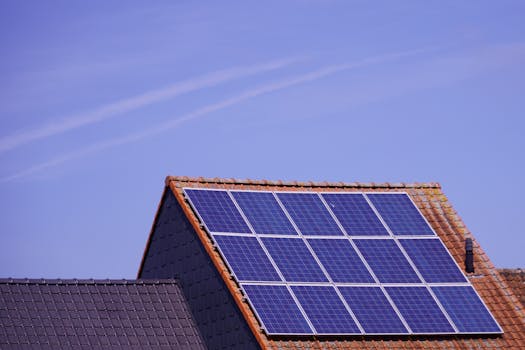
Close-up of solar panels on a tiled rooftop under a clear sky, showcasing renewable energy. Photo: Budget Bizar / Pexels
Embarking on the journey to solar energy often begins with a fundamental question: what is the actual solar panel installation cost US? It's a critical inquiry, and understanding the financial landscape is key to making an informed decision. On average, homeowners in the United States can expect to pay anywhere from $15,000 to $25,000 for a typical residential solar system *before* factoring in any incentives. This range is for a standard 6 kW to 8 kW system, which is suitable for many homes. However, it's crucial to understand that this is a broad average, and your specific costs will depend on a multitude of variables. The 'per watt' cost is a common metric used in the industry, often ranging from $2.50 to $3.50 per watt. This metric allows for a more direct comparison between different system sizes and quotes. For instance, a 7 kW system at $3.00/watt would cost $21,000 before incentives. Several factors contribute to this baseline cost. The size of your system, measured in kilowatts (kW), is arguably the most significant. Larger homes with higher energy consumption will naturally require a larger system, leading to a higher upfront cost. The type of solar panels you choose also plays a role; monocrystalline panels, known for their higher efficiency and sleek appearance, typically cost more than polycrystalline panels. The complexity of your roof, including its pitch, material, and any obstructions like skylights or vents, can influence labor costs. Furthermore, the brand and quality of the inverter, which converts the DC electricity from panels into usable AC electricity for your home, also impact the overall price. Premium inverters or microinverters can add to the expense but often come with better warranties and performance. It's essential to get multiple quotes to compare not just the total price but also the components included and the warranty offered. Many solar companies offer financing options, including loans and leases, which can make the upfront cost more manageable. Exploring these options, alongside the various incentives available, is a crucial step in understanding your true investment. Remember, while the initial investment might seem substantial, the long-term savings on electricity bills and the environmental benefits often far outweigh the upfront expense. For a deeper dive into making the switch, explore our guide on how to choose the right solar installer for your home.

Unpacking the Factors That Influence Your Solar Investment
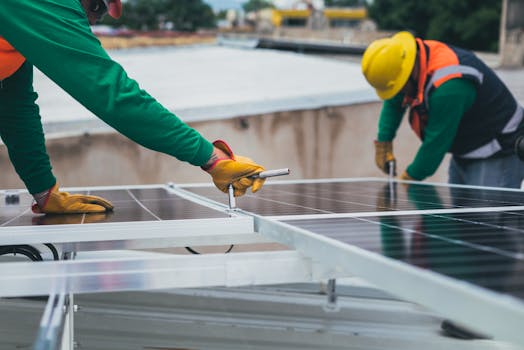
Workers secure solar panels on a rooftop, advancing renewable energy. Photo: Los Muertos Crew / Pexels
Beyond the basic average, a deeper dive into the specific factors influencing solar panel installation cost US reveals why prices can vary significantly from one household to another. Understanding these elements empowers you to make informed decisions and negotiate effectively. Firstly, **system size and energy consumption** are paramount. Your current electricity bills provide the best indicator of your energy needs. A larger household with heavy appliance usage or electric vehicle charging will require a more powerful system (more kilowatts), directly increasing the cost. Conversely, a smaller home with efficient habits might need a modest system, reducing the overall investment. Secondly, **equipment choices** play a substantial role. Solar panels come in various types and efficiencies. Monocrystalline panels are generally more efficient and aesthetically pleasing but also more expensive. Polycrystalline panels offer a more budget-friendly option with slightly lower efficiency. Thin-film panels exist but are less common for residential applications. Beyond the panels, the inverter type is crucial. String inverters are common and cost-effective, while microinverters (one per panel) offer better performance in shaded conditions and individual panel monitoring, albeit at a higher price point. Battery storage systems, while not always included in initial quotes, are an increasingly popular addition, allowing homeowners to store excess energy and further increase energy independence, but they add significantly to the upfront cost. Thirdly, **labor and installation complexity** cannot be overlooked. The ease of installation is heavily dependent on your roof. A simple, south-facing roof with ample space and no obstructions will be less labor-intensive than a complex roof with multiple angles, shading issues, or difficult access. Roofing material also impacts labor; installing on asphalt shingles is generally easier than on tile or metal roofs. Local labor rates and the installer's experience and reputation also contribute to the overall cost. Highly reputable installers might have slightly higher labor rates but often provide superior service, warranties, and peace of mind. Finally, **geographic location** within the US can influence costs. States with higher demand for solar often have more competitive pricing due to a larger pool of installers. Conversely, areas with fewer installers or more stringent permitting requirements might see higher costs. Understanding these variables will help you interpret quotes and ensure you're getting the best value for your solar investment.

Maximizing Savings: Federal, State, and Local Solar Incentives

Concept illustration of man with money bag instead of head in suit representing financial concept on green background Photo: Monstera Production / Pexels
While the initial solar panel installation cost US might seem substantial, a robust landscape of incentives significantly reduces the net expense, making solar more accessible and financially appealing. The cornerstone of these savings is the **Federal Solar Investment Tax Credit (ITC)**. This powerful incentive allows homeowners to claim a credit equivalent to 30% of the total cost of their solar energy system, including equipment, labor, and even battery storage (if installed with the solar system). This is not just a deduction; it's a dollar-for-dollar reduction in your federal income tax liability. For example, if your system costs $20,000, the ITC would reduce your tax bill by $6,000, bringing your net cost down to $14,000. It's crucial to understand that you must have a tax liability to fully utilize the credit, though any unused portion can often be rolled over to subsequent tax years. Beyond the federal level, many **states and local municipalities** offer their own set of incentives. These can vary widely and include state tax credits, property tax exemptions (preventing your property taxes from increasing due to the added value of solar), sales tax exemptions, and grant programs. Some states also have **Solar Renewable Energy Credits (SRECs)**, where you earn credits for the clean electricity your system generates, which can then be sold on a market, providing an additional revenue stream. Net metering is another critical policy, though not strictly an incentive, that allows you to send excess electricity generated by your panels back to the grid in exchange for credits on your electricity bill. This effectively turns your meter backward when your panels produce more than you consume, significantly reducing or even eliminating your monthly utility bill. It's vital to research the specific incentives available in your state and even your county or city. Websites like DSIRE (Database of State Incentives for Renewables & Efficiency) are excellent resources for finding up-to-date information. An experienced solar installer will also be well-versed in local incentives and can help you navigate the application process. Combining federal, state, and local programs can dramatically reduce your net solar panel installation cost US, often leading to a much faster payback period and higher long-term savings. Don't overlook these opportunities; they are designed to encourage renewable energy adoption and can make a significant difference in your overall investment. For more details on the financial benefits, check out our article on the ROI of solar panels.

Smart Solar Decisions: Avoiding Common Mistakes & Maximizing Value
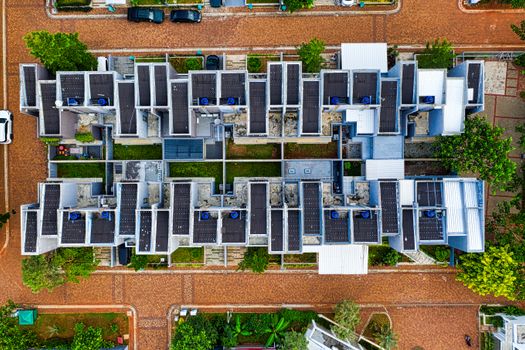
Drone shot of an organized residential area in Banten, Indonesia with solar panels. Photo: Tom Fisk / Pexels
Making the leap to solar power is a significant investment, and like any major home improvement, there are common pitfalls to avoid to ensure you maximize your value and minimize future headaches regarding solar panel installation cost US. **Common Mistakes to Avoid:** * **Not getting multiple quotes:** Relying on a single quote limits your ability to compare pricing, equipment, and warranties. Always solicit at least three detailed proposals from different reputable installers. * **Focusing solely on the lowest price:** The cheapest option isn't always the best. A low price might indicate lower quality panels, inverters, or a less experienced installer. Prioritize value, which includes equipment quality, warranty, and installer reputation. * **Ignoring financing options:** Many homeowners pay cash, but competitive solar loans or leases can make solar accessible without a large upfront payment. Understand the terms, interest rates, and overall cost of financing. * **Overlooking ongoing maintenance:** While solar panels require minimal maintenance, it’s not zero. Factor in occasional cleaning (especially in dusty areas) and monitoring system performance. Ensure your installer offers monitoring solutions. * **Not understanding your energy needs:** An undersized system won't meet your demands, while an oversized one is an unnecessary expense. Base your system size on your actual historical electricity consumption. * **Skipping local incentives research:** Federal incentives are well-known, but state and local programs can add significant savings. Don't leave money on the table; investigate all available rebates, credits, and SRECs. **Tips for Maximizing Value:** * **Optimize energy efficiency first:** Before going solar, make your home as energy-efficient as possible. Insulate, seal drafts, and upgrade to efficient appliances. This reduces your overall energy demand, allowing for a smaller, less expensive solar system. * **Choose reputable installers:** Look for installers with strong local reviews, certifications (like NABCEP), and a proven track record. A good installer will guide you through the entire process, from design to permitting and activation. * **Understand warranties:** Differentiate between equipment warranties (panels, inverters), performance warranties (guaranteed energy production), and workmanship warranties (installation quality). Longer, comprehensive warranties offer greater peace of mind. * **Consider future needs:** If you plan to get an electric vehicle or add a heat pump, factor in that increased energy usage when sizing your system. It's often more cost-effective to install a slightly larger system upfront than to expand it later. * **Monitor your system's performance:** Regularly check your system's output. Many modern systems come with monitoring apps that allow you to track production and identify any issues quickly, ensuring optimal performance and savings. By being diligent and informed, you can navigate the solar installation process smoothly and ensure your investment pays off for decades to come.

Comparison

FeatureMonocrystalline PanelsPolycrystalline PanelsThin-Film Panels
Efficiency17-22%15-17%10-13%
Cost (per watt)HigherMediumLower
AestheticsSleek, uniform blackBlue, checkeredFlexible, less visible
Space RequirementLess (higher power density)MoreMost
DurabilityHighHighVariable
Common UseResidential, limited spaceResidential, large roofsCommercial, niche applications

What Readers Say

"The transparency regarding our solar panel installation cost US was incredible. We knew exactly what we were paying for, and the federal tax credit made it much more affordable than we anticipated. Highly recommend!"

Sarah J. · Austin, TX

"After comparing several quotes, we found a great deal that perfectly fit our budget for solar panel installation cost US. The team walked us through all the state incentives, which was a huge bonus."

Michael R. · San Diego, CA

"Our electricity bill dropped by 80% after installation! The initial solar panel installation cost US was an investment, but the long-term savings and increased home value are already paying off significantly."

Emily P. · Denver, CO

"The installation process for our solar panels was smooth, and the crew was professional. While the solar panel installation cost US was a bit higher than our initial estimate due to roof complexity, the financing options made it manageable."

David L. · Orlando, FL

"We were initially hesitant about the solar panel installation cost US, but the detailed proposal and clear breakdown of ROI convinced us. Our home is now energy independent, and we're thrilled with the results."

Jessica M. · Boston, MA

Frequently Asked Questions

What is the average solar panel installation cost US?

The average solar panel installation cost in the US typically ranges from $15,000 to $25,000 before incentives for a 6kW-8kW residential system. This translates to about $2.50 to $3.50 per watt, but final costs depend heavily on system size, equipment chosen, and installation complexity.

Will solar panels increase my property taxes?

In many US states, solar panels are exempt from property tax assessments, meaning they will not increase your property taxes despite increasing your home's value. It's important to check the specific regulations in your state and local municipality as policies can vary.

How do I get a precise quote for my home?

To get a precise quote, you should contact several reputable solar installers. They will conduct a site assessment, evaluate your energy consumption, and provide a customized proposal detailing system size, equipment, installation costs, and available incentives for your specific location.

Is solar panel installation a good investment financially?

Yes, for most homeowners, solar panel installation is a sound financial investment. With the 30% federal tax credit and potential state/local incentives, the payback period can be significantly reduced, leading to decades of free or heavily reduced electricity bills and an increase in property value.

How does the federal solar tax credit work?

The federal solar Investment Tax Credit (ITC) allows you to claim 30% of your solar system's cost as a credit on your federal income taxes. This is a dollar-for-dollar reduction in your tax liability, not a deduction, and any unused portion can often be carried over to future tax years.

Who should consider solar panel installation in the US?

Homeowners with sufficient roof space, good sun exposure, and a desire to reduce their electricity bills, increase home value, and contribute to environmental sustainability should consider solar panel installation. It's particularly beneficial for those in areas with high electricity rates or strong solar incentives.

What are the risks associated with solar panel installation?

Key risks include choosing an unreliable installer, potential roof damage from improper installation (rare with certified professionals), and performance issues if the system is not adequately sized or maintained. These risks are largely mitigated by selecting a reputable company with strong warranties.

What are the future trends in solar panel installation cost US?

Future trends indicate continued decreases in equipment costs, coupled with advancements in panel efficiency and battery storage technology. Policy support for renewable energy is expected to remain strong, potentially introducing new incentives, further enhancing the affordability and accessibility of solar power in the US.

Ready to take control of your energy future? Understanding your specific solar panel installation cost US is the first step towards significant savings and a greener lifestyle. Don't wait; get a personalized, no-obligation quote today and discover how affordable and impactful solar energy can be for your home.

Topics: solar panel installation cost USresidential solar pricingsolar incentives Americacost of solar powerUS solar energy savings
Leo List

IE Escorts NO Escorts US Escorts NZ Escorts AU Escorts
Brampton weed
Adultwork EstrelaBet Vai de Bet R7 Bet Betão Galera Bet Rainbet Bet9ja Shop SportyBet BetKing Sisal Loto Foot Hollywoodbets YesPlay Odibets RushBet Jugabet BetWarrior BetCity MSport betPawa Fortebet