✓ Over 4 million US homes have solar, with financing making it accessible.
✓ The federal Investment Tax Credit (ITC) offers a 30% tax credit for solar installations.
✓ Solar loans allow homeowners to own their system and benefit from all incentives.
✓ Solar leases and PPAs offer low or no upfront costs, ideal for budget-conscious consumers.
✓ Property Assessed Clean Energy (PACE) loans are tied to the property, not the homeowner.
How It Works
1
Assess Your Solar Potential
Determine if your home is suitable for solar based on roof space, sunlight exposure, and energy consumption. Many solar companies offer free assessments.
2
Understand Financing Models
Familiarize yourself with the main financing options: cash purchase, solar loans, solar leases, and Power Purchase Agreements (PPAs). Each has distinct benefits and drawbacks.
3
Compare Quotes & Providers
Obtain multiple quotes from different solar installers and financing providers. This helps ensure you get competitive pricing and terms for your chosen financing method.
4
Secure Financing & Installation
Once you select a financing option and installer, finalize the agreement and schedule the installation. Your chosen financing will dictate your payment structure moving forward.
Navigating the Solar Panel Financing Landscape in the US
Photo: Kindel Media / Pexels
The dream of going solar has never been more attainable for homeowners across the United States, thanks to a robust and evolving landscape of solar panel financing options US. Gone are the days when a significant upfront cash payment was the only path to harnessing the sun's energy. Today, a variety of financial products and incentives have democratized solar power, making it accessible to a broader demographic. Understanding these options is the first crucial step for anyone considering the switch to renewable energy, not just for environmental benefits but also for long-term financial savings.
At its core, solar financing aims to bridge the gap between the initial cost of a solar panel system and the long-term benefits it provides. These benefits include reduced or eliminated electricity bills, increased home value, and a reduced carbon footprint. However, the upfront investment can still be substantial, often ranging from $15,000 to $30,000 or more for an average residential system before incentives. This is where financing solutions become indispensable, transforming a large capital expenditure into manageable monthly payments or even no upfront cost at all.
The US market is particularly dynamic, driven by federal, state, and local incentives designed to accelerate solar adoption. The federal Investment Tax Credit (ITC), often referred to as the solar tax credit, is arguably the most significant incentive, offering a 30% tax credit on the cost of a new solar system for eligible homeowners. This credit directly reduces the amount of income tax you owe, effectively lowering the net cost of your system. Beyond the ITC, many states and municipalities offer their own rebates, property tax exemptions, and Solar Renewable Energy Credits (SRECs), which can further enhance the financial appeal of solar. Exploring these various incentives is paramount to understanding the true cost and potential savings of your solar project.
Choosing the right financing option depends heavily on your financial situation, your willingness to own the system, and your desired level of upfront investment. For instance, some homeowners prioritize owning the system outright to maximize long-term savings and benefit from all available incentives. Others may prefer a hands-off approach with no upfront costs, even if it means foregoing some of the long-term financial benefits. There's no one-size-fits-all solution, making a thorough understanding of each option critical. This comprehensive guide will delve into the primary solar panel financing options available in the US, empowering you to make an informed decision and embark on your solar journey with confidence. From traditional loans to innovative leasing models, we'll break down the pros and cons, helping you align your solar aspirations with your financial realities. The goal is to demystify the process and highlight how accessible solar power truly is in today's market.
Understanding Solar Loans: Ownership and Maximum Savings
Photo: RDNE Stock project / Pexels
For many homeowners, a solar loan represents the ideal path to going solar, offering a balance between manageable payments and complete system ownership. Unlike leases or Power Purchase Agreements (PPAs), a solar loan means you purchase the solar panel system outright, much like buying a car or financing a home improvement project. This ownership model is crucial because it allows you to capitalize on all available financial incentives, including the lucrative federal Investment Tax Credit (ITC), state-specific rebates, and any potential Solar Renewable Energy Credits (SRECs).
Solar loans typically come in a few forms: secured loans and unsecured loans. Secured solar loans might use your home as collateral, often resulting in lower interest rates due to reduced risk for the lender. Unsecured solar loans, on the other hand, don't require collateral but may come with slightly higher interest rates. The terms for solar loans generally range from 5 to 20 years, with fixed interest rates, providing predictability in your monthly payments. Many lenders specialize in solar financing, offering competitive rates and streamlined application processes tailored to renewable energy projects.
The primary advantage of a solar loan is that you reap all the financial benefits of your system. As the owner, you directly benefit from the reduction in your electricity bills, which can be substantial. Furthermore, the federal ITC, currently at 30%, can significantly offset the total cost of your system. For example, on a $25,000 system, the ITC would provide a $7,500 tax credit, effectively reducing your net cost. This credit can be applied to reduce your tax liability in the year your system is installed, or carried forward to future tax years if you can't use the full amount immediately. This direct benefit is a key differentiator from leasing or PPA options.
Moreover, owning your solar system can increase your home's value. Studies have shown that homes with owned solar panels sell faster and for more money than comparable homes without solar. This added equity is another long-term financial perk that comes with ownership. While monthly loan payments are a consideration, they are often designed to be comparable to or even less than your previous electricity bills, especially after accounting for the energy savings. It's essential to compare the estimated monthly loan payment against your current average utility bill to determine your potential net savings. When evaluating solar panel financing options US, a solar loan is often favored by those looking to maximize their long-term financial return and gain full control over their energy production. It requires a good credit score for favorable terms but offers the most comprehensive financial upside.
Leases and Power Purchase Agreements (PPAs): Low Upfront Cost Solutions
Photo: RDNE Stock project / Pexels
For homeowners who prefer to avoid a large upfront investment or taking on debt, solar leases and Power Purchase Agreements (PPAs) present attractive alternatives among the solar panel financing options US. These models are often grouped together because they share a fundamental characteristic: you don't own the solar panel system. Instead, a third-party company owns, installs, and maintains the panels on your roof, and you pay them for the electricity generated or for the use of the equipment.
A solar lease involves paying a fixed monthly fee to the solar provider for the use of their equipment. This fee is typically predictable and often lower than what you would pay for electricity from the grid. The solar provider is responsible for all maintenance, repairs, and performance monitoring of the system. This hands-off approach is a significant draw for many homeowners, as it eliminates the hassle and potential costs associated with system upkeep. At the end of the lease term, which usually ranges from 20 to 25 years, you typically have options to renew the lease, purchase the system at its fair market value, or have the provider remove it.
Power Purchase Agreements (PPAs) are similar to leases in that a third party owns the system, but instead of paying a fixed monthly lease payment, you pay for the electricity the solar panels produce at a predetermined rate per kilowatt-hour (kWh). This rate is typically lower than your utility's rate and is often fixed or escalates at a predictable, lower-than-market rate over the contract term. This model guarantees a reduction in your electricity costs from day one, with no upfront cost for installation or maintenance. The PPA provider takes on all the responsibility for system performance and upkeep, making it a truly worry-free solution for the homeowner. Understanding the nuances of energy pricing is key to appreciating PPA benefits.
The main trade-off with both leases and PPAs is that because you don't own the system, you don't directly benefit from the federal Investment Tax Credit (ITC) or other ownership-based incentives like SRECs. These financial benefits are typically claimed by the third-party owner. However, the savings you receive through lower electricity bills, combined with the lack of upfront costs and maintenance responsibilities, can still make these options highly appealing. They offer an immediate reduction in energy expenses and a predictable energy cost for decades, without the financial commitment of purchasing a system. For those prioritizing simplicity, minimal financial risk, and immediate savings without ownership, leases and PPAs are excellent considerations when evaluating solar panel financing options US. They democratize access to solar energy, making it available to a wider range of homeowners.
Key Considerations and Avoiding Common Mistakes
Photo: Artem Podrez / Pexels
Choosing the right solar panel financing option in the US is a significant decision that requires careful consideration. While the benefits of solar are clear, making an informed choice about how to pay for it is crucial to maximizing your savings and satisfaction. Here are some key considerations and common mistakes to avoid:
* **Understand Your Financial Situation:** Before diving into options, assess your credit score, income stability, and long-term financial goals. This will help determine if a loan, lease, or PPA is the most suitable fit. A good credit score is vital for securing favorable loan terms.
* **Compare Multiple Quotes:** Never settle for the first offer. Obtain at least three to five quotes from different solar installers and financing providers. This allows you to compare pricing, equipment quality, warranty terms, and financing rates, ensuring you get the best value.
* **Read the Fine Print:** Whether it's a loan agreement, lease contract, or PPA, thoroughly read and understand all terms and conditions. Pay close attention to interest rates, escalation clauses (in PPAs), lease durations, buy-out options, and maintenance responsibilities.
* **Factor in All Incentives:** Don't just look at the sticker price. Calculate the impact of the federal ITC, state rebates, and any local incentives on your overall cost. For loans, remember the ITC is a tax credit you claim, not an upfront discount.
* **Consider System Ownership vs. Non-Ownership:** Decide if owning the system and claiming all incentives is more important than having no upfront costs and no maintenance worries. This fundamental choice will steer you towards loans (ownership) or leases/PPAs (non-ownership).
* **Avoid High-Pressure Sales Tactics:** Reputable solar companies will provide clear information and allow you time to make a decision. Be wary of anyone pressuring you into signing immediately or making unrealistic promises.
* **Understand Production Guarantees:** Ensure your contract includes a production guarantee, especially with leases and PPAs. This protects you if the system doesn't generate the expected amount of electricity. Also, understand how performance issues are addressed.
* **Home Resale Value:** If you plan to sell your home in the future, consider how your chosen financing option will impact resale. Owned systems generally add value, while leased systems might require the new homeowner to assume the lease or buy out the contract.
* **Maintenance and Warranties:** Clarify who is responsible for maintenance and what warranties cover the equipment and installation. With leases/PPAs, the provider handles this, but with loans, it falls on you (though equipment warranties usually cover components).
By diligently evaluating these points, homeowners can confidently navigate the solar panel financing options US and choose a solution that aligns perfectly with their needs, ensuring a smooth transition to clean, affordable solar energy.
Comparison
Feature
Solar Loan
Solar Lease
Power Purchase Agreement (PPA)
System Ownership
Homeowner
Third-Party
Third-Party
Upfront Cost
Low to None (depending on loan)
None or Very Low
None or Very Low
Federal ITC Eligibility
✓ (Homeowner)
✗ (Third-Party claims)
✗ (Third-Party claims)
Monthly Payments
Loan payment
Fixed lease payment
Per kWh rate for electricity
Maintenance Responsibility
Homeowner (covered by warranties)
Third-Party
Third-Party
Electricity Savings
Maximize (from day one)
Moderate (from day one)
Moderate (from day one)
Home Value Impact
Increases home value
Can complicate resale
Can complicate resale
Contract Length
5-20 years
20-25 years
20-25 years
What Readers Say
★★★★★
"Using a solar loan was the best decision for us. We got to keep the federal tax credit, and our monthly payments are less than our old electric bill. The process for solar panel financing options US was surprisingly straightforward."
Sarah J. · Austin, TX
★★★★★
"The PPA option made going solar incredibly easy. No upfront costs, and our electricity rates are lower and predictable. It's a great way to get solar without the large initial investment, highly recommend for solar panel financing options US."
Michael D. · Phoenix, AZ
★★★★★
"We chose a solar lease, and our energy bills dropped by 40% immediately. The company handles all the maintenance, which gives us peace of mind. Truly a hassle-free experience with the solar panel financing options US we explored."
Emily R. · San Diego, CA
★★★★★
"While the loan process took a bit longer than expected, owning our system outright means we get all the incentives. The long-term savings are significant, making it worth the initial paperwork for solar panel financing options US."
David L. · Denver, CO
★★★★★
"We were hesitant about the cost, but after researching solar panel financing options US, we found a great unsecured loan. Our home value increased, and we're saving hundreds annually on electricity. It's a win-win!"
Jessica M. · Orlando, FL
Frequently Asked Questions
What is the most common solar panel financing option in the US?
Currently, solar loans are among the most popular options, allowing homeowners to own their system and claim valuable incentives like the federal Investment Tax Credit (ITC). Leases and Power Purchase Agreements (PPAs) are also very common for those seeking zero-down solutions without ownership.
Will solar panels increase my property taxes?
In many US states, solar panel systems are exempt from property tax increases. This incentive is designed to encourage solar adoption. However, regulations vary by state and even by county, so it's crucial to check local laws regarding property tax exemptions for solar installations.
How do I qualify for a solar loan?
Qualifying for a solar loan typically requires a good credit score (usually 650+), a stable income, and a low debt-to-income ratio. Lenders will assess your financial health to determine your eligibility and the interest rate you'll receive. Some specialized solar lenders may have more flexible criteria.
What is the average upfront cost for solar panels with financing?
With most solar panel financing options US, the upfront cost can range from $0 to a few thousand dollars. Solar leases and PPAs often require no money down. Solar loans may have a small down payment, but many lenders offer zero-down options, allowing you to pay nothing upfront.
Is it better to buy or lease solar panels?
The 'better' option depends on your priorities. Buying (via cash or loan) offers maximum long-term savings, eligibility for all incentives (like the ITC), and increased home value. Leasing/PPAs offer no upfront costs, no maintenance worries, and immediate electricity savings, but you don't own the system or claim the ITC.
Who should consider solar panel financing options US?
Anyone looking to reduce their electricity bills, increase their energy independence, and contribute to a greener environment should consider solar panel financing. It's particularly beneficial for homeowners who want to go solar but prefer to avoid a large upfront cash payment, making clean energy accessible to a broad audience.
Are there any risks associated with solar panel financing?
Like any financial commitment, there are risks. For loans, ensure you can afford the monthly payments. For leases/PPAs, understand the contract length, escalation clauses, and what happens if you sell your home. Always choose reputable installers and financing providers to mitigate performance and contractual risks.
What is the future trend for solar panel financing in the US?
The trend points towards continued innovation and accessibility. We can expect more flexible loan products, community solar programs, and potentially new incentive structures. As solar technology becomes more efficient and affordable, financing options will continue to evolve to meet diverse consumer needs, making solar even more mainstream.
Ready to embrace clean energy and significant savings? Explore the diverse solar panel financing options US has to offer and find the perfect path to power your home with the sun. Get started on your solar journey today and unlock a brighter, more sustainable future.

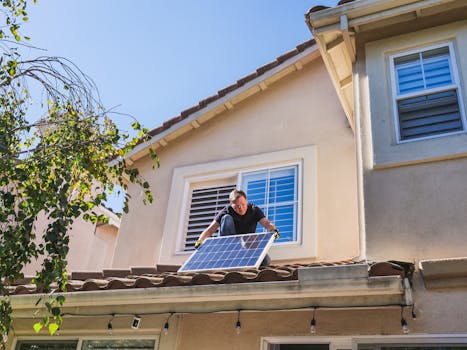 Photo: Kindel Media / Pexels
 Photo: RDNE Stock project / Pexels
 Photo: RDNE Stock project / Pexels
 Photo: Artem Podrez / Pexels