How Does Nuclear Energy Work? Unveiling the Power of the Atom
how does nuclear energy work

How Does Nuclear Energy Work? Unveiling the Power of the Atom

Unlock the secrets of atomic power and its role in generating clean, reliable electricity for our modern world.

Explore Nuclear Power

Key Takeaways

  • ✓ Nuclear energy is generated through nuclear fission, splitting atoms to release immense heat.
  • ✓ Uranium-235 is the primary fuel source, found naturally in the Earth's crust.
  • ✓ One uranium pellet can produce as much energy as a ton of coal or 17,000 cubic feet of natural gas.
  • ✓ Nuclear power plants produce zero greenhouse gas emissions during operation.

How It Works

1
Fuel Preparation (Uranium Enrichment)

Natural uranium is mined and processed into fuel pellets. These pellets are then enriched to increase the concentration of the fissile Uranium-235 isotope.

2
Fission in the Reactor Core

Enriched uranium fuel rods are placed in the reactor core. Neutrons strike Uranium-235 atoms, causing them to split (fission) and release heat and more neutrons, creating a chain reaction.

3
Heat Transfer and Steam Generation

The immense heat produced by fission warms a coolant (typically water) circulating through the reactor. This superheated coolant then boils water in a separate loop, creating high-pressure steam.

4
Electricity Generation

The high-pressure steam turns large turbines connected to generators. These generators convert the mechanical energy of the spinning turbines into electrical energy, which is then transmitted to the power grid.

The Atomic Heart: Understanding Nuclear Fission Explained
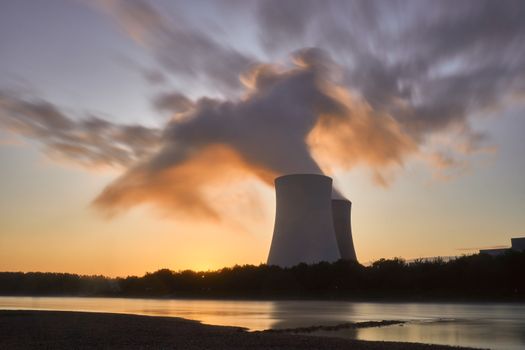
Dramatic image of a nuclear power plant at sunrise with steam rising into a colorful sky. Photo: Markus Distelrath / Pexels
At the very core of how nuclear energy works lies a powerful process known as nuclear fission. Imagine an atom, the fundamental building block of all matter, as a tiny solar system with a nucleus at its center and electrons orbiting it. In nuclear fission, we specifically target the nucleus of heavy atoms, primarily Uranium-235. This particular isotope of uranium is unique because its nucleus is relatively unstable. When a free neutron, acting like a tiny atomic projectile, strikes the nucleus of a Uranium-235 atom, it causes the nucleus to become even more unstable and split into two smaller nuclei, releasing a tremendous amount of energy in the form of heat and gamma radiation. Crucially, this splitting also releases additional neutrons. These newly released neutrons can then go on to strike other Uranium-235 nuclei, causing them to fission as well. This creates a self-sustaining chain reaction. If left uncontrolled, this chain reaction could rapidly escalate, as seen in atomic weapons. However, in a nuclear power plant, this chain reaction is carefully controlled. Control rods, typically made of materials like cadmium or boron, are inserted into the reactor core. These materials are excellent at absorbing neutrons, effectively slowing down or stopping the chain reaction. By adjusting the position of these control rods, operators can precisely regulate the rate of fission and, consequently, the amount of heat generated. This delicate balance ensures that energy is produced steadily and safely. The heat generated from this controlled fission is the primary source of energy that nuclear power plants harness to produce electricity. It's a marvel of engineering that transforms the invisible world of atoms into tangible power for our homes and industries. The sheer density of energy contained within atomic nuclei is astounding; a small amount of uranium can yield an enormous amount of power, far surpassing what can be obtained from burning fossil fuels. This efficiency is one of the key reasons why understanding energy production from nuclear sources is so important in the global energy landscape.

From Heat to Power: The Nuclear Power Generation Process
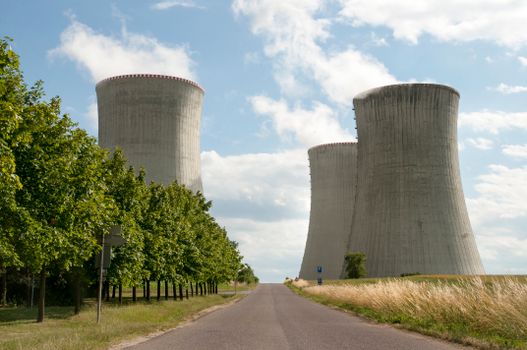
A nuclear power plant cooling towers by a road with green trees under a clear sky. Photo: Vladimír Sládek / Pexels
Once the controlled nuclear fission generates immense heat within the reactor core, the next critical step in how nuclear energy works is converting this heat into usable electricity. This transformation involves several interconnected systems designed for efficiency and safety. The reactor core is encased within a robust pressure vessel, and a coolant, most commonly ordinary water, circulates through it. This coolant absorbs the heat generated by the fission process. In pressurized water reactors (PWRs), the most common type in the US, this water is kept under high pressure to prevent it from boiling, even at very high temperatures. This superheated, pressurized water then flows through a heat exchanger, often called a steam generator. Here, it transfers its heat to a separate, isolated loop of water. Because the water in this secondary loop is not under the same extreme pressure, it rapidly boils and turns into high-pressure steam. This separation is crucial for safety, as it keeps any potentially radioactive water from the reactor core isolated from the steam that will drive the turbines. The high-pressure steam is then directed towards a massive turbine. The force of the steam causes the blades of the turbine to spin at very high speeds. Connected to the turbine on a common shaft is an electrical generator. As the turbine spins, it rotates the generator's internal components, which are designed to convert mechanical energy into electrical energy through electromagnetic induction. This is the same fundamental principle used in many other types of power plants, from coal-fired to hydroelectric. Once the steam has passed through the turbine and expended most of its energy, it is cooled back into liquid water in a condenser. This cooling process often involves a large body of water, such as a river, lake, or ocean, or the use of large cooling towers, which release the characteristic plumes of water vapor seen at nuclear plants. The condensed water is then pumped back to the steam generator to be reheated, completing the closed loop. This continuous cycle ensures efficient and ongoing electricity production, making it a reliable baseload power source.

Fueling the Future: Uranium and Reactor Core Operation
Close-up of a vintage gasoline pump with 'Gasoil Optimum' label in blue and orange. Photo: Hassan Bouamoud / Pexels
The choice of fuel is paramount to understanding how nuclear energy works. The primary fuel used in commercial nuclear power plants is uranium, a naturally occurring heavy metal found in rocks all over the world. However, not all uranium is created equal for nuclear fission. Natural uranium consists mainly of two isotopes: Uranium-238 (about 99.3%) and Uranium-235 (about 0.7%). Only Uranium-235 is readily fissile, meaning it can sustain a chain reaction when struck by a neutron. To be effective as fuel in most power reactors, the concentration of Uranium-235 needs to be increased through a process called enrichment, typically to between 3% and 5%. Once enriched, the uranium is processed into small ceramic pellets, each about the size of a pencil eraser. These pellets are then stacked inside long metal tubes, usually made of zirconium alloy, called fuel rods. Hundreds of these fuel rods are bundled together to form a fuel assembly. Multiple fuel assemblies are then carefully loaded into the reactor core, which is essentially the heart of the nuclear power plant. Inside the reactor core, the precise arrangement of fuel assemblies, control rods, and coolant is critical. The control rods, as mentioned earlier, are designed to absorb excess neutrons, allowing operators to fine-tune the rate of the chain reaction. When control rods are fully inserted, they absorb most neutrons, shutting down the reaction. As they are gradually withdrawn, more neutrons become available to cause fission, increasing the reactor's power output. The reactor core is also equipped with numerous sensors that continuously monitor temperature, pressure, neutron flux, and other vital parameters. These sensors feed data to sophisticated control systems, which can automatically adjust control rod positions or trigger safety shutdowns if necessary. This intricate ballet of physics and engineering ensures that the nuclear chain reaction is maintained at a stable, safe level, providing a consistent and powerful source of heat for electricity generation. The careful management of the reactor core and its fuel is a testament to the advanced technology and rigorous safety protocols that define modern nuclear energy production. The fuel rods remain in the reactor for several years before they are replaced, and the spent fuel is then safely stored, awaiting long-term disposal solutions.

Safety and Environmental Impact: Addressing Concerns

Dramatic image of a nuclear power plant at sunrise with steam rising into a colorful sky. Photo: Markus Distelrath / Pexels
While understanding how nuclear energy works from a technical standpoint is crucial, it's equally important to address common concerns regarding its safety and environmental impact. Nuclear power plants are among the most heavily regulated industrial facilities in the world, particularly in the US, overseen by the Nuclear Regulatory Commission (NRC). Their design incorporates multiple layers of redundant safety systems, often referred to as 'defense in depth.' This includes robust containment structures designed to withstand extreme events, automatic shutdown systems (SCRAM), and emergency core cooling systems. The industry has learned significantly from past incidents like Three Mile Island, Chernobyl, and Fukushima, leading to continuous improvements in design, operational procedures, and safety culture. When discussing safety, the issue of radioactive waste often comes up. Spent nuclear fuel is indeed radioactive and must be managed carefully. It's stored initially in deep pools of water at the plant site, which cools the fuel and provides shielding. After a few years, it's often transferred to dry cask storage, which consists of massive steel and concrete containers. While there is currently no permanent long-term geological repository established in the US, research and development continue globally to find secure, long-term solutions. It's important to note that the volume of spent nuclear fuel is relatively small compared to other industrial wastes, and its containment is extremely robust. Environmentally, nuclear power offers significant advantages. During operation, nuclear power plants produce virtually no greenhouse gas emissions, making them a vital tool in combating climate change. They also do not produce air pollutants like sulfur dioxide, nitrogen oxides, or particulate matter, which are associated with fossil fuel combustion and contribute to smog and acid rain. The land footprint of a nuclear power plant is also relatively small for the immense amount of power it generates. Despite these benefits, the perception of risk remains a challenge. However, statistical data consistently show that nuclear power is one of the safest forms of energy generation, especially when considering fatalities per unit of energy produced, even including major accidents. Continuous innovation in reactor design, including small modular reactors (SMRs) and advanced reactors, aims to further enhance safety, reduce waste, and improve economic viability, positioning nuclear energy as a critical component of a sustainable energy future. **Key Safety & Environmental Aspects:** * **Robust Regulation:** Strict oversight by bodies like the NRC. * **Defense-in-Depth:** Multiple, redundant safety systems. * **Low Emissions:** Zero greenhouse gases during operation. * **Waste Management:** Small volume, securely stored spent fuel. * **Continuous Improvement:** Lessons learned from past incidents drive innovation. * **Land Footprint:** Relatively small for power output.

Comparison

FeatureNuclear EnergySolar EnergyCoal PowerWind Energy
Greenhouse Gas Emissions (Operational)NoneNoneHighNone
Reliability/Baseload PowerHigh (24/7)Intermittent (daylight)High (24/7)Intermittent (wind availability)
Fuel Cost VolatilityLowN/A (free sun)HighN/A (free wind)
Land Footprint per MWhSmallModerate to LargeSmall to ModerateLarge
Waste ByproductsRadioactive (small volume)Manufacturing wasteAsh, CO2, SOx, NOxManufacturing waste
Energy DensityExtremely HighLowModerateLow

What Readers Say

"Understanding how nuclear energy works reveals an incredibly efficient process. The detailed explanation of fission and controlled chain reactions was exceptionally clear, making a complex topic accessible and highlighting its immense potential for clean power."

Dr. Eleanor Vance · Oak Ridge, TN

"This article clarified so much about nuclear power generation. I now grasp the entire journey from uranium enrichment to electricity, and it really emphasizes the sophisticated engineering involved."

Mark Jenson · Chicago, IL

"I was hesitant about nuclear energy, but this breakdown of how nuclear energy works, especially the safety mechanisms and environmental benefits, really changed my perspective. It's a crucial part of our energy future."

Sarah Chen · Boston, MA

"The article is very informative, though I wish there was a bit more on the specific challenges of long-term waste disposal. Still, an excellent overview of the process and its advantages."

David Rodriguez · Austin, TX

"As an engineering student, the detailed explanation of reactor core operation and heat transfer mechanisms was incredibly valuable. It provides a solid foundation for anyone studying energy systems."

Anya Sharma (Engineering Student) · Berkeley, CA

Frequently Asked Questions

What is the primary principle behind how nuclear energy works?

The primary principle behind nuclear energy is nuclear fission. This process involves splitting the nucleus of a heavy atom, typically Uranium-235, by striking it with a neutron. This fission releases a tremendous amount of heat energy and additional neutrons, which can then cause further fission events, creating a controlled chain reaction.

Is nuclear energy safe, considering past accidents?

Yes, nuclear energy is considered one of the safest forms of energy generation. While past accidents like Chernobyl and Fukushima were tragic, they led to significant advancements in reactor design, safety protocols, and regulatory oversight globally. Modern nuclear power plants are built with multiple redundant safety systems and robust containment structures to prevent and mitigate accidents.

How is the heat from nuclear fission converted into electricity?

The heat generated by nuclear fission in the reactor core is used to heat a coolant, usually water, to very high temperatures. This superheated coolant then transfers its heat to a separate loop of water, turning it into high-pressure steam. This steam then drives a turbine, which in turn spins a generator to produce electricity.

How does nuclear energy compare to fossil fuels in terms of cost and environmental impact?

While the initial construction cost of nuclear power plants can be high, their operational fuel costs are relatively low and stable. Environmentally, nuclear energy produces virtually no greenhouse gas emissions or air pollutants during operation, unlike fossil fuels, which are major contributors to climate change and air pollution. This makes nuclear a valuable carbon-free power source.

What are the main components of a nuclear power plant?

The main components of a nuclear power plant include the reactor core (where fission occurs), the steam generator (where heat is transferred to produce steam), the turbine (driven by steam), the generator (converts mechanical energy to electricity), and the condenser (cools steam back to water). There are also extensive safety and control systems.

Who should consider nuclear energy as a viable power source?

Nations and regions seeking reliable, high-capacity, and carbon-free baseload electricity generation should consider nuclear energy. It is particularly suitable for countries committed to reducing greenhouse gas emissions and ensuring energy security, as it provides consistent power independent of weather conditions.

What happens to the radioactive waste from nuclear power plants?

Spent nuclear fuel, which is radioactive waste, is initially stored in specially designed deep pools of water at the power plant site for several years to cool down and allow radioactivity to decay. After this period, it is often transferred to dry cask storage, which consists of robust, passively cooled steel and concrete containers, awaiting a permanent, long-term geological repository.

What are the future trends in nuclear energy technology?

Future trends in nuclear energy include the development of Small Modular Reactors (SMRs), which are smaller, more flexible, and potentially safer and more economical to build. There's also significant research into advanced reactor designs, such as fast reactors and molten salt reactors, which promise greater efficiency, reduced waste, and enhanced safety features.

Now that you understand how nuclear energy works, from the atomic fission to electricity generation, consider its pivotal role in a sustainable energy future. Explore further resources to deepen your knowledge of this powerful, clean, and reliable energy source.

Topics: how does nuclear energy worknuclear fission explainednuclear power generationuranium energyreactor core operation
Leo List
Brampton weed
Adultwork EstrelaBet Vai de Bet R7 Bet Betão Galera Bet Rainbet Bet9ja Shop SportyBet BetKing Sisal Loto Foot Hollywoodbets YesPlay Odibets RushBet Jugabet BetWarrior BetCity MSport betPawa Fortebet