Unlock Savings: Get a Home Energy Audit Today!
home energy audit

Unlock Savings: Get a Home Energy Audit Today!

Identify energy waste, improve comfort, and reduce your carbon footprint with a comprehensive home energy assessment.

Schedule Your Audit

Key Takeaways

  • ✓ A typical US household spends over $2,000 annually on energy bills.
  • ✓ Energy audits can identify inefficiencies that waste 20-30% of a home's energy.
  • ✓ Many utility companies offer rebates or incentives for energy-efficient upgrades.
  • ✓ Improved insulation and air sealing are often the most cost-effective upgrades.

How It Works

1
Initial Consultation & Data Collection

A certified auditor discusses your energy concerns, reviews past utility bills, and gathers basic information about your home's construction and systems.

2
On-Site Inspection & Diagnostic Testing

The auditor performs visual inspections, uses specialized tools like blower doors and infrared cameras to pinpoint air leaks, insulation gaps, and appliance inefficiencies.

3
Comprehensive Report & Recommendations

You receive a detailed report outlining energy weaknesses, prioritized recommendations for improvements, estimated savings, and potential ROI for each upgrade.

4
Implementation & Follow-Up

Armed with the report, you can choose to implement recommended upgrades. Some auditors offer post-upgrade assessments to verify improvements and savings.

Why You Absolutely Need to Get a Home Energy Audit Now

Hand holding LED light bulb on a grass surface, representing energy efficiency. Photo: Riki Risnandar / Pexels
In an era where energy costs continue to climb and environmental consciousness is at an all-time high, understanding your home's energy consumption is no longer a luxury—it's a necessity. A professional home energy audit serves as a diagnostic tool, much like a doctor's check-up for your house. It meticulously examines every nook and cranny, every system, and every appliance to identify where your valuable energy (and money) is literally leaking out. Many homeowners are surprised to learn that their homes, even relatively new ones, can be significant energy hogs. This isn't always due to old appliances; often, it's subtler issues like inadequate insulation, unsealed ductwork, or air leaks around windows and doors that go unnoticed for years. These 'invisible' problems can account for a substantial portion of your monthly utility bills. Beyond the immediate financial savings, a comprehensive energy audit brings a myriad of benefits. Imagine a home that's consistently comfortable, without those annoying cold drafts in winter or hot spots in summer. An audit helps achieve this by pinpointing areas of uneven temperature distribution, allowing for targeted improvements that enhance indoor comfort significantly. Furthermore, by making your home more energy-efficient, you're not just saving money; you're also reducing your carbon footprint. This contributes to a healthier planet and aligns with sustainable living practices. The process begins with a certified energy auditor who uses specialized equipment and expertise to create a detailed energy profile of your residence. They don't just guess; they use scientific methods to quantify energy losses and potential gains. This data-driven approach ensures that any recommendations are tailored specifically to your home's unique characteristics and your personal energy goals. Don't wait until your next skyrocketing utility bill to take action. Proactively understand your energy usage and unlock the potential for significant savings and enhanced living comfort. The investment in an audit often pays for itself many times over through reduced energy expenditures and increased home value. It’s an intelligent step towards a more sustainable and economically sound future for your household.

The Comprehensive Process of a Professional Energy Assessment

A solar technician in protective gear works on a rooftop under a blue sky. Photo: Los Muertos Crew / Pexels
When you decide to get a home energy audit, you're investing in a thorough, multi-faceted investigation of your home's energy performance. This isn't just a quick walk-through; it's a scientific assessment designed to uncover hidden inefficiencies. The process typically begins even before the auditor arrives at your doorstep. Many auditors will request copies of your past 12-24 months of utility bills (electricity, gas, oil) to establish a baseline of your energy consumption. This historical data helps them identify seasonal trends and potential anomalies in your usage. Once on-site, the auditor will conduct a detailed visual inspection of your home's exterior and interior. This includes examining the foundation, walls, roof, windows, doors, and attic for signs of air leakage, moisture issues, and insulation deficiencies. Inside, they'll inspect your heating, ventilation, and air conditioning (HVAC) systems, water heater, appliances, and lighting for efficiency. But the real magic of a professional audit lies in its diagnostic testing. A key tool is the 'blower door test.' This involves sealing off all external openings in your home (windows, doors, vents) and using a powerful fan to depressurize the house. As air is pulled out, outside air rushes in through any leaks, which the auditor can then easily detect using smoke pencils or infrared cameras. This test precisely measures your home's air tightness, a critical factor in energy loss. Another invaluable tool is the 'infrared camera.' This device visualizes temperature differences, revealing areas of missing or inadequate insulation within walls, ceilings, and floors. It can also detect moisture issues and ductwork leaks that are otherwise invisible. The auditor will also assess your home's combustion appliances (furnace, water heater, stove) for proper ventilation and safety, checking for carbon monoxide leaks. They will examine your ductwork for leaks and proper sizing, as leaky ducts can account for significant energy waste. Finally, they will evaluate your home's lighting, identifying opportunities to switch to more efficient LED bulbs. This comprehensive data collection forms the basis of a highly accurate energy profile for your home.

Decoding Your Energy Audit Report and Maximizing Savings

Two professionals reviewing detailed energy consumption charts in an office setting. Photo: RDNE Stock project / Pexels
After the on-site assessment, the energy auditor compiles all their findings into a comprehensive report. This document is the cornerstone of your journey towards a more energy-efficient home. It's crucial to understand how to interpret this report, as it will guide your future actions. The report typically begins with an executive summary, highlighting the most significant findings and the projected overall energy savings. This is often followed by a detailed breakdown of your home's energy consumption, usually presented in easy-to-understand charts and graphs, showing where your energy dollars are currently going. The core of the report consists of a prioritized list of recommended improvements. Each recommendation will typically include: a description of the problem (e.g., 'insufficient attic insulation'), the proposed solution (e.g., 'add R-38 blown-in cellulose insulation'), the estimated cost of the improvement, and, crucially, the projected annual energy savings and the payback period (how long it will take for the savings to offset the initial investment). Recommendations often fall into categories such as air sealing (e.g., caulking, weatherstripping), insulation upgrades (attic, walls, crawl space), HVAC system improvements or maintenance, window and door replacements, and lighting upgrades. The prioritization is key; auditors will usually suggest the most cost-effective improvements that offer the quickest return on investment first. For instance, air sealing is often a low-cost, high-impact improvement. To maximize your savings, it's essential not just to read the report but to act on its recommendations. Start with the 'low-hanging fruit' – the inexpensive, high-impact improvements. Many utility companies and government programs offer rebates, tax credits, or low-interest loans for energy-efficient upgrades. Your auditor might even be able to provide information on these incentives, helping to offset the cost of improvements. Don't be afraid to ask for clarification on any part of the report. A good auditor will be happy to walk you through the findings and help you develop a practical plan. Implementing these recommendations can lead to substantial and long-lasting energy savings, increased home comfort, and a reduced environmental impact. Remember, the audit is just the first step; the real savings come from thoughtfully implementing the recommended changes. You can also explore smart thermostat installation as a complementary upgrade to further optimize your energy usage.

Common Mistakes to Avoid and Tips for a Successful Home Energy Audit
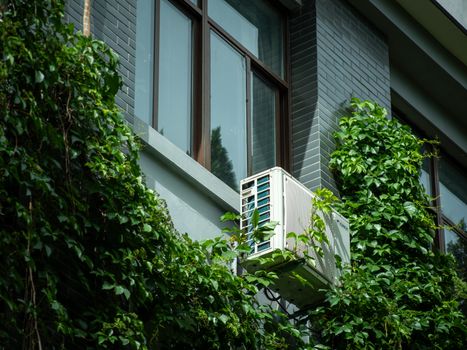
Air conditioner unit on an ivy-covered building wall, blending nature and technology. Photo: Alex Bian / Pexels
To ensure you get the most out of your home energy audit, it's important to be prepared and avoid common pitfalls. Here are some key tips and mistakes to steer clear of: * **Mistake 1: Not preparing your utility bills.** Have at least 12 months (preferably 24) of your electricity, gas, and any other fuel bills readily available for the auditor. This data is invaluable for establishing baselines and identifying trends. * **Mistake 2: Not communicating your concerns.** Before the audit begins, clearly articulate any specific issues you're experiencing, such as drafts, cold spots, high utility bills, or inconsistent heating/cooling. This helps the auditor focus their investigation. * **Mistake 3: Choosing an uncertified auditor.** Always opt for auditors certified by reputable organizations like the Building Performance Institute (BPI) or Residential Energy Services Network (RESNET). Certification ensures they have the necessary training and expertise. * **Mistake 4: Expecting instant fixes.** An audit identifies problems; it doesn't solve them. Be prepared to invest time and potentially money in implementing the recommended upgrades. The savings will come, but not overnight. * **Mistake 5: Ignoring the report.** The audit report is your roadmap to energy efficiency. Don't just file it away. Study it, understand the recommendations, and prioritize actions based on cost-effectiveness and your budget. * **Mistake 6: Not asking about incentives.** Many states, local utilities, and federal programs offer rebates, tax credits, or financing for energy efficiency upgrades. Ask your auditor or research these programs to reduce your out-of-pocket costs. **Tips for Success:** 1. **Clear the way:** Ensure the auditor has easy access to areas like the attic, basement, crawl space, and around your HVAC systems. Remove clutter that might impede their work. 2. **Ask questions:** Don't hesitate to ask the auditor to explain their findings, the tools they're using, or the reasoning behind their recommendations. A good auditor will be happy to educate you. 3. **Get multiple quotes for upgrades:** Once you have the audit report, obtain quotes from several contractors for the recommended improvements to ensure competitive pricing. 4. **Prioritize:** Focus on the improvements with the best return on investment first, especially those that also enhance comfort or safety. 5. **Consider a follow-up:** Some auditors offer a post-improvement assessment to verify the effectiveness of the changes made and quantify the actual savings.

Comparison

FeatureProfessional Energy AuditDIY Energy AuditUtility Company Audit
Tools UsedBlower door, infrared camera, combustion analyzerFlashlight, caulk gun, thermometerVaries; often visual or basic tools
Accuracy of FindingsHigh; scientific data-drivenLow to Medium; subjectiveMedium; depends on provider
Cost$300 - $700 (before rebates)$0 - $50 (for materials)$0 - $150 (often subsidized)
RecommendationsDetailed, prioritized, ROI estimatesBasic, general suggestionsSome detail, focus on common fixes
Rebate EligibilityOften required for major rebatesNot typically sufficientSometimes a prerequisite
Safety Checks✓ (Combustion safety)Sometimes (basic)
Time Commitment2-4 hours on-site, plus report prepFew hours of self-inspection1-2 hours on-site

What Readers Say

"Getting a home energy audit was a game-changer! The auditor found huge air leaks in our attic we never knew about. Our AC used to run constantly, but now it cycles much less, and our bills are noticeably lower."

Sarah J. · Austin, TX

"I was skeptical, but the professional audit was incredibly thorough. The report clearly outlined everything. We sealed our ducts and added attic insulation, and our home is finally comfortable in winter without cranking the heat."

Mark D. · Denver, CO

"After our home energy audit, we implemented just two of the recommendations: air sealing and upgrading our old water heater. Our monthly energy costs dropped by over $70, saving us hundreds per year!"

Emily R. · Portland, OR

"The audit itself was fantastic and very informative. I docked one star because some of the recommended upgrades were a bit pricey for my budget, but the auditor did help me prioritize the most impactful ones I could afford."

David L. · Chicago, IL

"We were planning on replacing our entire HVAC system, but the audit showed our existing one was fine; the real issue was leaky ductwork and poor insulation. Saved us thousands by focusing on the actual problem!"

Jessica M. · Atlanta, GA

Frequently Asked Questions

What is the average cost to get a home energy audit?

The cost of a professional home energy audit in the US typically ranges from $300 to $700. However, this can vary based on your home's size, location, and the specific services included. Many utility companies and state programs offer rebates or subsidies that can significantly reduce or even cover the cost of an audit, so it's always worth checking for local incentives.

Is a home energy audit really worth the investment?

Yes, absolutely. A professional home energy audit is a highly valuable investment. It provides a detailed, scientific understanding of where your home is losing energy, allowing you to make targeted improvements. The savings from reduced utility bills, increased home comfort, and potential eligibility for rebates and tax credits often lead to the audit paying for itself multiple times over within a few years.

How do I find a qualified energy auditor?

To find a qualified energy auditor, look for certifications from reputable organizations such as the Building Performance Institute (BPI) or the Residential Energy Services Network (RESNET). You can often find certified professionals through their websites or by checking with your local utility company, which may have a list of approved auditors or offer audit services directly.

What kind of savings can I expect after an energy audit?

The potential savings vary widely depending on your home's current inefficiencies and the extent of the improvements you implement. However, many homeowners report annual energy bill reductions of 10% to 30% after acting on audit recommendations. For a household spending $2,000 annually on energy, this could translate to $200-$600 in savings each year.

How does a professional energy audit compare to a DIY audit?

While a DIY audit can help identify obvious issues like drafty windows, a professional audit uses specialized tools like blower doors and infrared cameras to pinpoint hidden air leaks and insulation deficiencies that are impossible to find yourself. Professionals also provide detailed, prioritized recommendations with estimated costs and savings, offering a much more comprehensive and accurate assessment than a DIY approach.

Who should consider getting a home energy audit?

Anyone experiencing high utility bills, inconsistent indoor temperatures (hot or cold spots), excessive dust, or signs of moisture issues should consider an audit. It's also highly recommended for homeowners planning major renovations, those looking to reduce their environmental impact, or anyone simply wanting to maximize their home's comfort and energy efficiency.

Are there any risks involved with a home energy audit?

There are no inherent risks to the homeowner during a standard home energy audit. Certified auditors are trained to perform tests, such as the blower door test and combustion safety checks, safely and effectively. The process is non-invasive and designed to identify potential issues without causing damage to your home.

Will a home energy audit become mandatory in the future?

While not currently mandatory nationwide, there's a growing trend towards requiring energy audits or disclosures for home sales in some regions and municipalities, particularly as energy efficiency becomes a larger environmental and economic concern. Even if not mandated, the benefits of understanding and improving your home's energy performance will likely make audits a standard practice for savvy homeowners.

Ready to stop wasting energy and start saving money? Don't let hidden inefficiencies drain your wallet. Get a home energy audit today and unlock the full potential of your home's comfort and efficiency. Take the first step towards a smarter, greener, and more economical home!

Topics: home energy auditenergy efficiencysave money on energy billshome comfort improvementsenergy assessment
Leo List

IE Escorts NO Escorts US Escorts NZ Escorts AU Escorts
Brampton weed
Adultwork EstrelaBet Vai de Bet R7 Bet Betão Galera Bet Rainbet Bet9ja Shop SportyBet BetKing Sisal Loto Foot Hollywoodbets YesPlay Odibets RushBet Jugabet BetWarrior BetCity MSport betPawa Fortebet