Unlock Savings: Energy Efficient Appliance Rebates
energy efficient appliance rebates

Unlock Savings: Energy Efficient Appliance Rebates

Upgrade your home with qualifying appliances and significantly reduce your utility bills through available rebate programs.

Find My Rebates Now

Key Takeaways

  • ✓ Rebates can cover a significant portion of new appliance costs.
  • ✓ Both federal and local programs offer incentives for energy efficiency.
  • ✓ Qualifying appliances often carry ENERGY STAR® certification.
  • ✓ Upgrading can lead to substantial long-term utility bill savings.

How It Works

1
Identify Eligible Appliances

Before purchasing, research which appliances qualify for rebates in your area. Look for ENERGY STAR® certified models and check program-specific requirements.

2
Purchase and Install

Buy your new energy-efficient appliance from a participating retailer. Ensure professional installation if required by the rebate program to maintain eligibility.

3
Gather Documentation

Collect all necessary paperwork, including your purchase receipt, appliance model numbers, and proof of installation. Many programs require these for submission.

4
Submit Your Rebate Claim

Complete the rebate application online or via mail, attaching all required documentation. Be mindful of submission deadlines to ensure your claim is processed.

Understanding Energy Efficient Appliance Rebates
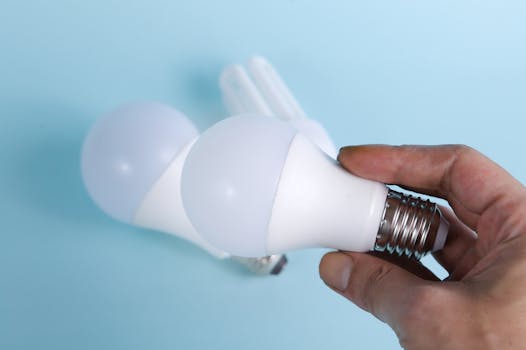
Close-up of hand holding energy-efficient LED light bulbs on a blue background. Photo: Riki Risnandar / Pexels
In an era where both personal finance and environmental stewardship are paramount, energy efficiency has emerged as a cornerstone of modern living. Energy efficient appliance rebates are financial incentives offered by various entities – including federal and state governments, local utility companies, and even some manufacturers – to encourage consumers to purchase appliances that consume less energy. These programs are designed to achieve multiple goals: reduce energy consumption, lower greenhouse gas emissions, alleviate strain on power grids, and, crucially, put money back into the pockets of homeowners and renters. The concept is straightforward: you invest in a more efficient appliance, and in return, you receive a partial reimbursement of the purchase cost. This effectively reduces the upfront barrier to adopting greener technologies, making it easier for households across the United States to upgrade their homes. The scope of appliances covered by these rebates is extensive, ranging from major household necessities like refrigerators, washing machines, and dishwashers to heating and cooling systems such as furnaces, air conditioners, and heat pumps. Even smaller items like smart thermostats and water heaters can qualify. The common thread among all eligible products is their ENERGY STAR® certification, a widely recognized symbol of energy efficiency in the US. This certification indicates that an appliance meets strict energy performance standards set by the U.S. Environmental Protection Agency (EPA) and U.S. Department of Energy (DOE). When you see the ENERGY STAR® label, you can be confident that the product is designed to save you money on your utility bills without sacrificing performance. Navigating the world of rebates can seem daunting at first, as programs vary significantly by location and specific offering. Some rebates are direct cash back, while others might come in the form of bill credits or gift cards. The amount of the rebate can also differ widely, from a modest $50 for a smart thermostat to several hundred or even a few thousand dollars for a new, highly efficient HVAC system. Understanding the nuances of these programs is critical to maximizing your savings. It's not just about the immediate rebate; it's also about the long-term operational savings you'll realize from lower energy consumption. Over the lifespan of an appliance, an energy-efficient model can save hundreds or even thousands of dollars in electricity or gas bills, making the initial investment even more worthwhile. These rebates essentially act as a catalyst, accelerating the adoption of technologies that benefit both individual budgets and the collective environment, fostering a more sustainable future for everyone.

Finding and Applying for US Appliance Rebates

A woman fills out an application form with a pen at a sunlit wooden desk. Photo: Kampus Production / Pexels
The landscape of energy efficient appliance rebates in the US is dynamic and multifaceted, with opportunities available at various levels of government and through private entities. The key to unlocking these savings lies in knowing where to look and understanding the specific requirements for each program. Your first point of contact should generally be your local utility provider – electricity, gas, or even water companies. Many utilities across the nation offer robust rebate programs as part of their demand-side management strategies, aiming to reduce overall energy consumption and peak load. These programs are typically designed for their specific service areas and can offer substantial incentives for upgrading to efficient appliances. Their websites are usually the best place to start, often featuring dedicated sections for energy-saving programs and rebate applications. Beyond utility companies, state and local governments are also significant players in the rebate arena. Many states have initiatives funded through energy conservation funds or federal grants to promote energy efficiency. These can include statewide rebate programs for specific appliances or broader tax incentives. For example, some states might offer a percentage back on the cost of a new heat pump, while others might provide sales tax exemptions for ENERGY STAR® certified products. Websites of state energy offices or environmental protection agencies are excellent resources for discovering these opportunities. Furthermore, some cities and counties, particularly those with strong environmental mandates, might have their own localized programs, sometimes partnering with community organizations to reach residents. Federal incentives, while less frequent as direct rebates for individual appliances compared to utility programs, often come in the form of tax credits. The Inflation Reduction Act of 2022, for instance, introduced significant tax credits for a range of energy-efficient home improvements, including certain high-efficiency heat pumps, water heaters, and insulation. These credits reduce your tax liability dollar-for-dollar, offering another powerful incentive. The Department of Energy's ENERGY STAR® website is an invaluable national resource, providing a comprehensive rebate finder tool that allows you to search for available rebates by zip code. This tool aggregates information from utilities, state programs, and federal incentives, streamlining the search process considerably. Always remember to check the eligibility criteria meticulously: purchase dates, specific model numbers, installation requirements, and submission deadlines are critical details that can make or break your rebate application. Keeping thorough records of your purchase and installation is paramount for a successful claim.

Maximizing Your Savings with Smart Appliance Choices
A home inspector wearing safety gear examines a house interior for safety compliance. Photo: RDNE Stock project / Pexels
Choosing the right energy-efficient appliance goes beyond just looking for the ENERGY STAR® label; it involves a strategic approach to maximize both immediate rebates and long-term utility savings. While the label is a crucial indicator, delving deeper into an appliance's specific energy performance metrics, often found on the yellow EnergyGuide label, can reveal even greater savings potential. This label provides estimated annual energy consumption and operating costs, allowing for a direct comparison between models. For instance, two ENERGY STAR® certified refrigerators might have different energy usage, and opting for the one with lower annual operating costs, even if it has a slightly smaller rebate, could lead to more significant savings over its lifespan. Thinking about the total cost of ownership – purchase price minus rebate, plus estimated lifetime energy costs – is a more holistic approach to appliance investment. Consider the types of appliances that offer the most substantial savings. Heating and cooling systems (HVAC) are typically the largest energy consumers in a home, making high-efficiency furnaces, central air conditioners, and especially heat pumps prime candidates for significant rebates and long-term savings. Upgrading an old, inefficient HVAC system can result in hundreds of dollars in annual energy bill reductions. Water heaters are another major energy user, and tankless or heat pump water heaters, while having a higher upfront cost, often come with generous rebates and drastically reduce hot water heating expenses. Refrigerators, washing machines, and dishwashers are also excellent opportunities, particularly if your current models are more than 10-15 years old, as efficiency standards have improved dramatically over time. Bundling your upgrades can also unlock additional incentives. Some utility or state programs offer enhanced rebates when multiple energy-efficient improvements are made simultaneously, such as installing a new HVAC system along with improved insulation or a smart thermostat. Furthermore, look for seasonal promotions or special manufacturer rebates that can be stacked with existing utility or government programs. Energy audits are an invaluable first step in this process. A professional energy audit can identify your home's biggest energy drains and recommend the most impactful upgrades, guiding you towards the appliances and improvements that will offer the best return on investment and qualify for the most substantial rebates. By combining careful research, strategic purchasing, and diligent application, you can transform your home into an energy-saving powerhouse while recouping a significant portion of your investment.

Common Mistakes and Smart Tips for Rebate Success
Image of a checklist and calculator for managing small business accounting tasks efficiently. Photo: Leeloo The First / Pexels
Navigating the world of energy efficient appliance rebates can sometimes feel like a maze, but by avoiding common pitfalls and implementing smart strategies, you can significantly increase your chances of a successful claim and maximize your savings. One of the most frequent mistakes is failing to check eligibility requirements *before* purchase. Many programs specify particular models, efficiency ratings, or even retailers. Purchasing a seemingly efficient appliance only to find it doesn't qualify for a rebate is a frustrating and costly error. Always verify the exact model number against the program's approved list. Another common issue is missing deadlines. Rebate programs often have strict submission windows, sometimes as short as 30-60 days from the purchase date. Keep track of these dates and submit your application promptly. Procrastination can lead to forfeiting valuable savings. Similarly, incomplete or incorrect documentation is a major cause of denied claims. Ensure you have clear copies of your receipt, the appliance's ENERGY STAR® label, the manufacturer's model and serial numbers, and any required installation invoices. Double-check that all information matches across documents. Here are some smart tips to ensure rebate success: * **Start Early:** Research available rebates *before* you even begin shopping. This will inform your appliance choices and help you prioritize which upgrades to make. * **Read the Fine Print:** Every rebate program has unique terms and conditions. Pay close attention to eligibility, submission instructions, and required documentation. * **Keep Everything:** Create a dedicated folder (physical and/or digital) for all rebate-related documents: receipts, invoices, product spec sheets, and a copy of your submitted application. * **Verify Installation Requirements:** Some rebates require professional installation by a licensed contractor. Ensure your chosen installer is qualified and provides the necessary documentation. * **Check for Stacking Opportunities:** See if you can combine rebates from different sources (e.g., utility, state, manufacturer) for even greater savings. Always confirm this with each program. * **Follow Up:** If you haven't heard back within the stated processing time, don't hesitate to follow up with the rebate program administrator. Keep a record of all communication. * **Consider Future Programs:** If you're not ready to buy now, keep an eye on utility and government websites. Programs change and new ones are introduced regularly, especially with evolving federal initiatives.

Comparison

FeatureFederal Tax CreditsUtility Company RebatesState/Local ProgramsManufacturer Rebates
SourceIRS (via tax filing)Local electric/gas companyState energy offices, city/countyAppliance brand
Typical BenefitTax creditCash back/bill creditCash back/tax creditCash back/discount
EligibilitySpecific high-efficiency products, homeownerENERGY STAR®, service area residentVaries by program, residentSpecific models, purchase period
ApplicationTax form submissionOnline/mail formOnline/mail formOnline/mail form
StackableSometimes with othersOften with state/manufacturerOften with utility/manufacturerSometimes with others

What Readers Say

"Applying for the energy efficient appliance rebates for my new heat pump was surprisingly easy. The utility company's website had clear instructions, and I received my check within a few weeks. It made a big difference in the upgrade cost!"

Sarah J. · Austin, TX

"I replaced my old washing machine with an ENERGY STAR® model and got a $75 rebate from my power company. Not only am I saving on my water and electricity bills, but the rebate was a nice bonus that made the purchase even sweeter."

Mark D. · Seattle, WA

"Thanks to the federal tax credit and a state rebate, my new tankless water heater ended up being much more affordable than I anticipated. The long-term savings on gas are already noticeable, proving these energy efficient appliance rebates are truly worth the effort."

Elena R. · Boston, MA

"The process for the furnace rebate was a bit more involved than I expected, requiring specific contractor certifications. However, after a few calls, everything was sorted, and the substantial rebate made it worthwhile. Just be prepared to do your homework."

David L. · Denver, CO

"Our HOA recommended checking for energy efficient appliance rebates when we upgraded our AC unit. We found a great utility program that covered a significant portion, and our electricity bills have dropped dramatically since. Highly recommend looking into them!"

Jessica M. · Orlando, FL

Frequently Asked Questions

What are energy efficient appliance rebates?

Energy efficient appliance rebates are financial incentives offered by governments, utilities, or manufacturers to encourage consumers to purchase appliances that meet specific energy efficiency standards, often indicated by the ENERGY STAR® label. These incentives help offset the upfront cost of more efficient models, making them more accessible and promoting energy conservation.

Are energy efficient appliances really worth the extra cost?

Absolutely. While energy efficient appliances might have a slightly higher initial purchase price, the long-term savings on your utility bills, combined with available rebates and tax credits, often make them a more economical choice over the lifespan of the appliance. They also contribute to a reduced carbon footprint and increased home comfort.

How do I find energy efficient appliance rebates in my area?

The best places to start are your local utility company's website (electricity, gas, water), your state's energy office website, and the ENERGY STAR® website's rebate finder tool. These resources allow you to search by zip code and filter by appliance type to find relevant programs.

What kind of savings can I expect from these rebates?

The amount of savings varies greatly depending on the appliance, the program, and your location. Rebates can range from tens of dollars for smaller appliances to several hundreds or even thousands for major systems like HVAC or water heaters. Additionally, the ongoing energy savings from efficient operation will continue to add up over the years.

Are federal tax credits considered the same as rebates?

While both offer financial incentives, federal tax credits (like those from the Inflation Reduction Act) reduce the amount of income tax you owe, dollar for dollar. Rebates, on the other hand, are typically direct payments or bill credits from utilities or states. You can often combine federal tax credits with local utility or state rebates for maximum savings.

Who should use energy efficient appliance rebates?

Anyone planning to replace an old appliance or purchase a new one for a home improvement project should actively seek out these rebates. Homeowners, renters (where applicable for specific programs), and even landlords can benefit from these programs to reduce costs and improve energy efficiency.

Are there any risks to applying for rebates?

The primary 'risk' is having your application denied due to incomplete paperwork, missed deadlines, or not meeting specific eligibility criteria. To mitigate this, always read the program's terms carefully, keep meticulous records, and submit your application well in advance of any deadlines. There's no financial risk in applying, only the potential for lost savings if not done correctly.

What's the future outlook for energy efficient appliance rebates?

The trend for energy efficient appliance rebates is positive and expected to grow. With increasing emphasis on climate change mitigation and energy independence, government and utility initiatives are likely to expand, offering more comprehensive programs and larger incentives to encourage widespread adoption of energy-saving technologies.

Don't leave money on the table! Explore the wealth of energy efficient appliance rebates available in the US today. By making smart choices and diligently applying, you can significantly reduce your upfront costs and enjoy lower utility bills for years to come. Start your search now and invest in a more sustainable and affordable home.

Topics: energy efficient appliance rebatesappliance rebates UShome energy savingsutility rebatesfederal tax credits
Leo List

DK Escorts LU Escorts AT Escorts SE Escorts FI Escorts CH Escorts DE Escorts HR Escorts IE Escorts GR Escorts CZ Escorts NO Escorts BE Escorts FR Escorts SI Escorts IL Escorts NL Escorts PL Escorts HU Escorts ES Escorts IT Escorts PT Escorts SK Escorts RO Escorts ZA Escorts UY Escorts US Escorts UK Escorts NZ Escorts AU Escorts
Brampton weed
Adultwork EstrelaBet Vai de Bet R7 Bet Betão Galera Bet Rainbet Bet9ja Shop SportyBet BetKing Sisal Loto Foot Hollywoodbets YesPlay Odibets RushBet Jugabet BetWarrior BetCity MSport betPawa Fortebet