Unlock Savings: Your Guide to an Energy Audit for Homes US
energy audit for homes US

Unlock Savings: Your Guide to an Energy Audit for Homes US

Understand the process, benefits, and how to choose the right professional to transform your home's energy consumption.

Find an Auditor Now

Key Takeaways

  • ✓ An average US household spends over $2,000 annually on energy.
  • ✓ A professional energy audit can identify opportunities to save 5% to 30% on energy bills.
  • ✓ Many utility companies and states offer rebates and incentives for energy efficiency upgrades.
  • ✓ Energy audits assess insulation, HVAC, windows, and air sealing to pinpoint inefficiencies.

How It Works

1
Initial Consultation & Data Collection

A certified auditor discusses your energy concerns, reviews past utility bills, and gathers information about your home's construction and appliances. This helps tailor the audit to your specific needs and potential issues.

2
On-Site Home Assessment

The auditor conducts a thorough visual inspection and uses specialized tools like blower doors and infrared cameras to identify air leaks, insulation gaps, and inefficient systems. This is the core data-gathering phase.

3
Analysis & Report Generation

Post-inspection, the auditor analyzes all collected data to create a comprehensive report detailing your home's energy performance. This report prioritizes recommended upgrades based on cost-effectiveness and potential savings.

4
Review & Implementation Support

The auditor presents their findings, explains the recommended improvements, and answers your questions. They can also provide guidance on contractors, financing options, and available rebates to help you implement the changes.

Understanding the Value of a Home Energy Assessment
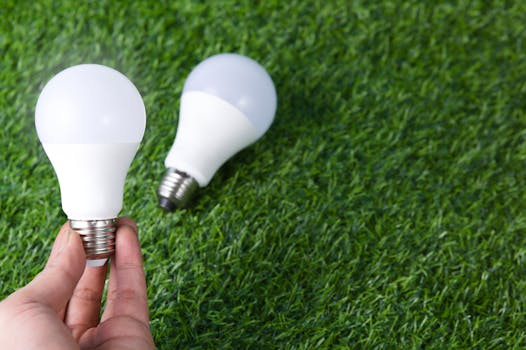
Hand holding LED light bulb on a grass surface, representing energy efficiency. Photo: Riki Risnandar / Pexels
In an era where sustainability and cost-saving are paramount, a professional energy audit for homes in the US stands out as a foundational step toward achieving both. Far more than just a walkthrough, a comprehensive home energy assessment is a systematic evaluation of your home’s energy performance, designed to pinpoint exactly where and how energy is being wasted. This process is crucial because many energy inefficiencies are invisible to the naked eye, leading to higher utility bills, uncomfortable living spaces, and an increased carbon footprint. Think of your home as a complex system; an energy audit acts as a diagnostic tool, identifying the weak links that are costing you money and comfort. The primary goal of an energy audit is to provide homeowners with a clear, actionable roadmap for improving their home's energy efficiency. This isn't about guessing; it's about data-driven recommendations. Auditors use specialized equipment and expertise to uncover issues ranging from inadequate insulation and leaky ductwork to inefficient heating, ventilation, and air conditioning (HVAC) systems, and even poorly sealed windows and doors. The insights gained from an audit can be transformative, helping you prioritize upgrades that offer the best return on investment. For instance, you might assume your old windows are the biggest culprit for heat loss, only for an audit to reveal that attic insulation or significant air leaks around electrical outlets are far more impactful and less costly to address initially. By understanding these factors, you can make informed decisions that lead to tangible savings and a more comfortable home environment. Moreover, the benefits extend beyond just financial savings. A more energy-efficient home often translates to improved indoor air quality, reduced drafts, and consistent temperatures throughout your living spaces. This enhances overall comfort and can even contribute to a healthier home environment by minimizing moisture issues and preventing the infiltration of outdoor pollutants. For those considering selling their home, an energy-efficient rating can be a significant selling point, adding to its market value. The US Department of Energy estimates that homeowners can save between 5% and 30% on their annual energy bills by implementing the recommendations from a professional energy audit. This makes the initial investment in an audit a wise financial decision, often paying for itself through reduced energy costs over time. Understanding these multifaceted advantages underscores why an energy audit is not just an expense, but an investment in your home's future and your personal well-being. For more general information on how to save money, check out our guide on energy saving tips. Furthermore, an energy audit often identifies opportunities for homeowners to take advantage of federal, state, and local incentives or rebates. Many government programs and utility companies offer financial assistance for energy efficiency upgrades, such as insulation improvements, HVAC replacements, or smart thermostat installations. An auditor can help you navigate these programs, ensuring you maximize your savings on both the audit itself and the subsequent improvements. This layered approach to saving money makes the energy audit an indispensable tool for any homeowner looking to optimize their property's performance and reduce their environmental impact.

The Comprehensive Process of an Energy Audit for Homes US
Bright and spacious empty room featuring French doors, large windows, and a warm color palette. Photo: Curtis Adams / Pexels
A thorough energy audit for homes in the US involves a multi-faceted approach, combining visual inspection with advanced diagnostic tools to provide a complete picture of your home’s energy performance. The process typically begins with an initial consultation where the auditor discusses your specific concerns, such as high utility bills, uncomfortable rooms, or drafts. They will often ask to review your past 12 months of utility bills to understand your historical energy consumption patterns. This foundational data helps the auditor focus their investigation and identify potential areas of concern before even stepping foot inside your home. Following the consultation, the on-site assessment kicks off. This is where the bulk of the data collection occurs. A certified energy auditor will systematically inspect various components of your home. This includes a close look at your home's envelope, which consists of the exterior walls, roof, foundation, windows, and doors. They will assess the quality and condition of insulation in the attic, walls, and crawl spaces, as well as inspect for air leaks around windows, doors, electrical outlets, plumbing penetrations, and recessed lighting fixtures. The auditor will also examine your heating and cooling systems (furnace, air conditioner, heat pump), hot water heater, and major appliances to evaluate their age, efficiency ratings, and overall condition. Ductwork, a common source of energy loss, will be inspected for leaks and proper sealing. Critical to a professional energy audit are specialized diagnostic tests. The most common is the blower door test, which depressurizes your home to exaggerate air leaks, making them easier to detect with smoke pencils or infrared cameras. This test provides a quantifiable measure of your home's airtightness. Infrared cameras (thermal imaging) are used to visualize temperature differences on surfaces, revealing areas of poor insulation, thermal bridging, and hidden air leaks that are otherwise invisible. Combustion appliance safety tests are also performed to ensure that gas furnaces, water heaters, and other combustion appliances are operating safely and efficiently, without producing dangerous levels of carbon monoxide. The auditor may also check for proper ventilation in kitchens and bathrooms, and assess window performance. Each of these tools contributes to a precise understanding of your home's energy strengths and weaknesses, allowing for targeted and effective recommendations rather than broad generalizations. This detailed methodology ensures that no stone is left unturned in identifying opportunities for energy improvement.

Key Areas of Focus: Where Your Home is Losing Energy
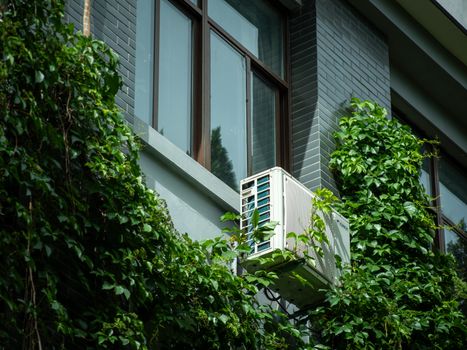
Air conditioner unit on an ivy-covered building wall, blending nature and technology. Photo: Alex Bian / Pexels
During an energy audit for homes in the US, auditors meticulously examine several critical areas where energy loss is most prevalent. Understanding these common culprits can help homeowners anticipate the findings and prepare for potential improvements. One of the most significant areas of focus is the building envelope, which includes the roof, walls, and foundation. Inadequate or improperly installed insulation in the attic, walls, and crawl spaces is a leading cause of heat gain in summer and heat loss in winter. An auditor will assess the R-value of existing insulation and recommend upgrades to meet current energy efficiency standards, which can dramatically impact indoor comfort and heating/cooling costs. They will also look for thermal bridges, areas where heat can easily transfer through structural elements. Another major culprit for energy waste is air leakage. Homes are often riddled with tiny cracks and gaps around windows, doors, electrical outlets, plumbing penetrations, and attic hatches. These leaks allow conditioned air to escape and unconditioned air to infiltrate, forcing your HVAC system to work harder. The blower door test is instrumental in identifying these hidden leaks, which can account for a significant portion of a home’s energy loss. Sealing these air leaks through caulking, weatherstripping, and foam sealants is one of the most cost-effective energy efficiency improvements. Auditors will also pay close attention to ductwork. Leaky or uninsulated ducts, especially those running through unconditioned spaces like attics or crawl spaces, can lose a substantial amount of heated or cooled air before it ever reaches your living spaces. Sealing and insulating ducts are often high-priority recommendations. Heating, ventilation, and air conditioning (HVAC) systems are central to a home's energy consumption. Auditors evaluate the age, efficiency rating (AFUE for furnaces, SEER for AC units), and overall condition of your furnace, air conditioner, or heat pump. They will check for proper sizing – an oversized unit cycles on and off too frequently, leading to inefficiency and premature wear, while an undersized unit struggles to maintain desired temperatures. Thermostat settings and functionality are also reviewed, with recommendations often made for programmable or smart thermostats. Furthermore, water heating, lighting, and major appliances are assessed. Hot water heaters, especially older models, can be significant energy consumers. The auditor might recommend insulation for the tank and pipes, or suggest upgrading to a more efficient model like a tankless or heat pump water heater. Similarly, they'll check the efficiency of refrigerators, washers, and dryers, and suggest switching to LED lighting. By addressing these key areas, an energy audit provides a holistic approach to making your home truly energy efficient, leading to lasting comfort and savings. For more details on specific appliances, refer to our guide on understanding appliance efficiency.

Maximizing Your Investment: Tips and Common Mistakes to Avoid
Two LED light bulbs on a bright yellow background, emphasizing modern energy-efficient lighting. Photo: Riki Risnandar / Pexels
To truly maximize the benefits of an energy audit for homes in the US, homeowners should approach the process strategically and be aware of common pitfalls. One crucial tip is to choose a certified and reputable energy auditor. Look for certifications from organizations like the Building Performance Institute (BPI) or RESNET, which ensure the auditor has undergone rigorous training and adheres to industry standards. Don't simply opt for the cheapest option; an experienced auditor brings invaluable expertise that can uncover subtle issues and provide the most impactful recommendations. Always ask for references and check online reviews. Another important tip is to be an active participant. Before the audit, gather your past year's utility bills, note any specific comfort issues (e.g., cold spots, drafty rooms), and list any recent home improvements. During the audit, ask questions and walk through with the auditor if possible. The more information you provide, the more tailored and effective the audit report will be. After receiving the report, don't let it sit on a shelf. Prioritize the recommended improvements based on the auditor's suggestions for cost-effectiveness and potential energy savings. Start with no-cost or low-cost measures like sealing air leaks and improving insulation, which often offer the quickest return on investment. Common mistakes to avoid include: * **Ignoring the report:** The audit is only valuable if you act on its findings. * **DIYing complex projects without expertise:** While some tasks like weatherstripping are homeowner-friendly, major insulation, HVAC, or ductwork projects are best left to qualified contractors to ensure proper installation and safety. * **Focusing solely on one area:** Forgetting the holistic approach. A home's energy performance is interconnected. Addressing only windows while ignoring major attic insulation issues will yield limited results. * **Not researching incentives:** Many homeowners miss out on significant rebates and tax credits available for energy efficiency upgrades. Your auditor can often provide guidance on these programs. * **Expecting instant results without ongoing effort:** Maintaining energy efficiency is an ongoing process. Regular maintenance of HVAC systems and continued vigilance for new drafts or issues are important. By following these tips and avoiding common mistakes, you can ensure your energy audit leads to substantial, long-term savings and a more comfortable, efficient home.

Comparison

FeatureProfessional Energy AuditDIY Home Energy CheckupUtility Company Assessment
Depth of AnalysisComprehensive, diagnostic toolsBasic visual inspectionModerate, often limited
Tools UsedBlower door, infrared camera, CO detectorFlashlight, thermometer, visualOften visual, sometimes basic tools
Cost$300 - $700 (before rebates)$0 - $50 (materials)Often free or low cost
Accuracy/PrecisionHigh, quantifiable dataLow, subjectiveModerate, depends on program
Actionable PlanDetailed, prioritized recommendationsGeneral ideas, no quantificationSome recommendations, less detailed
Rebate Guidance✓ (for their programs)
CertificationBPI, RESNET certified auditorsVaries by utility

What Readers Say

"Our energy audit for homes US experience was fantastic. The auditor found a huge air leak in our attic we never knew about. Our AC runs so much less now!"

Sarah J. · Austin, TX

"After years of high heating bills, we finally got an energy audit. The report was clear, and implementing just two recommendations cut our winter bills by 20%. Highly recommend!"

Mark D. · Denver, CO

"The infrared camera showed exactly where we were losing heat. We sealed those areas, and our home is noticeably warmer and our energy usage dropped by 15% in the first month."

Emily R. · Boston, MA

"The audit was thorough, though a bit more expensive than I anticipated. However, the savings identified will easily pay for it within a year, so it's a solid investment."

John P. · Seattle, WA

"We had an energy audit done before installing solar panels. It helped us optimize our home's efficiency first, so we needed fewer panels, saving us even more money in the long run."

Laura K. · Atlanta, GA

Frequently Asked Questions

What is the typical cost of an energy audit for homes in the US?

The cost of a professional energy audit in the US typically ranges from $300 to $700, depending on your home's size, location, and the depth of the assessment. Some utility companies offer free or low-cost audits, or rebates that can significantly offset the expense. Considering the potential savings on utility bills, the initial investment often pays for itself within a few years.

Will an energy audit really save me money on my utility bills?

Absolutely. A professional energy audit identifies specific areas of energy waste in your home, allowing you to make targeted improvements. Homeowners who implement the recommended upgrades often see savings of 5% to 30% on their annual energy bills. This translates into tangible financial benefits year after year, improving your home's financial efficiency.

How long does a typical home energy audit take?

An on-site home energy audit usually takes between 2 to 4 hours, though larger or more complex homes might require more time. This includes the initial consultation, the comprehensive inspection using specialized tools like blower doors and infrared cameras, and sometimes a preliminary discussion of findings. The auditor then typically takes a few days to compile a detailed report.

Are there any government or utility rebates available for energy audits or upgrades?

Yes, many federal, state, and local governments, as well as utility companies, offer various rebates, tax credits, and financing programs for energy efficiency improvements, including the audit itself. These incentives aim to encourage homeowners to reduce energy consumption. Your energy auditor can often provide information on programs available in your specific region to help you maximize your savings.

How do I find a qualified energy auditor in my area?

To find a qualified energy auditor, look for professionals certified by reputable organizations such as the Building Performance Institute (BPI) or RESNET (Residential Energy Services Network). You can often find certified auditors through these organizations' websites, or by checking with your local utility company, which may have a list of approved providers. Always ask for credentials and references.

Who should consider getting an energy audit for their home?

Any homeowner experiencing high utility bills, inconsistent indoor temperatures, drafts, or concerns about their home's environmental impact should consider an energy audit. It's also highly beneficial for those planning renovations, purchasing an older home, or simply wanting to ensure their home is as efficient and comfortable as possible, regardless of age or condition.

Is an energy audit safe for my home and family?

Yes, a professional energy audit is very safe. Certified auditors are trained to conduct tests, such as the blower door test and combustion appliance safety checks, in a controlled and safe manner. They prioritize your home's structural integrity and your family's health, ensuring that all procedures are performed according to industry safety standards and regulations.

What are the future trends in home energy audits and efficiency?

Future trends in home energy audits include increased integration of smart home technology, real-time energy monitoring, and advanced AI-driven analytics for even more precise recommendations. There's also a growing emphasis on whole-house performance, including renewable energy integration (like solar), and a focus on resilience and electrification to reduce reliance on fossil fuels, aligning with broader sustainability goals.

Ready to take control of your energy bills and enhance your home's comfort? A professional energy audit for homes in the US is your first, most effective step. Don't let hidden inefficiencies drain your wallet; invest in a smarter, more sustainable home today.

Topics: energy audit for homes UShome energy assessmentresidential energy efficiencyenergy saving tipsutility bill reduction
Leo List
Brampton weed
Adultwork EstrelaBet Vai de Bet R7 Bet Betão Galera Bet Rainbet Bet9ja Shop SportyBet BetKing Sisal Loto Foot Hollywoodbets YesPlay Odibets RushBet Jugabet BetWarrior BetCity MSport betPawa Fortebet