How to Buy Electric Car Charger US: Your Ultimate Guide
August 25, 2026 15 min read 3,048 words
Unlock the convenience of home EV charging with our expert insights into choosing, purchasing, and installing the perfect charger for your US home.
Start Charging Smarter
Understanding EV Charger Levels and Your Home's Needs
 Photo: Gustavo Fring / Pexels
When you decide to buy electric car charger US, the first critical step is to understand the different charging levels available and how they align with your specific electric vehicle (EV) and daily driving habits. This foundational knowledge will ensure you make an informed decision, preventing both overspending and underperformance. In the US, EV charging is primarily categorized into three levels: Level 1, Level 2, and Level 3 (DC Fast Charging). For home use, your focus will overwhelmingly be on Level 1 and, more prominently, Level 2.
Level 1 charging utilizes a standard 120-volt AC outlet, the same type you use for everyday household appliances. It's the slowest charging method, typically adding about 2-5 miles of range per hour. While it requires no special equipment beyond what usually comes with your EV, its slow speed makes it best suited for plug-in hybrid electric vehicles (PHEVs) with smaller batteries or for EV owners who drive very few miles daily and can charge overnight for extended periods. It's an excellent option for occasional top-ups but generally insufficient for primary charging of a full battery electric vehicle (BEV). Think of it as trickle charging – it gets the job done eventually, but patience is key. The benefit here is simplicity and zero additional installation cost, making it an accessible entry point for new EV owners. However, relying solely on Level 1 for a long-range EV can quickly become frustrating, especially if you have an unpredictable schedule or frequently drive long distances.
Level 2 charging is the sweet spot for most EV owners looking to buy electric car charger US for their homes. These chargers operate on a 240-volt AC circuit, similar to what powers electric dryers or ovens. This significantly boosts charging speed, typically delivering 25-50 miles of range per hour, depending on the charger's amperage and your vehicle's acceptance rate. A full charge for most EVs can be achieved overnight, or even in a few hours, making it highly practical for daily use. To install a Level 2 charger, you'll need a dedicated 240V circuit and a qualified electrician. While there's an upfront installation cost, the convenience and speed it offers are invaluable. Many Level 2 chargers also come with smart features, allowing you to schedule charging, monitor energy consumption, and even integrate with smart home systems, optimizing your
energy management. When considering a Level 2 unit, pay attention to its amperage rating (e.g., 32A, 40A, 48A). Higher amperage generally means faster charging, but your home's electrical panel capacity and your EV's onboard charger limit the maximum charging rate. It’s crucial to match the charger to both your car's capabilities and your home's electrical infrastructure to avoid unnecessary expenses or inefficient charging. Your daily commute, battery size, and desire for quick turnaround times will heavily influence whether a 32A or 48A charger is more appropriate for your needs.
Navigating Installation, Costs, and Incentives for Your EV Charger
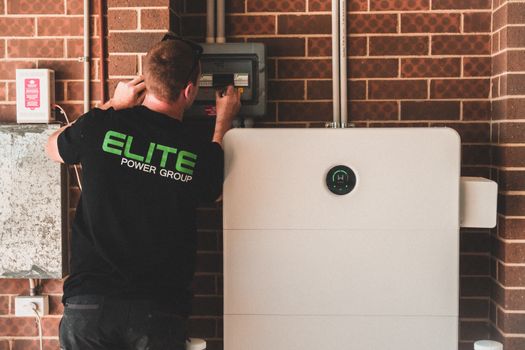 Photo: Elite Power Group / Pexels
Once you've decided on the appropriate charging level, the next critical phase in your journey to buy electric car charger US involves understanding the installation process, associated costs, and available financial incentives. These factors can significantly impact your overall investment and long-term satisfaction with your home charging setup. The installation of a Level 2 EV charger is not a DIY project for most homeowners; it requires the expertise of a licensed electrician. This is because it involves working with high voltage, potentially upgrading your electrical panel, and ensuring compliance with local electrical codes and safety standards. An electrician will assess your existing electrical panel to determine if it has sufficient capacity to handle the new circuit required for the charger. If your panel is older or already near its maximum capacity, an upgrade may be necessary, which can add to the installation cost.
The cost of installing an EV charger can vary widely across the US, typically ranging from a few hundred dollars to several thousand. This range depends on several variables: the distance from your electrical panel to the desired charger location (longer runs mean more wiring and labor), the need for trenching if the charger is located far from the house or in a detached garage, and whether an electrical panel upgrade is required. Simple installations in a garage adjacent to the electrical panel will be on the lower end of the spectrum, while complex installations involving panel upgrades or significant wiring runs will be on the higher end. Always obtain multiple quotes from qualified, reputable electricians to compare costs and ensure transparent pricing. Ask for a detailed breakdown of labor, materials, and any necessary permits, as these can also add to the final bill.
Fortunately, the US government and various state and local entities offer a range of incentives to encourage EV adoption and the installation of charging infrastructure. These incentives can significantly offset the cost of both the charger unit and its installation. At the federal level, the Alternative Fuel Vehicle Refueling Property Credit (IRS Form 8911) currently allows eligible individuals to claim a tax credit for 30% of the cost of new, qualified alternative fuel vehicle refueling property, up to a maximum of $1,000. This credit typically applies to both the charger equipment and installation costs. It's important to verify the current status and eligibility requirements of this credit as tax laws can change. Beyond federal incentives, many states, municipalities, and even utility companies offer their own programs. These can include rebates for charger purchases, installation cost reimbursements, or special time-of-use (TOU) electricity rates designed to make EV charging more affordable. For example, some states might offer rebates of several hundred dollars for Level 2 charger purchases, while utility companies might provide incentives for smart chargers that can manage grid demand. To find applicable programs in your area, research your state's energy office website, your local utility provider's EV programs, and federal incentive databases. Leveraging these incentives is a smart financial move that can make your decision to buy electric car charger US much more economical and appealing, accelerating your return on investment in EV ownership.
Choosing the Right Charger and Future-Proofing Your Investment
 Photo: Kindel Media / Pexels
When you're ready to buy electric car charger US, the actual selection of the unit involves more than just picking the fastest one. You need to consider compatibility, smart features, brand reputation, and the potential for future vehicle upgrades. Making an informed choice now can save you headaches and additional costs down the line. The most crucial compatibility factor is the connector type. In the US, most electric vehicles use the J1772 connector for Level 1 and Level 2 charging. However, Tesla vehicles traditionally used a proprietary connector, though they now offer adapters for J1772, and are increasingly adopting the North American Charging Standard (NACS) – which is essentially Tesla's connector design now being adopted by other automakers. If you own a Tesla, you'll need either a Tesla-specific Wall Connector, a J1772 charger with a Tesla adapter, or a NACS-compatible charger. If you own a non-Tesla EV, a J1772 charger is your standard choice. Given the industry's shift towards NACS, considering a NACS-native charger or one that offers easy future upgrades or adapters could be a wise move for long-term compatibility, especially if you plan to switch EV brands in the future. Always check your vehicle's manual or manufacturer's specifications to confirm its charging port type and maximum charging rate.
Beyond basic compatibility, modern EV chargers come equipped with a host of smart features that can enhance your charging experience and even save you money. Many Level 2 chargers offer Wi-Fi connectivity, allowing you to control and monitor charging sessions via a smartphone app. This includes scheduling charging during off-peak hours when electricity rates are lower, tracking energy consumption, and receiving notifications. Some advanced chargers integrate with home energy management systems, solar panels, or demand response programs from utility companies. These features allow for optimized charging, potentially reducing your electricity bill and contributing to a more sustainable energy footprint. When evaluating smart features, consider what's important to your lifestyle. Do you need precise scheduling, or would simple remote start/stop suffice? Do you want detailed energy reporting, or is basic charging status enough? These considerations will help narrow down your options and avoid paying for features you won't use.
Brand reputation and warranty are also significant factors when you buy electric car charger US. Investing in a charger from a well-established manufacturer often means better product quality, more reliable customer support, and a more robust warranty. Research brands known for their reliability and positive user reviews. Common reputable brands in the US include ChargePoint, Enel X Way (formerly JuiceBox), Wallbox, Grizzl-E, and Tesla (for their Wall Connector). A good warranty provides peace of mind, protecting your investment against manufacturing defects for a specified period. Most reputable chargers come with at least a 3-year warranty, with some offering longer terms. Finally, consider the charger's power output (amperage). While your current EV might only accept a certain amperage, future EVs might be able to charge faster. If your home's electrical panel can support it, installing a higher amperage charger (e.g., 48A) even if your current car doesn't fully utilize it, can future-proof your setup for your next EV, potentially avoiding another installation cost down the road. This forward-thinking approach, combined with diligent research into current models and their features, will ensure you select an EV charger that serves your needs reliably for years to come.
Smart energy solutions are becoming increasingly integrated with EV charging, making these considerations even more relevant for future-proofing.
Common Mistakes to Avoid When Buying an EV Charger
Photo: Gustavo Fring / Pexels
Navigating the process to buy electric car charger US can be straightforward if you're prepared, but several common pitfalls can lead to frustration, added expense, or an underperforming charging setup. Being aware of these mistakes can save you significant time and money.
* **Underestimating Electrical Panel Capacity:** One of the most frequent errors is failing to assess your home's electrical panel. Many older homes, or even newer ones with many high-draw appliances, may not have sufficient spare capacity to accommodate a Level 2 charger without an upgrade. An electrician's assessment is non-negotiable before purchase. Skipping this step can lead to buying a charger you can't install, or worse, an overloaded electrical system.
* **Ignoring Local Permitting and Codes:** Installation of a Level 2 charger almost always requires permits and must adhere to local electrical codes. Attempting to install it without proper permits or by an unlicensed individual can lead to safety hazards, voided home insurance, and potential fines. Always use a licensed electrician who is familiar with local regulations.
* **Buying the Wrong Connector Type:** While the J1772 is standard for most EVs in the US, and NACS is gaining traction, mistakenly buying a charger with an incompatible connector for your current or future EV is a common error. Always double-check your vehicle's specifications. While adapters exist, a native connection is always preferable for reliability and efficiency.
* **Overlooking Charger Amperage vs. Vehicle Acceptance Rate:** A 48-amp charger is great, but if your EV's onboard charger can only accept 32 amps, you're paying for unused capacity. Conversely, buying a low-amperage charger for an EV that can charge much faster means slower charging than necessary. Match the charger's output to your EV's maximum acceptance rate for optimal performance.
* **Not Considering Cable Length and Placement:** Think about where you park your EV and where the charger will be located. A cable that's too short will be a constant nuisance. Measure the distance from the proposed charger location to your EV's charging port when parked in its usual spot, ensuring the cable has enough slack to reach comfortably. Consider future parking arrangements too.
* **Neglecting Smart Features and Connectivity:** In today's interconnected world, a 'dumb' charger might be a missed opportunity. Smart features like Wi-Fi connectivity, app control, and scheduling capabilities can significantly enhance convenience and help you save money by charging during off-peak hours. Not all chargers are equal in their smart capabilities.
* **Failing to Research Incentives:** Many federal, state, and local incentives exist to reduce the cost of EV chargers and installation. Failing to research and apply for these can mean leaving hundreds or even thousands of dollars on the table. Always check government and utility websites for current programs before making your purchase.
By avoiding these common mistakes, you can ensure a smooth, cost-effective, and highly efficient experience when you buy electric car charger US, setting you up for years of convenient home EV charging.