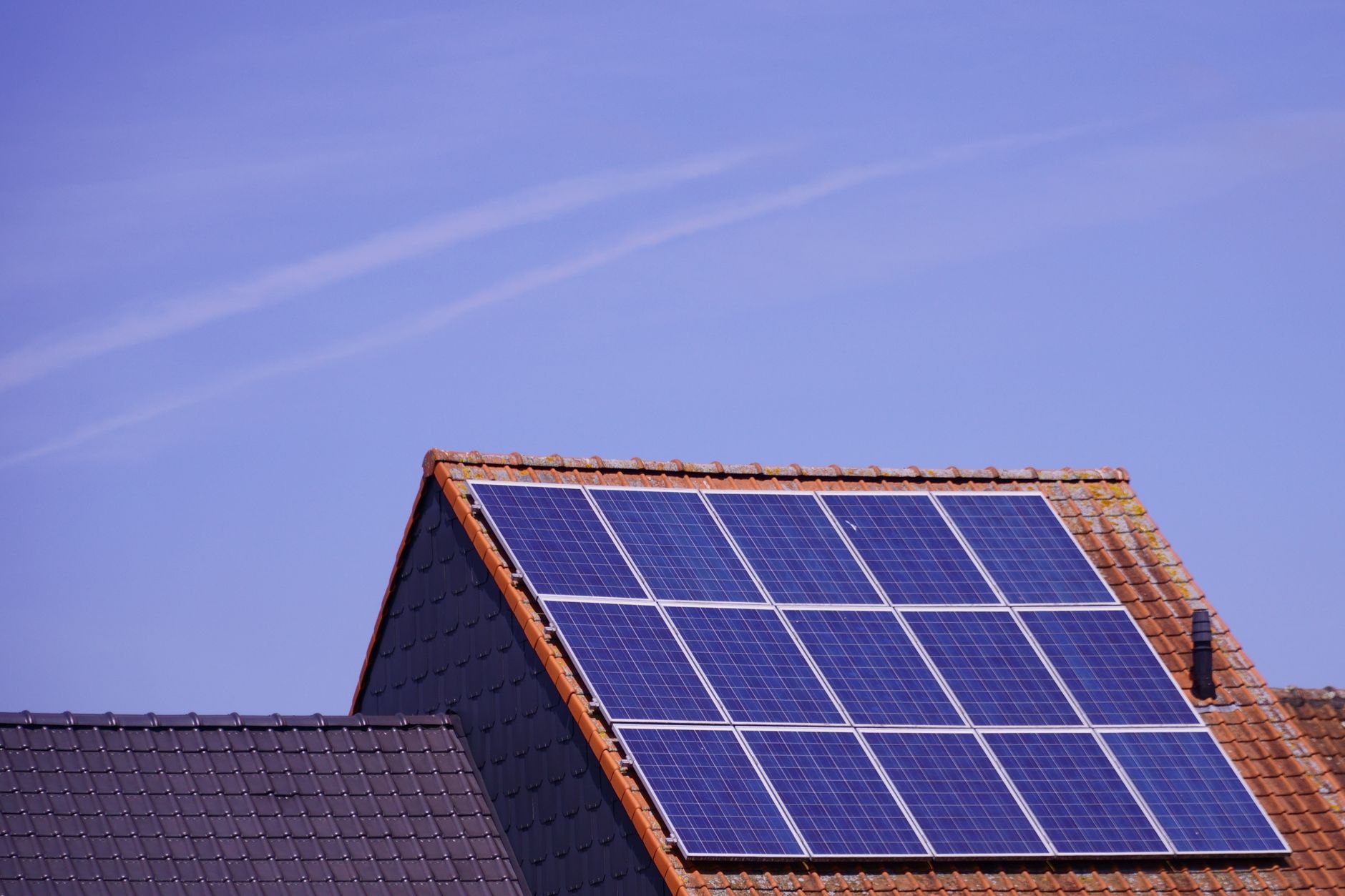
Unlock Savings: Affordable Home Solar Kits Explained
affordable home solar kits

Unlock Savings: Affordable Home Solar Kits Explained

Gain energy independence and significantly reduce your electricity bills with readily available, budget-friendly solar solutions for your home.

Find Your Solar Kit

Key Takeaways

  • ✓ Affordable home solar kits can reduce electricity bills by 50-100%.
  • ✓ Many kits qualify for federal tax credits, offering up to 30% savings.
  • ✓ DIY solar installation is feasible for many homeowners, saving on labor costs.
  • ✓ Solar panels can increase home value by an average of 4.1%.

How It Works

1
Sunlight Collection

Solar panels, typically mounted on your roof or ground, capture photons from sunlight. These photons excite electrons within the silicon cells, generating direct current (DC) electricity.

2
DC to AC Conversion

The DC electricity produced by the panels is then fed into an inverter. This crucial component converts the DC power into alternating current (AC) electricity, which is the standard form of electricity used in homes and by the utility grid.

3
Powering Your Home

The AC electricity generated by your solar system directly powers your home's appliances and electronics. If your panels produce more electricity than you're currently using, the excess can be sent back to the grid or stored in batteries.

4
Grid Connection & Net Metering

Most affordable home solar kits are grid-tied, meaning they remain connected to your utility company. Through net metering, you earn credits for excess electricity sent to the grid, which can offset future electricity usage or even result in payments from the utility.

The Rise of Affordable Home Solar Kits for Energy Independence
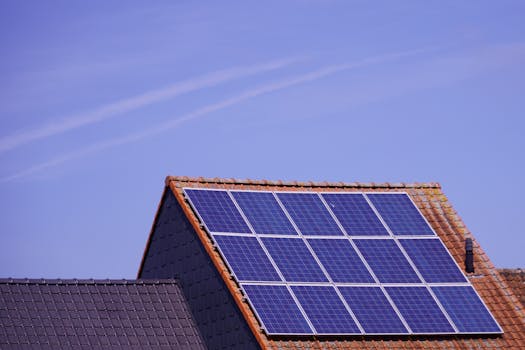
Close-up of solar panels on a tiled rooftop under a clear sky, showcasing renewable energy. Photo: Budget Bizar / Pexels
The dream of energy independence and significantly reduced utility bills was once reserved for those with substantial upfront capital. However, the landscape of renewable energy has dramatically shifted, making affordable home solar kits a tangible reality for a broader spectrum of homeowners across the United States. These kits represent a paradigm shift, democratizing access to clean, sustainable power and empowering individuals to take control of their energy consumption and costs. The technological advancements in photovoltaic (PV) cells have led to increased efficiency and decreased manufacturing costs, directly translating into more budget-friendly options for consumers. Furthermore, the growing awareness of environmental concerns and the desire to reduce carbon footprints have fueled the demand for accessible solar solutions. But what exactly constitutes an 'affordable' home solar kit? It's more than just the sticker price. Affordability encompasses the total cost of ownership, including purchase price, installation (whether DIY or professional), maintenance, and the long-term savings on electricity bills. These kits are typically designed to be less complex than custom-designed, large-scale installations, often featuring pre-engineered components and clearer instructions for a more straightforward setup. They cater to various needs, from small off-grid systems powering a cabin or RV to larger grid-tied setups designed to significantly offset or even eliminate a household's electricity bill. The beauty of these kits lies in their scalability and adaptability, allowing homeowners to start with a smaller investment and expand their system as their energy needs or budget evolve. Understanding the various components within these kits – solar panels, inverters, mounting hardware, and wiring – is the first step toward making an informed decision. While the prospect of generating your own electricity can seem daunting, the modular nature of these kits, coupled with extensive online resources and community support, makes the journey toward solar energy more accessible than ever before. This introductory exploration aims to demystify the process, highlight the undeniable benefits, and guide you through the essential considerations when embarking on your solar journey. The future of home energy is here, and it’s more affordable than you might think. Embracing solar power isn't just about saving money; it's about investing in a sustainable future and enhancing the value of your property.

Decoding the Components: What's Inside Your Solar Kit?
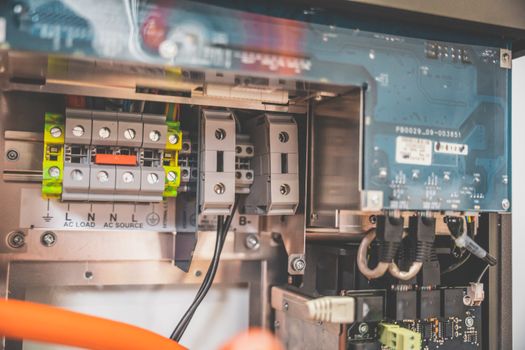
Close-up view of the internal components of a solar inverter showing electrical parts. Photo: Elite Power Group / Pexels
To truly appreciate the value and functionality of affordable home solar kits, it's crucial to understand the core components that make up these systems. Each part plays a vital role in converting sunlight into usable electricity for your home. At the heart of any solar kit are the solar panels themselves. These are typically photovoltaic (PV) panels, which are made up of numerous individual solar cells. When sunlight hits these cells, it creates an electric field, generating direct current (DC) electricity. The efficiency and durability of these panels are key factors to consider, with monocrystalline panels generally offering higher efficiency in a smaller footprint, while polycrystalline panels are often a more budget-friendly option. Modern panels are designed to withstand various weather conditions, ensuring a long operational lifespan. The next critical component is the inverter. Since solar panels produce DC electricity, and most household appliances run on alternating current (AC) electricity, an inverter is essential to convert the power. There are primarily two types of inverters commonly found in home solar kits: string inverters and microinverters. String inverters connect a series of panels together, converting the DC power from the entire string. Microinverters, on the other hand, are installed on each individual panel, converting DC to AC at the panel level. Microinverters can offer advantages in systems where panels might be shaded differently throughout the day, as the performance of one panel doesn't affect the others. They also often come with panel-level monitoring capabilities, allowing for more granular insights into system performance. The choice between these depends on your specific roof layout, potential shading issues, and budget. Mounting hardware is another indispensable part of the kit. This includes the rails, clamps, and brackets used to securely attach the solar panels to your roof or ground. High-quality mounting hardware is crucial for the longevity and safety of your system, ensuring panels remain firmly in place against strong winds and other environmental stressors. Most kits provide universal mounting systems or options tailored to common roof types (shingle, tile, metal), making the installation process more manageable for DIY enthusiasts. Wiring and electrical components, such as MC4 connectors, circuit breakers, and disconnect switches, complete the electrical pathway from the panels to the inverter and then to your home’s electrical panel. These components must meet electrical codes and standards to ensure a safe and efficient system. Some advanced kits may also include battery storage solutions, allowing you to store excess energy generated during the day for use at night or during power outages, further enhancing your energy independence. Understanding these components empowers you to select a kit that aligns with your energy needs, budget, and installation capabilities, paving the way for a successful solar integration.

Installation Insights: DIY vs. Professional for Your Affordable Solar Kit
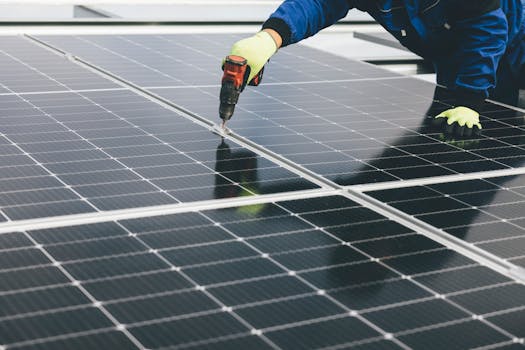
A technician uses a power tool to install solar panels, showcasing renewable energy efforts. Photo: Markus Spiske / Pexels
One of the most appealing aspects of affordable home solar kits is the potential for significant savings on installation costs, particularly if you opt for a Do-It-Yourself (DIY) approach. However, the decision between DIY and professional installation is a critical one, influenced by factors such as your technical aptitude, comfort with electrical work, local regulations, and the complexity of the kit. A DIY installation can drastically reduce the overall cost of your solar project, often saving thousands of dollars in labor fees. Many kits are specifically designed with the DIY homeowner in mind, featuring pre-assembled components, clear instructional manuals, and online video guides. If you have a strong understanding of basic electrical principles, are comfortable working on your roof, and have experience with home improvement projects, a DIY installation might be a viable and rewarding option. It allows for a deeper understanding of your system and a sense of accomplishment. Before committing to DIY, it's essential to thoroughly research local permitting requirements and electrical codes. Many jurisdictions require permits for solar installations, and some may mandate that electrical connections be inspected or even performed by a licensed electrician, regardless of whether the rest of the system is DIY. Failing to adhere to these regulations can lead to costly delays, fines, or even safety hazards. Understanding solar permits is crucial. Conversely, professional installation offers peace of mind and expertise. While it comes with a higher upfront cost, professional installers ensure that your system is correctly sized, safely installed, and compliant with all local codes and manufacturer warranties. They handle all permitting paperwork, system design, and electrical hookups, which can be particularly beneficial for grid-tied systems that require connection to the utility grid. Professional installers also often provide warranties on their workmanship, adding an extra layer of protection. For homeowners who are less comfortable with electrical work, lack the necessary tools, or simply prefer to have the job done by experts, professional installation is the recommended route. It can also be faster and more efficient, as experienced teams can complete installations in a matter of days. Some affordable home solar kits are designed with a 'hybrid' approach in mind, where homeowners can handle the mechanical mounting of panels, and a licensed electrician is brought in for the final electrical connections and grid tie-in. This can be a good compromise, balancing cost savings with safety and compliance. Regardless of your chosen path, thorough planning, understanding the scope of work, and prioritizing safety are paramount. Always consult with a qualified electrician or solar professional if you have any doubts about the electrical aspects of your installation. The goal is a safe, efficient, and compliant solar system that brings you years of clean energy and savings.

Maximizing Your Investment: Tips for Choosing the Right Affordable Solar Kit
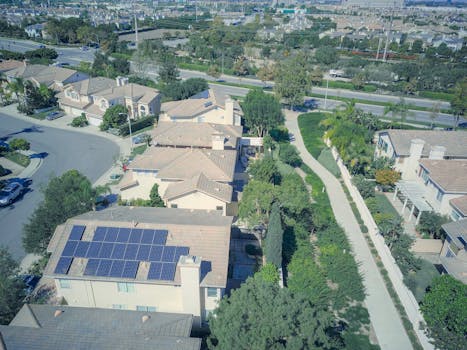
Aerial shot of suburban homes featuring solar panels and green landscapes. Photo: Kindel Media / Pexels
Selecting the best affordable home solar kit requires careful consideration of several factors beyond just the price tag. To truly maximize your investment, you need a system that meets your energy needs, fits your budget, and is compatible with your home and local regulations. Here are key tips to guide your decision-making process: * **Assess Your Energy Needs:** Begin by understanding your average daily electricity consumption. Review past electricity bills to identify your kilowatt-hour (kWh) usage. This will help you determine the appropriate size of the solar system you need. Over-sizing can lead to unnecessary costs, while under-sizing might not deliver the desired savings. Many solar calculators are available online to assist with this assessment. * **Understand Your Roof's Potential:** Evaluate your roof's orientation, pitch, and available unshaded space. South-facing roofs (in the Northern Hemisphere) with minimal shading throughout the day are ideal for solar panels. If your roof isn't optimal, ground-mounted systems might be an alternative. Kits come with different mounting options, so ensure compatibility. * **Compare Panel Efficiency and Warranty:** While affordable, don't compromise entirely on quality. Look for panels with good efficiency ratings (typically 17-22%) and robust warranties, often 25 years for performance. Higher efficiency means more power generation in a smaller footprint. A strong warranty protects your investment for decades. * **Inverter Type Matters:** Decide between string inverters, microinverters, or hybrid inverters if battery storage is a consideration. Microinverters are excellent for roofs with partial shading or for homeowners who want panel-level monitoring. String inverters are generally more cost-effective for uniform, unshaded roofs. * **Check Kit Inclusions:** Ensure the kit includes all necessary components: panels, inverter, mounting hardware, wiring, and safety disconnects. Some kits might be 'panel-only' or 'grid-tie ready' but require additional purchases for a complete setup. Read the product description meticulously. * **Research Local Incentives and Rebates:** The federal solar tax credit (ITC) can save you 30% on your system cost. Beyond federal incentives, many states and local municipalities offer additional rebates, property tax exemptions, or SRECs (Solar Renewable Energy Credits). These can significantly reduce your net cost, making even more robust kits affordable. * **Consider Expandability:** If your budget is limited now but you anticipate growing energy needs or desire for battery storage later, choose a system that allows for future expansion. This means selecting an inverter that can handle additional panels or a system design that accommodates battery integration. * **Read Reviews and Seek Recommendations:** Customer reviews offer invaluable insights into the quality of the kit, ease of installation, and responsiveness of customer support. Look for reputable brands with a track record of reliability and good service. * **Permitting and Code Compliance:** Before purchasing, research local building and electrical codes for solar installations. Some kits are easier to permit than others, and understanding requirements upfront can prevent headaches down the line. It might be wise to consult with a local electrician or solar expert regarding specific local regulations. By diligently following these tips, you can confidently navigate the market for affordable home solar kits, ensuring you select a system that delivers lasting value and contributes positively to your energy independence journey.

Comparison

FeatureBest for DIYBest for PerformanceBest for Off-Grid
Panel TypePolycrystallineMonocrystallineMonocrystalline/Flexible
Inverter TypeString InverterMicroinvertersHybrid/Charge Controller
Battery IncludedOptional
Installation ComplexityLow-MediumMediumMedium-High
Average Cost Range$4,000 - $8,000$8,000 - $15,000$5,000 - $12,000
Ideal Use CaseGrid-tied, budget-consciousMaximized output, partial shadeRemote cabins, RVs, backup power

What Readers Say

"Our affordable home solar kit was a game-changer. Installation was straightforward with the provided guides, and our electric bill dropped from $180 to under $30 a month almost immediately. It's truly empowering!"

David R. · Austin, TX

"I was skeptical about DIY solar, but this kit proved me wrong. Everything was clearly labeled, and their online support was fantastic. We're now generating most of our own power, which feels amazing."

Maria S. · Phoenix, AZ

"We installed a small grid-tied kit and saw our energy consumption from the utility drop by 60% in the first quarter. The peace of mind knowing we're contributing to a greener planet, while saving money, is priceless."

Tom L. · Portland, OR

"The kit itself is excellent value, and the panels perform well even on cloudy days. The only minor challenge was navigating the local permitting process, which required a bit more effort than I anticipated for a DIY project."

Jessica M. · Denver, CO

"As an off-grid homeowner, finding an affordable and reliable solar solution was crucial. This kit powers our entire cabin and even our well pump. It's robust, efficient, and has held up wonderfully in all seasons."

Robert K. · Rural CA

Frequently Asked Questions

What is the average cost of affordable home solar kits?

The average cost for affordable home solar kits can range widely based on system size, components, and brand. Typically, you can expect to pay anywhere from $4,000 to $15,000 for a complete kit designed to significantly offset or eliminate your home's electricity bill, before considering any tax credits or incentives. Smaller, off-grid kits for specific applications might be less, while larger, more efficient grid-tied systems will be at the higher end.

Are affordable solar kits reliable and durable?

Yes, modern affordable solar kits are generally very reliable and durable. Most solar panels come with performance warranties of 20-25 years, guaranteeing a certain output over that period. Inverters and other electrical components typically have warranties ranging from 5-12 years. High-quality kits are designed to withstand harsh weather conditions, offering a long lifespan and consistent performance.

How do I know what size solar kit my home needs?

To determine the right size, you need to calculate your average daily or monthly electricity consumption (in kWh) from your utility bills. Multiply this by the number of peak sun hours in your location (available online) to estimate the system size needed. Many online solar calculators can help with this, or you can consult with a solar professional for a precise assessment based on your specific energy usage and goals.

Can I install an affordable home solar kit myself?

Many affordable home solar kits are designed for DIY installation, especially for mechanically inclined homeowners. However, while you might handle the mounting of panels, local regulations often require a licensed electrician to perform the final electrical connections to your home's main panel and the utility grid. Always check local permitting and electrical codes before starting a DIY project to ensure compliance and safety.

How do affordable solar kits compare to custom-installed solar systems?

Affordable solar kits are typically more budget-friendly due to standardized components and the option for DIY installation, saving on labor costs. Custom-installed systems, while more expensive, offer tailored design, professional installation, and often handle all permitting and paperwork, which can be ideal for complex roofs or homeowners who prefer a hands-off approach. Kits offer a balance of cost-effectiveness and accessibility for many homeowners.

Who should consider using affordable home solar kits?

Affordable home solar kits are ideal for homeowners who are budget-conscious, have a suitable roof or property for solar panels, and are comfortable with a DIY or hybrid installation approach. They are also great for those seeking energy independence, looking to reduce their carbon footprint, or wanting to significantly lower their monthly electricity bills. Off-grid kits are perfect for cabins, RVs, or remote properties.

What are the main safety considerations for installing a solar kit?

Safety is paramount during solar kit installation. Key considerations include working at heights (if roof-mounting), handling electrical components (always disconnect power), and ensuring all wiring is correctly installed according to electrical codes. Using proper personal protective equipment (PPE), following manufacturer instructions meticulously, and consulting with or hiring a licensed electrician for electrical connections are crucial to prevent accidents and ensure a safe, compliant system.

What future trends might impact the affordability and accessibility of solar kits?

Future trends such as continued advancements in panel efficiency, further reductions in manufacturing costs, and innovations in battery storage technology are expected to make solar kits even more affordable and accessible. Increased governmental incentives, the development of more user-friendly smart home integration, and the expansion of community solar programs will also likely contribute to solar energy becoming a standard feature in more homes.

Embrace the power of the sun and take control of your energy future today. Explore the diverse range of affordable home solar kits available and start your journey towards significant savings and energy independence. Your home, your power, your planet.

Topics: affordable home solar kitsDIY solar powerresidential solar panelssolar energy solutionshome energy independence
Leo List

DK Escorts LU Escorts AT Escorts SE Escorts FI Escorts CH Escorts DE Escorts HR Escorts IE Escorts GR Escorts CZ Escorts NO Escorts BE Escorts FR Escorts SI Escorts IL Escorts NL Escorts PL Escorts HU Escorts ES Escorts IT Escorts PT Escorts SK Escorts RO Escorts ZA Escorts UY Escorts US Escorts UK Escorts NZ Escorts AU Escorts
Brampton weed
Adultwork EstrelaBet Vai de Bet R7 Bet Betão Galera Bet Rainbet Bet9ja Shop SportyBet BetKing Sisal Loto Foot Hollywoodbets YesPlay Odibets RushBet Jugabet BetWarrior BetCity MSport betPawa Fortebet