✓ The average upfront cost for a residential solar system in the US can range from $15,000 to $25,000 before incentives.
✓ The federal Investment Tax Credit (ITC) offers a 30% tax credit for solar systems installed through 2032.
✓ Solar loans allow homeowners to own their system from day one, often with competitive interest rates.
✓ Power Purchase Agreements (PPAs) and leases enable homeowners to go solar with little to no upfront cost, paying for the electricity produced.
How It Works
1
Assess Your Energy Needs & Home Suitability
Understand your current electricity consumption and determine if your roof is suitable for solar installation. This initial assessment guides system size and potential savings.
2
Obtain Multiple Solar Quotes
Contact several reputable solar installers to get detailed proposals. Compare system designs, equipment, warranties, and, crucially, financing options offered.
3
Evaluate Financing Models
Carefully review the various residential solar financing options available, including cash purchase, loans, leases, and PPAs. Consider your financial goals, tax situation, and desire for ownership.
4
Secure Financing & Installation
Once you choose a financing option and installer, finalize agreements and schedule the installation. Your chosen financing will dictate how payments are structured and when they begin.
Understanding the Landscape of Residential Solar Financing Options
Photo: Budget Bizar / Pexels
Transitioning to solar energy for your home in the United States is not just an environmental choice; it's a significant financial decision that can offer substantial long-term savings. However, the initial investment can seem daunting. Fortunately, a robust ecosystem of residential solar financing options has evolved, making solar power accessible to a broad spectrum of homeowners. Understanding these options is the first critical step toward harnessing the sun's power for your household. This comprehensive guide will break down the primary financing avenues, helping you navigate the complexities and select the path that best aligns with your financial situation and energy goals.
The upfront cost of a solar panel system can vary widely based on system size, equipment quality, and local labor rates, typically ranging from $15,000 to $25,000 before any incentives are applied. This figure, while substantial, is offset by various mechanisms designed to reduce the burden. The most impactful of these is the federal Investment Tax Credit (ITC), often referred to as the solar tax credit. This credit allows homeowners to deduct a significant percentage (currently 30% through 2032) of the cost of installing a new solar energy system from their federal taxes. This alone can shave thousands off the net cost, making solar a far more attractive proposition. Beyond the federal incentive, many states, municipalities, and even utility companies offer additional incentives, rebates, or performance-based payments that can further reduce costs or provide ongoing income. Exploring these local solar incentives is crucial for maximizing your savings.
The core residential solar financing options fall into two broad categories: ownership models and third-party ownership models. Ownership models, primarily cash purchases and solar loans, put you in direct control of the system, allowing you to reap all the financial benefits, including the ITC and increased home value. Third-party ownership, encompassing solar leases and Power Purchase Agreements (PPAs), involves a solar company owning and maintaining the system on your property, with you paying for the electricity or the lease itself. Each model comes with its own set of advantages and disadvantages concerning upfront costs, long-term savings, maintenance responsibilities, and eligibility for incentives. Your choice will depend on factors like your credit score, tax appetite, desired level of involvement, and how quickly you want to see a return on investment. We will delve into each of these options in detail, providing you with the knowledge to make an informed decision for your home's energy future. The goal is to demystify the process, ensuring that the dream of going solar is within reach for more American households.
Ownership Models: Loans and Cash Purchases for Solar Panels
Photo: MARIANNE RIXHON / Pexels
For homeowners who prefer to own their solar energy system outright, there are two primary residential solar financing options: a cash purchase or a solar loan. Both methods offer distinct advantages, primarily centered around maximizing financial returns and enjoying complete control over your energy production. A cash purchase is the most straightforward option. By paying for the entire system upfront, homeowners avoid interest payments and immediately own the asset. This allows them to claim the full federal Investment Tax Credit (ITC) and any state or local incentives directly, often recovering a significant portion of their investment within the first few years. Furthermore, cash buyers benefit from the highest long-term savings on electricity bills, as they pay nothing for the power generated after installation. The absence of monthly payments for the system itself, combined with drastically reduced or eliminated utility bills, translates into substantial savings over the system's 25-30 year lifespan. While requiring a significant upfront capital outlay, a cash purchase offers the quickest path to ROI and the greatest overall financial benefit.
Solar loans, on the other hand, provide an excellent pathway to ownership for those who don't have the immediate capital for a cash purchase but still want to harness the full benefits of solar ownership. These loans are specifically designed for solar installations and can come from various sources, including banks, credit unions, and specialized solar lenders. They typically offer competitive interest rates and repayment terms, often ranging from 10 to 20 years. Similar to a mortgage, you make regular monthly payments on the loan. The key advantage here is that you own the system from day one, making you eligible for the federal ITC and any other applicable incentives. In many cases, the monthly loan payment, combined with a significantly reduced utility bill, can be less than or comparable to your previous monthly electricity expenses, leading to immediate or near-immediate savings. Over time, as the loan is paid off, your energy costs plummet, leading to substantial long-term savings. Solar loans can be secured (using the solar system or your home as collateral) or unsecured, with interest rates often varying based on your creditworthiness and the loan type. Choosing a solar loan allows you to build equity in your home with a valuable asset, potentially increasing its resale value. It’s crucial to shop around for the best loan terms, comparing interest rates, fees, and repayment schedules to find the option that best suits your financial plan. Many homeowners find this a balanced approach, allowing them to benefit from ownership without the large upfront expenditure of a cash purchase. This flexibility makes solar loans one of the most popular residential solar financing options available today.
Third-Party Ownership: Leases and Power Purchase Agreements (PPAs)
Photo: Dhruvan Patel / Pexels
For homeowners who prefer to avoid the upfront costs and maintenance responsibilities associated with solar ownership, third-party ownership models – specifically solar leases and Power Purchase Agreements (PPAs) – offer compelling residential solar financing options. These models allow you to benefit from solar energy with little to no money down, making the transition to clean energy highly accessible. The fundamental difference between these and ownership models is that a third-party company, typically the solar installer or a financing partner, owns and maintains the solar panel system installed on your roof. This arrangement removes the financial barrier of a large initial investment and shifts the responsibility for system performance and maintenance away from the homeowner.
A solar lease involves paying a fixed monthly fee to the solar company for the use of the solar panels on your property. This fee is generally predictable and often lower than your previous utility bill, leading to immediate savings. Lease terms typically range from 15 to 25 years. Under a lease agreement, the solar company is responsible for all aspects of the system, including installation, monitoring, maintenance, and repairs. They also claim the federal Investment Tax Credit and other incentives, as they are the system owners. While you don't directly benefit from these incentives, the lower monthly lease payments often reflect the company's ability to leverage them. At the end of the lease term, you typically have options to renew the lease, purchase the system at its fair market value, or have the company remove it. This model is ideal for homeowners who want to reduce their electricity bills without any upfront cost or the hassle of system ownership. You essentially rent the solar panels, enjoying the clean energy benefits without the capital investment. For those exploring affordable energy solutions, leases present a clear and simple path.
Power Purchase Agreements (PPAs) are similar to leases in that a third-party owns and maintains the solar system on your property, and there's typically no upfront cost. However, instead of paying a fixed monthly lease payment, under a PPA, you agree to purchase the electricity generated by the solar panels at a predetermined rate per kilowatt-hour (kWh). This rate is usually lower than your utility company's standard rates, guaranteeing savings on your electricity bill. PPA rates can be fixed for the entire term or include a small annual escalator (e.g., 1-3%) to account for inflation, which is still typically below historical utility rate increases. Like leases, the solar company handles all aspects of installation, maintenance, and repairs, and they claim the federal ITC and other incentives. PPAs are particularly attractive because they align your payment directly with your energy consumption from the solar system, making it easy to see the direct financial benefit. Both leases and PPAs can simplify the switch to solar, especially for homeowners who may not qualify for attractive loan terms or prefer not to deal with tax credits and maintenance. They offer a predictable path to lower energy costs and contribute to a greener environment without the complexities of ownership.
Comparing Options and Important Considerations for Residential Solar Financing
Photo: Robert So / Pexels
Choosing the right residential solar financing option involves weighing several critical factors. Beyond the direct financial implications, homeowners must consider their long-term goals, tax situation, and desired level of responsibility. For those considering a cash purchase or a solar loan, the primary benefit is ownership. Owning your system means you directly receive the federal Investment Tax Credit (ITC), state incentives, and any Solar Renewable Energy Credits (SRECs) if applicable in your region. This maximizes your financial return over the system's lifespan. Additionally, a fully owned solar system significantly increases your home's value, often recovering more than the initial investment at the time of sale. You also have complete control over your energy production and can make future upgrades or modifications as you see fit. However, these options require a substantial upfront investment (cash) or a commitment to monthly loan payments, and you are responsible for any maintenance or repairs beyond warranty coverage.
Conversely, solar leases and Power Purchase Agreements (PPAs) are designed for minimal upfront cost and maximum convenience. These third-party ownership models eliminate the need for a large initial investment, making solar accessible to a broader audience. The solar company handles all installation, maintenance, and repairs, providing peace of mind. You typically benefit from lower monthly energy costs from day one, with predictable payments. The trade-off is that you do not own the system, meaning the solar company claims the ITC and other incentives. While your home value may still increase due to lower utility bills, it won't be to the same extent as owning the system outright. Additionally, transferring a lease or PPA to a new homeowner during a sale can sometimes add a layer of complexity, although many providers have streamlined this process. It's crucial to understand the contract terms thoroughly, including any annual escalators in PPA rates or lease payments, and end-of-term options.
Here are key considerations when evaluating residential solar financing options:
* **Upfront Cost Tolerance:** How much are you willing or able to pay initially? Cash and loans require more, while leases/PPAs require little to none.
* **Tax Appetite:** Do you have enough tax liability to fully utilize the federal ITC and other tax benefits? Ownership models allow you to claim these directly.
* **Long-Term Savings vs. Immediate Savings:** Ownership typically offers greater long-term savings, while third-party models provide more immediate, predictable savings.
* **Home Value Impact:** Owned systems generally add more value to your home.
* **Maintenance Responsibility:** Are you comfortable with potential maintenance or prefer the solar company to handle it?
* **Contract Length & Flexibility:** Understand the duration of the agreement and options for early termination or transfer.
* **Credit Score:** A good credit score is essential for securing favorable loan terms or qualifying for leases/PPAs.
* **Local Incentives:** Research state, local, and utility-specific incentives that might sway your decision toward one option over another. These can significantly alter the financial landscape.
Comparison
Feature
Cash Purchase
Solar Loan
Solar Lease / PPA
Upfront Cost
High
Low to None
None
System Ownership
Yes
Yes
No (Third-Party)
Federal ITC Eligibility
Yes (Homeowner)
Yes (Homeowner)
No (Third-Party claims)
Maintenance Responsibility
Homeowner
Homeowner
Third-Party
Electricity Savings Potential
Highest
High
Moderate to High
Increased Home Value
Significant
Significant
Moderate
Typical Contract Length
N/A
10-20 Years
15-25 Years
What Readers Say
★★★★★
"Using a solar loan was the perfect residential solar financing option for us. We got our panels installed with no money down, and our monthly payment plus the reduced electric bill is less than what we used to pay for electricity alone. It's been a fantastic investment!"
Sarah J. · Austin, TX
★★★★★
"We opted for a solar PPA and couldn't be happier. The process was seamless, we didn't pay anything upfront, and our electricity bills are consistently lower. It's great to know we're using clean energy without the ownership responsibilities."
Michael D. · San Diego, CA
★★★★★
"After researching all residential solar financing options, we decided to pay cash. The 30% tax credit made a huge difference, and now our electric bill is literally zero most months. The ROI has been incredible."
Emily R. · Denver, CO
★★★★★
"Our solar lease has been good. We save money every month, and the company handles all the maintenance, which is a huge plus. The only drawback is not getting the tax credit directly, but the convenience makes up for it."
David L. · Orlando, FL
★★★★★
"We chose a secured solar loan, and the interest rate was very competitive. The entire process, from application to installation, was straightforward. It's empowering to own our energy production and contribute to a greener future."
Jessica M. · Boston, MA
Frequently Asked Questions
What is the best residential solar financing option for me?
The 'best' option depends entirely on your financial situation, tax appetite, and desire for ownership. If you have significant upfront capital and tax liability, a cash purchase or solar loan can maximize long-term savings. If you prefer no upfront costs and minimal responsibility, a lease or PPA might be ideal. It's crucial to get quotes for all options and compare the total costs and benefits over the system's lifespan.
Will solar panels increase my home's value?
Yes, studies consistently show that owned solar panel systems significantly increase home value. The exact increase varies by region, system size, and energy savings, but it's often more than the initial investment. Leased or PPA systems can also make your home more attractive due to lower utility bills, though the direct impact on appraisal value might be less than owned systems.
How do I qualify for a solar loan?
Qualifying for a solar loan typically requires a good credit score (generally 650+), a stable income, and a low debt-to-income ratio. Lenders will also assess your home's suitability for solar and the overall project cost. Interest rates and loan terms will vary based on your creditworthiness and the type of loan (secured vs. unsecured).
Are there hidden fees with residential solar financing options?
Reputable solar financing options should be transparent about all costs. However, it's crucial to read contracts carefully. Look for details on origination fees, dealer fees (often rolled into the loan principal), annual escalators in PPA/lease agreements, and potential fees for early termination or system removal. Always ask for a clear breakdown of all costs before signing.
How do solar leases and PPAs compare to buying electricity from the utility?
Both solar leases and PPAs offer predictable, often lower, rates for electricity compared to traditional utility bills. Unlike utility bills, which can fluctuate wildly, lease payments are fixed, and PPA rates are locked in or have a small, predictable escalator. This provides cost stability and insulation from rising utility rates, making budgeting easier and often leading to immediate savings.
Who should consider third-party ownership (leases/PPAs) for solar?
Third-party ownership is ideal for homeowners who want to go solar with no upfront costs, prefer to avoid maintenance responsibilities, or don't have the tax liability to fully utilize the federal ITC. It's also a good option for those who plan to move within a few years, as transferring a lease or PPA can sometimes be simpler than selling a home with an owned system.
What happens if my solar panels don't produce enough energy?
With owned systems (cash/loan), you bear the risk of underperformance, though reputable installers offer production guarantees. With leases and PPAs, the solar company is typically responsible for system performance. Many PPA contracts include a production guarantee, meaning if the system doesn't generate the promised amount of electricity, you may receive a credit or adjustment to your bill. Ensure this is clearly outlined in your contract.
What are the future trends in residential solar financing?
Future trends include continued innovation in loan products, potentially lower interest rates as solar becomes more mainstream, and the integration of solar with battery storage financing. Community solar programs, where you own a share of a larger off-site solar farm, are also growing, offering another avenue for those who can't install panels on their own roofs. Expect more flexible and customized financing solutions.
Embarking on your solar journey is a smart financial and environmental decision. By thoroughly understanding the diverse residential solar financing options available, you can confidently choose the path that best suits your needs, ensuring a brighter, more sustainable future for your home. Don't let upfront costs deter you – explore these options and unlock the power of the sun today.
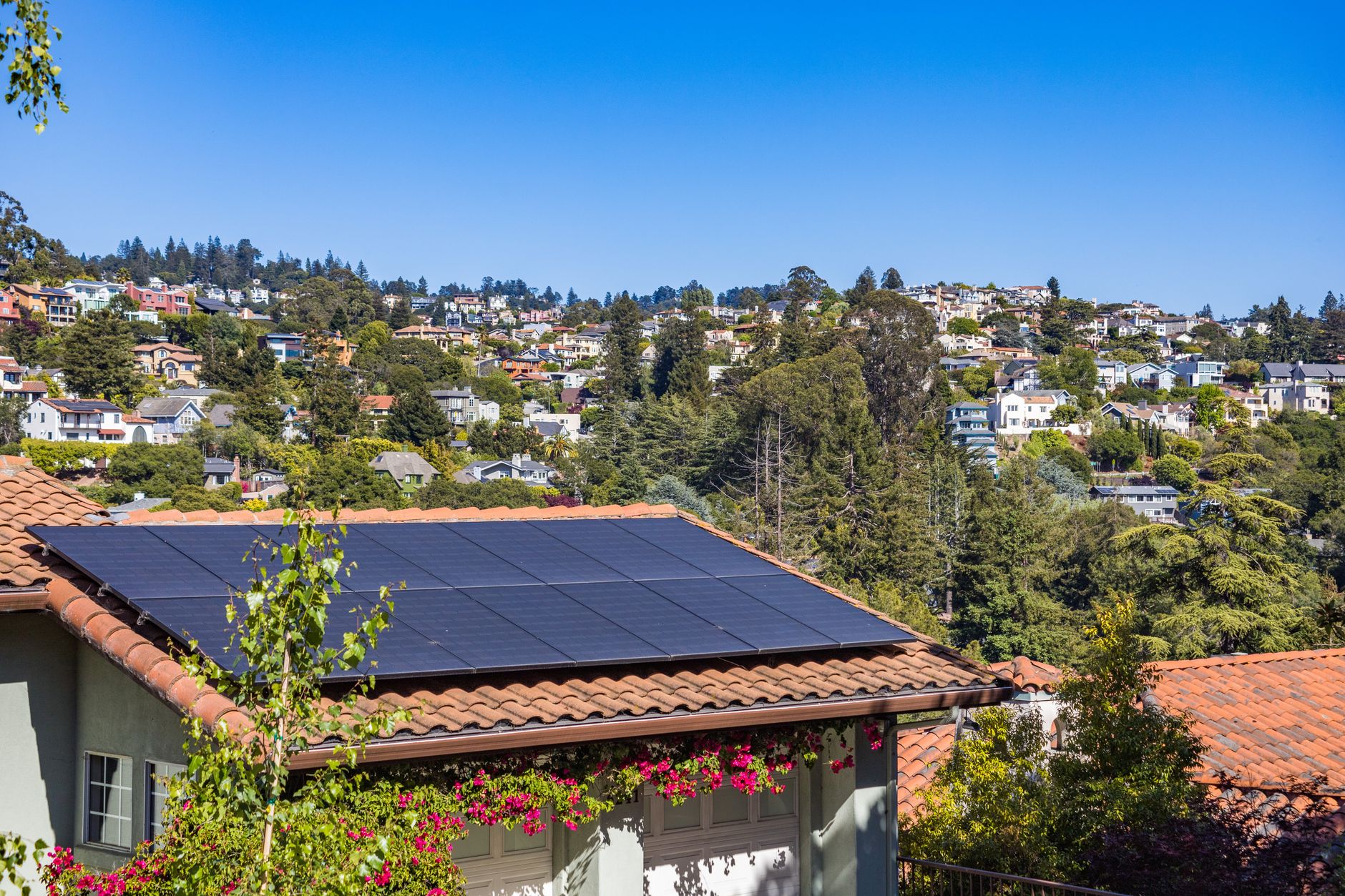
 Photo: Budget Bizar / Pexels
 Photo: MARIANNE RIXHON / Pexels
 Photo: Dhruvan Patel / Pexels
 Photo: Robert So / Pexels