✓ Most EV owners charge at home, saving time and money.
✓ There are three main levels of EV charging, with Level 2 being ideal for home use.
✓ Installation costs vary significantly based on your home's electrical panel and wiring.
✓ Federal, state, and local incentives can significantly reduce the cost of purchasing and installing an EV charger.
✓ Smart chargers offer advanced features like scheduling and energy monitoring.
How It Works
1
Assess Your Needs
Determine your daily driving range, vehicle charging port, and budget. This will help you choose the right charger level and features.
2
Evaluate Home Electrical System
Consult with a qualified electrician to check your electrical panel capacity. This is crucial for safely installing a Level 2 charger.
3
Select a Charger
Choose between Level 1 (standard outlet) or Level 2 (240V outlet) chargers, considering charging speed and smart features. Research different brands and models.
4
Arrange Professional Installation
Hire a licensed electrician for Level 2 charger installation to ensure safety and compliance with local codes. They will handle wiring and mounting.
Understanding EV Charging Levels: What You Need Before You Buy Electric Car Charger
Photo: Reinhard Bruckner / Pexels
Before you decide to buy an electric car charger, it's absolutely crucial to understand the different charging levels available and what each entails for your daily driving habits and home infrastructure. This foundational knowledge will empower you to make an informed decision that aligns with your needs and budget. In the United States, EV charging is generally categorized into three levels: Level 1, Level 2, and Level 3 (DC Fast Charging). While Level 3 is primarily found at public charging stations due to its high power requirements and cost, Level 1 and Level 2 are the two most relevant options for home charging.
Level 1 charging is the simplest and most accessible form of EV charging. It uses a standard 120-volt AC outlet, the same type you use for most household appliances. The charging equipment typically comes with your electric vehicle, often called an 'EVSE' (Electric Vehicle Supply Equipment). This method requires no special installation beyond plugging into an existing wall socket. The primary advantage of Level 1 charging is its universal availability and lack of additional cost for equipment or installation. However, its main drawback is speed. Level 1 charging delivers approximately 2-5 miles of range per hour of charging. For many EV owners with short commutes or plug-in hybrids, this might be sufficient for overnight charging, but for those with longer daily drives or larger battery EVs, it can be painfully slow, often taking 24 hours or more for a full charge. It's an excellent fallback option or for occasional top-ups, but not ideal as a primary charging solution for most full battery electric vehicles.
Level 2 charging is where home charging truly becomes practical and convenient for the vast majority of EV owners. This level uses a 240-volt AC outlet, similar to what powers a clothes dryer or electric oven. It requires dedicated EVSE hardware, which is the 'electric car charger' you'll be looking to buy. Level 2 chargers typically deliver between 12-80 miles of range per hour, with common home units providing 25-40 miles per hour. This means a full charge for most EVs can be achieved overnight, usually within 4-10 hours, depending on the vehicle's battery size and the charger's power output. The benefits of Level 2 are immense: significantly faster charging than Level 1, making it practical for daily use; increased convenience, as you wake up to a full battery; and often more efficient charging, which can lead to lower electricity costs over time. The main considerations for Level 2 are the upfront cost of the charger itself and the installation costs, which involve running a dedicated 240V circuit from your electrical panel to the charging location. It's essential to have a qualified electrician assess your home's electrical capacity to ensure it can safely support a Level 2 charger. Understanding these distinctions is the first critical step before you delve into specific models and features. For more insights into optimizing your home energy, explore our guide on home energy efficiency.
Key Factors to Consider When You Buy Electric Car Charger
Photo: Kindel Media / Pexels
Once you've grasped the fundamentals of charging levels, several other key factors come into play when you're ready to buy an electric car charger. These considerations will help you narrow down your options and select a unit that perfectly matches your lifestyle, vehicle, and home setup. Thinking through these points proactively can save you time, money, and potential headaches down the line.
First and foremost is compatibility with your electric vehicle. While most EVs sold in North America use the J1772 connector for Level 1 and Level 2 AC charging, Tesla vehicles utilize a proprietary connector. However, Tesla includes a J1772 adapter with their vehicles, allowing them to use standard Level 2 chargers. If you own a Tesla, you might consider a Tesla Wall Connector for seamless integration, but a standard J1772 charger with the adapter works just fine. Always double-check the connector type of your vehicle to ensure the charger you purchase is compatible.
Next, consider the charging speed and power output. Level 2 chargers come in various amperage ratings, typically ranging from 16 amps to 80 amps. A higher amperage means faster charging, but it also requires a larger circuit breaker and potentially thicker wiring, impacting installation costs. Your vehicle's onboard charger also has a maximum charging rate, so buying an 80-amp charger for a car that can only accept 48 amps won't make it charge any faster. A good balance for most homes and EVs is a 32-amp to 48-amp charger, which provides a substantial charge rate without excessive electrical upgrades. Think about your daily driving habits: do you need to fully recharge every night, or just top up a smaller amount of range?
Cable length and mounting options are practical considerations. Chargers come with varying cable lengths, usually between 18 and 25 feet. Measure the distance from your planned charger location to your EV's charging port when parked to ensure the cable will comfortably reach. As for mounting, most home chargers are wall-mounted, but some offer pedestal options for outdoor installations or specific garage layouts. Decide whether you prefer a hardwired unit (permanently connected to your home's electrical system) or a plug-in unit (which requires a 240V NEMA outlet, like a NEMA 14-50).
Finally, don't overlook smart features. Many modern EV chargers are 'smart' chargers, meaning they can connect to your home Wi-Fi network and offer advanced functionalities via a smartphone app. These features can include scheduling charging sessions to take advantage of off-peak electricity rates, monitoring energy usage, receiving charging notifications, and even integrating with smart home systems or utility demand response programs. While not strictly necessary for charging, these smart features can enhance convenience, provide valuable data, and potentially save you money on electricity over time. They add a layer of sophistication that can significantly improve your home charging experience.
Installation, Costs, and Incentives: Making Your Purchase Seamless
Photo: Andersen EV / Pexels
The decision to buy an electric car charger extends beyond just selecting the unit itself; it encompasses crucial aspects like professional installation, understanding the total costs involved, and leveraging available incentives. These elements collectively determine the overall feasibility and affordability of setting up home EV charging. Addressing them upfront will ensure a seamless transition to powering your EV at home.
Professional installation is non-negotiable for Level 2 chargers. While Level 1 simply plugs into a standard outlet, Level 2 requires a dedicated 240-volt circuit, which involves complex electrical work. This is not a DIY project. You'll need to hire a licensed and qualified electrician who has experience with EV charger installations. The electrician will assess your home's existing electrical panel to determine if it has sufficient capacity to support the new circuit. If your panel is old or lacks capacity, an upgrade might be necessary, which will add to the installation cost. They will then run the necessary wiring from your electrical panel to the desired charger location, install a circuit breaker, and mount the charger unit. It's vital to obtain multiple quotes from different electricians and ensure they are familiar with local electrical codes and permitting requirements. Proper installation guarantees safety, efficiency, and compliance.
When calculating the total cost to buy an electric car charger, break it down into two main components: the cost of the EVSE unit and the cost of installation. EVSE units for Level 2 home charging typically range from $400 to $800, though some advanced or higher-powered models can exceed $1,000. Installation costs are highly variable and can range from a few hundred dollars to several thousand. Factors influencing installation cost include the distance between your electrical panel and the charger location, the need for trenching if the charger is far from the panel or outdoors, the complexity of wiring, and whether your electrical panel requires an upgrade. For example, a simple installation in a garage adjacent to the electrical panel might cost $500, while a more complex job requiring a panel upgrade and extensive wiring could easily reach $2,000-$3,000 or more. Always get a detailed estimate from your electrician.
Fortunately, there are numerous incentives available that can significantly offset these costs, making the decision to buy an electric car charger more attractive. At the federal level in the US, the Alternative Fuel Vehicle Refueling Property Credit (IRS Form 8911) offers a tax credit for qualified EV charging equipment installed in your home. This credit covers 30% of the cost of the charger and installation, up to a maximum of $1,000. This is a substantial saving that many homeowners overlook. Beyond federal incentives, many states, local municipalities, and even utility companies offer additional rebates or tax credits for EV charger purchases and installations. These can vary widely by location. For instance, some states might offer direct rebates of several hundred dollars, while utilities might provide incentives for smart chargers or participation in demand response programs. It's crucial to research the specific incentives available in your region. Websites like the Alternative Fuels Data Center (AFDC) from the U.S. Department of Energy are excellent resources for finding up-to-date information on state and local incentives. Leveraging these programs can dramatically reduce your out-of-pocket expenses, making home charging an even more cost-effective solution in the long run. Don't forget to check out resources on renewable energy options for further savings.
Common Mistakes to Avoid When You Buy Electric Car Charger
Photo: Giant Asparagus / Pexels
Navigating the process to buy an electric car charger can be straightforward if you're well-informed, but it's also easy to fall into common pitfalls that can lead to unnecessary expenses, frustration, or even safety hazards. Being aware of these mistakes beforehand can save you significant time and money.
One of the most frequent mistakes is underestimating your home's electrical capacity. Many older homes, or even newer ones not specifically designed for EV charging, may have electrical panels that lack the spare capacity for a new 240-volt circuit. Trying to install a Level 2 charger without a proper electrical assessment can lead to tripped breakers, overloaded circuits, or, in severe cases, electrical fires. Always consult a qualified electrician first to determine if your panel needs an upgrade. Don't assume your panel can handle it; verify it.
Another common error is purchasing a charger that doesn't match your EV's onboard charger capabilities. As mentioned earlier, your EV's onboard charger dictates the maximum AC charging rate your car can accept. If your car has a 7.7 kW (32 amp) onboard charger, buying an 11.5 kW (48 amp) or higher charger won't make your car charge any faster. You'll be paying more for a charger that's overkill for your specific vehicle, and potentially for a more expensive installation with thicker wiring and a larger circuit breaker. Research your car's specifications carefully before making a purchase.
Ignoring the cable length and placement is another mistake. Imagine buying a beautiful new charger only to find the cable doesn't quite reach your car's charging port when parked in your preferred spot. This often leads to awkward parking maneuvers, or worse, stretching the cable unsafely. Before purchase, measure the distance from your intended charger mounting spot to where your car's charging port will be. Consider different parking orientations and choose a charger with an adequate cable length, typically 20-25 feet is a safe bet for most garages.
Here's a list of other mistakes to avoid:
* **Forgetting about future-proofing:** While your current EV might have a certain charging rate, you might upgrade to a vehicle with faster charging capabilities in the future. Consider installing a circuit with a higher amperage (e.g., a 60-amp circuit for a 48-amp charger) even if your current EV doesn't fully utilize it. This can save you from costly electrical upgrades later.
* **Not researching local incentives:** Failing to check for federal, state, and local rebates or tax credits means leaving money on the table. These incentives can significantly reduce the overall cost of your charger and its installation.
* **Attempting DIY installation for Level 2:** This is a major safety hazard and can void warranties or insurance policies. Always hire a licensed and experienced electrician for Level 2 charger installation.
* **Ignoring smart features:** While not essential, skipping smart chargers means missing out on potential electricity bill savings through off-peak charging, energy monitoring, and convenient scheduling. These features add significant value.
* **Not considering outdoor rating:** If you plan to install your charger outdoors or in an exposed area, ensure it has an appropriate NEMA rating (e.g., NEMA 3R or 4) for weather resistance. Indoor-only chargers will degrade quickly outdoors.
By being mindful of these common mistakes, you can ensure a smooth, safe, and cost-effective process when you buy an electric car charger for your home.
Comparison
Feature
Level 2 (Hardwired)
Level 2 (Plug-in)
Level 1 (Standard)
Charging Speed
Fast (25-40 miles/hr)
Fast (25-40 miles/hr)
Slow (2-5 miles/hr)
Installation
Professional electrician required
Professional electrician for outlet
Plug-and-play
Cost (Charger Unit)
$500 - $1000+
$400 - $800
$0 (included with EV)
Cost (Installation)
$500 - $3000+
$300 - $1500
$0
Portability
Permanent
Semi-portable
Portable
Electrical Requirement
Dedicated 240V circuit
Dedicated 240V NEMA outlet
Standard 120V outlet
Smart Features
✓
✓
✗
Future-proofing
Excellent
Good
Limited
What Readers Say
★★★★★
"Deciding to buy an electric car charger for my Tesla was the best decision. The ease of waking up to a full battery every morning has eliminated range anxiety completely. Installation was smooth with a local electrician."
Sarah J. · Austin, TX
★★★★★
"I chose a 40-amp Level 2 charger, and it's perfect for my Chevy Bolt. It charges much faster than the Level 1 cord that came with the car. The convenience alone makes the investment worthwhile."
Mark D. · Seattle, WA
★★★★★
"After researching how to buy an electric car charger, I found a smart charger that integrates with my utility. I'm saving money by scheduling charges during off-peak hours, and my electricity bill has actually gone down slightly thanks to optimization."
Emily R. · Denver, CO
★★★★★
"The process to buy an electric car charger and get it installed was a bit more involved than I expected due to needing a panel upgrade. However, the federal tax credit helped a lot, and now having home charging is incredibly convenient."
David L. · Miami, FL
★★★★★
"As a busy professional, I needed reliability. My new Level 2 charger means no more detours to public stations. It's a game-changer for daily commutes and weekend trips with my family."
Jessica M. · Chicago, IL
Frequently Asked Questions
What is the best type of electric car charger to buy for home use?
For most EV owners, a Level 2 (240-volt) electric car charger is the best choice for home use. It offers a significant speed increase over Level 1 charging, allowing for a full charge overnight, which is crucial for daily driving convenience. While Level 1 is available, its slow speed makes it less practical for primary charging of full battery electric vehicles.
Is it expensive to install an electric car charger at home?
Installation costs for a Level 2 electric car charger can vary widely, typically ranging from $500 to $3,000+. Factors like the distance from your electrical panel, the need for trenching, and whether your panel requires an upgrade all influence the final price. However, federal tax credits and various state/local incentives can significantly reduce these costs, making it more affordable than many expect.
How do I know if my home's electrical system can handle an EV charger?
The only way to definitively know if your home's electrical system can handle a Level 2 EV charger is to have a qualified, licensed electrician conduct an assessment. They will check your electrical panel's capacity and determine if any upgrades are necessary to safely install a dedicated 240-volt circuit for the charger. This step is critical for safety and system integrity.
Are there any government incentives or rebates when I buy an electric car charger?
Yes, absolutely! The federal Alternative Fuel Vehicle Refueling Property Credit (IRS Form 8911) offers a tax credit of 30% of the cost of the charger and installation, up to $1,000. Additionally, many states, local municipalities, and utility companies offer their own rebates, tax credits, or grant programs for EV charger purchases and installations. It's highly recommended to research incentives specific to your region.
What's the difference between a hardwired and a plug-in EV charger?
A hardwired EV charger is permanently connected to your home's electrical system, offering a clean, dedicated installation. A plug-in charger, on the other hand, plugs into a specific 240-volt NEMA outlet (like a NEMA 14-50), making it slightly more portable and potentially easier to install if the outlet is already present. Both offer similar charging speeds, but installation requirements differ.
Who should buy an electric car charger for their home?
Anyone who owns an electric vehicle and has access to off-street parking should strongly consider buying an electric car charger for their home. It offers unparalleled convenience, cost savings by charging during off-peak hours, and ensures your vehicle is always ready for your next trip, eliminating reliance on public charging infrastructure for daily needs.
Is it safe to install an EV charger at home?
Yes, it is perfectly safe to install an EV charger at home, provided it is done correctly by a licensed and experienced electrician. They will ensure the installation meets all local electrical codes and safety standards, properly sizing circuits and breakers to prevent hazards. Attempting a DIY installation for Level 2 charging is strongly discouraged and unsafe.
Will EV charging technology change rapidly, making my charger obsolete?
While EV technology is evolving, Level 2 AC charging standards (J1772 connector for most, Tesla adapter for Tesla) have been stable for many years and are unlikely to become obsolete for home use in the near future. Chargers are designed to be compatible with a wide range of current and future EVs. You can buy an electric car charger with confidence that it will serve you well for many years.
Ready to embrace the convenience and savings of home EV charging? Use this guide to confidently buy an electric car charger that fits your needs. Start enjoying a fully charged electric vehicle every morning.
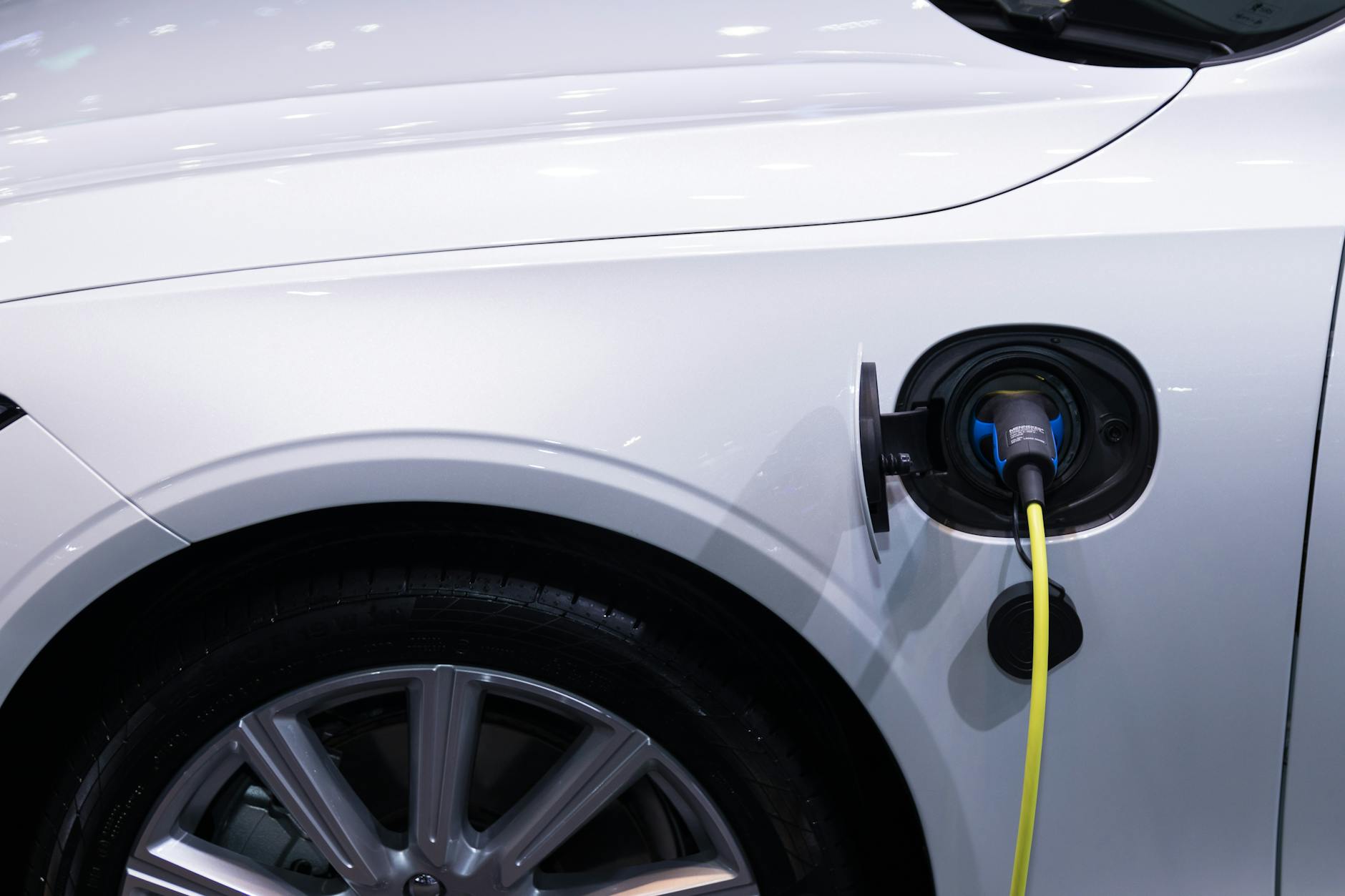
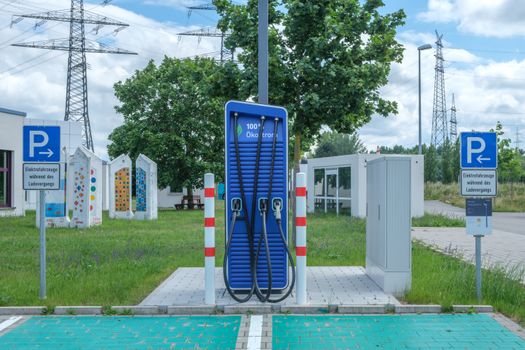 Photo: Reinhard Bruckner / Pexels
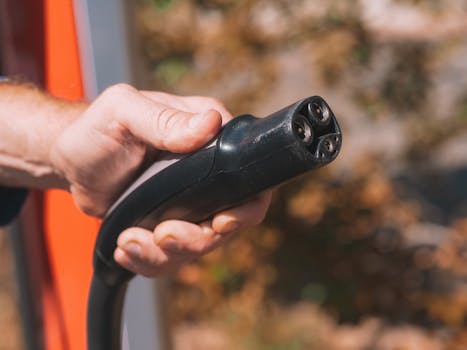 Photo: Kindel Media / Pexels
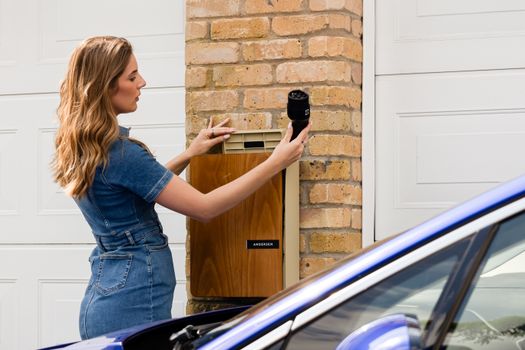 Photo: Andersen EV / Pexels
 Photo: Giant Asparagus / Pexels