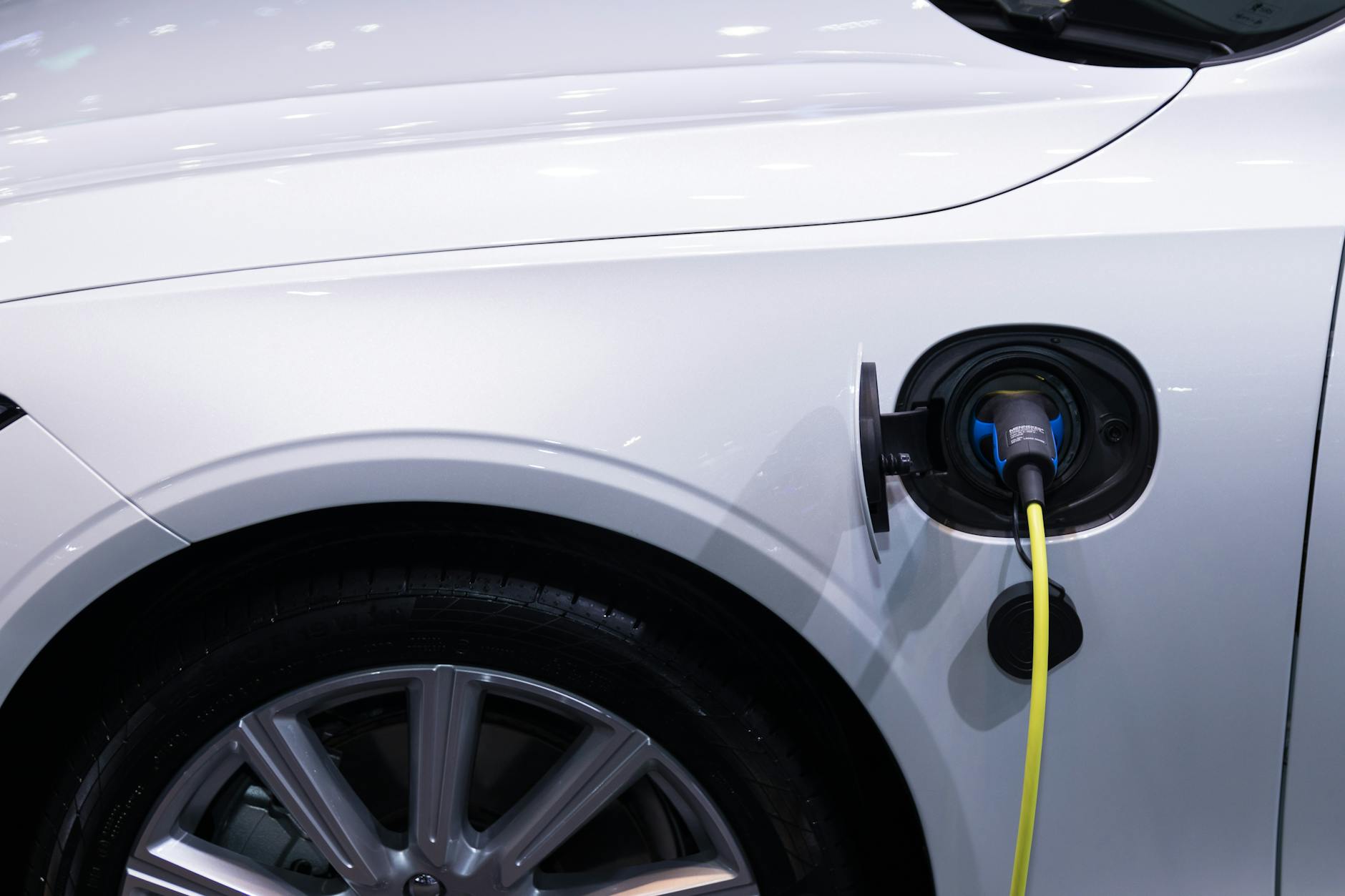
Find Electric Vehicle Charging Stations Near Me: Your Ultimate Guide
electric vehicle charging stations near me

Find Electric Vehicle Charging Stations Near Me: Your Ultimate Guide

Unlock hassle-free EV ownership by mastering how to find and utilize nearby charging infrastructure.

Find Your Next Charge

Key Takeaways

  • ✓ Over 160,000 public EV charging ports exist in the US.
  • ✓ Level 2 chargers are the most common public option.
  • ✓ DC Fast Chargers can add 80% range in 20-60 minutes.
  • ✓ Multiple apps and in-car navigation systems help locate stations.

How It Works

1
Identify Your Charging Needs

Determine if you need Level 1 (slow, overnight), Level 2 (common, hours), or DC Fast Charging (rapid, minutes) based on your vehicle and urgency. Your car's battery size and current charge level will dictate charging time.

2
Utilize Charging Apps & Navigation

Download popular EV charging apps like ChargePoint, Electrify America, or PlugShare, or use your vehicle's built-in navigation system. These tools provide real-time availability, connector types, and pricing information.

3
Locate and Navigate to a Station

Select a convenient charging station from the app or navigation system. Confirm the station is operational and compatible with your EV's connector type (e.g., J1772, CCS, CHAdeMO, NACS). Follow directions to the location.

4
Initiate and Monitor Charging

Once at the station, follow the instructions on the charger screen or app to start the session. This often involves tapping an RFID card, using the app, or scanning a QR code. Monitor your charge status via the app or your car's display.

Understanding the Landscape of Electric Vehicle Charging Stations Near Me
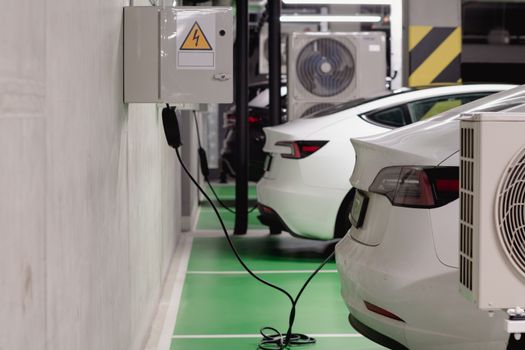
Electric vehicles charging at an indoor station in a modern underground garage. Photo: Jakub Zerdzicki / Pexels
The journey to electric vehicle ownership is exciting, but for many, the initial concern revolves around charging infrastructure. The good news is that the United States is experiencing a rapid expansion in electric vehicle charging stations, making it easier than ever to find a power source for your EV. Understanding the different types of chargers and networks is the first step to confidently navigating this evolving landscape. When you search for "electric vehicle charging stations near me," you're likely to encounter a mix of Level 2 and DC Fast Chargers. Level 2 chargers, often found in public parking lots, workplaces, and retail centers, are the most ubiquitous public charging option. They typically deliver 6-10 kW of power, meaning they can add approximately 20-30 miles of range per hour of charging. This makes them ideal for situations where your car will be parked for a few hours, such as during a workday or while shopping. Most public Level 2 chargers use the J1772 connector, which is standard for all EVs sold in North America (Tesla vehicles use an adapter). These stations are incredibly convenient for topping up your battery and extending your daily range without requiring a long stop. Think of them as the gas station equivalent for shorter, more frequent fills. For those longer trips or when you need to get back on the road quickly, DC Fast Chargers (also known as Level 3 chargers) are your go-to. These powerful stations can deliver anywhere from 50 kW to over 350 kW, capable of adding 80% of a vehicle's range in as little as 20-60 minutes, depending on the car and charger. DC Fast Chargers are typically located along major highways, at dealerships, and in dedicated charging hubs. The common connectors for DC Fast Charging are CCS (Combined Charging System), CHAdeMO (primarily for older Japanese EVs), and increasingly, the North American Charging Standard (NACS) for Tesla and now many other brands. It's crucial to check your vehicle's compatibility and the station's connector type before planning a stop. The proliferation of these faster chargers is a game-changer for long-distance EV travel, alleviating range anxiety and making cross-country journeys more feasible than ever before. The growth of renewable energy sources also plays a significant role in making these charging options more sustainable. Beyond just the physical chargers, understanding the charging networks is equally important. Companies like ChargePoint, Electrify America, EVgo, and Blink operate vast networks of public chargers. Each network often has its own app, payment system, and pricing structure. While some stations are interoperable, meaning you can use one network's app to activate another's charger, others require specific accounts. Many modern EVs integrate these networks directly into their navigation systems, simplifying the process of finding and using "electric vehicle charging stations near me." The rapid expansion and increasing standardization within these networks are continuously improving the user experience, making public charging more reliable and accessible for all EV drivers.

Navigating Apps and Locators to Find Electric Vehicle Charging Stations Near Me
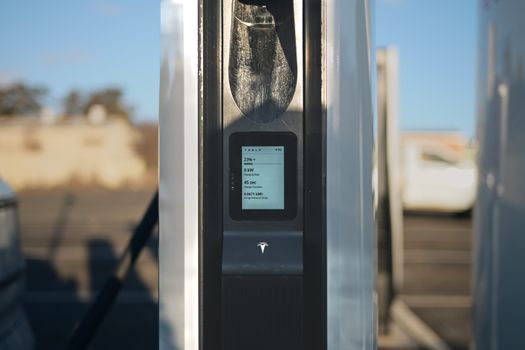
Close-up view of an electric vehicle charging station located outdoors in Yass, NSW, Australia. Photo: Harry Tucker / Pexels
In the digital age, finding electric vehicle charging stations near me is often as simple as pulling out your smartphone or checking your car's infotainment system. A suite of powerful applications and in-car navigation tools has been developed specifically to address the needs of EV drivers, providing real-time information that is crucial for a seamless charging experience. These platforms are far more than just maps; they are comprehensive guides to the charging ecosystem. Leading the pack are dedicated EV charging apps like PlugShare, ChargePoint, Electrify America, and EVgo. PlugShare is often considered the gold standard, offering a crowdsourced map that includes virtually every public charging station, regardless of network. Users can filter by connector type, charging speed, and even user reviews, which provide invaluable insights into the station's reliability and user experience. ChargePoint and Electrify America, on the other hand, are apps primarily for their respective networks but also show other compatible stations. These apps often allow you to start and stop charging sessions, view pricing, and track your charging history, streamlining the entire process. Many modern electric vehicles also come equipped with sophisticated built-in navigation systems that integrate charging station data directly. Tesla's Supercharger network is seamlessly integrated into their vehicles' navigation, automatically routing drivers to available chargers and preconditioning the battery for optimal charging speed. Other manufacturers, like Ford (with FordPass) and General Motors (with MyChevrolet), offer similar integrated solutions that tap into broader charging networks. These in-car systems are incredibly convenient, as they eliminate the need to switch between devices and can often factor in your current range and destination to suggest optimal charging stops. When using these tools, pay close attention to several key pieces of information. Firstly, check the connector type to ensure compatibility with your vehicle. Secondly, verify the charging speed (kW) to match your urgency. Thirdly, look at the real-time availability status, as some popular stations can have wait times. Many apps also show pricing per kWh or per minute, allowing you to compare costs. Finally, user reviews and photos can offer a practical perspective on the station's condition, safety, and amenities nearby. By leveraging these advanced digital tools, finding and utilizing electric vehicle charging stations near me becomes a stress-free part of your EV ownership experience, transforming potential anxiety into informed decision-making.

Maximizing Your Charging Experience: Tips for Finding the Best Electric Vehicle Charging Stations Near Me
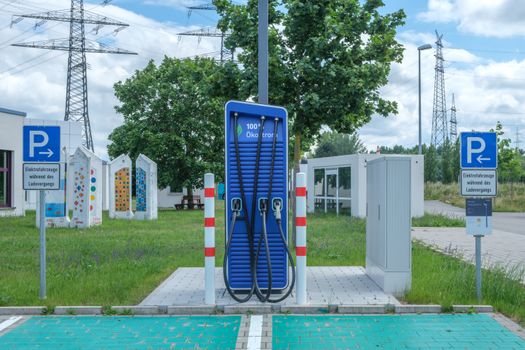
Public charging station with eco-friendly design for electric vehicles. Photo: Reinhard Bruckner / Pexels
Finding electric vehicle charging stations near me is one thing; finding the *best* ones for your specific needs is another. With a little planning and strategic thinking, you can significantly enhance your EV charging experience, saving time, money, and avoiding frustration. The key lies in understanding your charging habits, your vehicle's capabilities, and the nuances of the public charging infrastructure. Learning about smart grid technologies can also provide insights into future charging optimizations. One of the most important tips is to plan ahead, especially for longer trips. Don't wait until your battery is nearly depleted to start looking for a charger. Use your preferred charging app or in-car navigation to identify potential charging stops along your route well in advance. This allows you to compare options, check reviews, and even call ahead to confirm availability or report issues if necessary. For daily commutes, identify reliable Level 2 chargers near your workplace, grocery store, or gym where you can top up while already parked. This opportunistic charging minimizes dedicated charging stops. Become familiar with your vehicle's charging curve. Not all EVs charge at the same rate, and most DC Fast Chargers slow down significantly after reaching 80% state of charge to protect the battery. Knowing this can help you decide whether to charge to 100% (if time isn't critical) or stop at 80% and move on to the next charger, saving time during long journeys. For example, if a charger is 150 kW, your car might only accept that rate for a portion of the charge cycle. Consider signing up for memberships or accounts with the networks you use most frequently. Many networks offer discounted rates for members, which can add up to significant savings over time. Some also provide RFID cards that simplify the activation process, eliminating the need to fumble with your phone in adverse weather. Also, explore destination charging options. Many hotels, restaurants, and attractions offer free or low-cost Level 2 charging as an amenity for their patrons. These can be excellent opportunities to charge while enjoying other activities, effectively making charging time productive time. Finally, always have a backup plan. While public charging infrastructure is improving, outages, broken chargers, or occupied stalls can happen. Identify a secondary charging option nearby in case your primary choice isn't available. This proactive approach ensures you're never left stranded. By implementing these strategies, you'll transform the search for "electric vehicle charging stations near me" from a potential chore into a seamless and efficient part of your EV lifestyle.

Common Mistakes to Avoid When Searching for Electric Vehicle Charging Stations Near Me
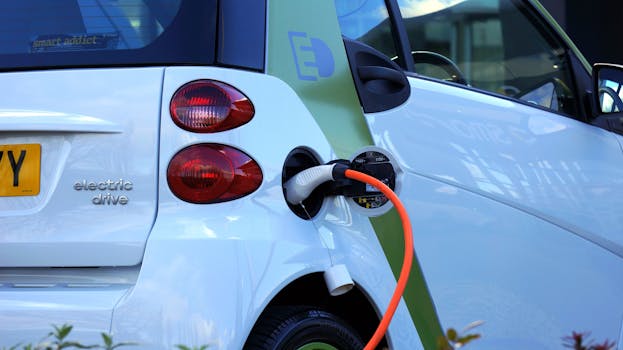
Close-up of an electric car being charged, highlighting eco-friendly transportation. Photo: Mike Bird / Pexels
While the process of finding and using electric vehicle charging stations near me has become significantly easier, there are still common pitfalls that new and even experienced EV owners can encounter. Avoiding these mistakes can save you time, money, and a great deal of frustration, ensuring a smoother and more enjoyable electric driving experience. **1. Not Checking Connector Compatibility:** This is perhaps the most frequent mistake. Just because a station is listed doesn't mean it has the right plug for your car. Always verify the connector type (J1772, CCS, CHAdeMO, NACS) shown in the app matches your vehicle's port before you drive to the location. Arriving at a station only to find an incompatible plug is a wasted trip. **2. Ignoring Real-Time Availability:** Public charging stations, especially DC Fast Chargers, can sometimes be busy. Relying solely on a station's existence without checking its real-time status (available, in use, out of order) can lead to long waits or detours. Always use apps that provide live updates on charger availability and functionality. **3. Underestimating Charging Time:** While DC Fast Chargers are quick, they aren't instant. Misjudging the time it takes to get a sufficient charge, especially when relying on Level 2 chargers, can throw off your schedule. Factor in the charging speed (kW) and your desired State of Charge (SoC) to estimate how long you'll need to be plugged in. **4. Not Having the Right Payment Method:** Different charging networks often require specific apps, RFID cards, or credit card readers. Arriving without the necessary payment method can prevent you from initiating a charge. Ensure you have accounts set up for the networks you plan to use and that your payment information is current. **5. Blocking Charging Spots:** This isn't a mistake in finding a charger, but a common courtesy lapse. Avoid parking in an EV charging spot if you're not actively charging. Also, move your vehicle once it's fully charged (or sufficiently charged for your needs) to free up the spot for others, especially at popular or limited stations. **6. Relying on a Single Charger Location:** Charger reliability can vary. A station might be temporarily offline, damaged, or occupied. Always have a mental (or actual) backup plan for an alternative charging location nearby, especially on long trips or in less populated areas. **7. Forgetting Your Adapter (for Tesla owners):** While Tesla Superchargers are proprietary, many Tesla owners use J1772 adapters to access Level 2 public chargers. Forgetting this adapter limits your charging options significantly. By being mindful of these common errors, you can significantly streamline your public charging experience and ensure that finding and using electric vehicle charging stations near me is always a smooth process.

Comparison

FeaturePlugShareChargePointElectrify AmericaIn-Car Nav (OEM)
Network CoverageAll networks (crowdsourced)Primarily ChargePoint + partnersElectrify America networkOEM-specific + partners
Real-time Availability✓ (user reports)✓ (variable)
Pricing Info✓ (user reports)✗ (often links to app)
Payment Integration✗ (links to network app)✗ (often links to app)
User Reviews
Route Planning

What Readers Say

"Using PlugShare has completely changed how I find electric vehicle charging stations near me. I love the user reviews and photos; they've saved me from driving to broken chargers multiple times. It's truly indispensable for my daily commute and weekend trips."

Sarah J. · Austin, TX

"Electrify America's app for finding electric vehicle charging stations near me is fantastic. The charging speeds are always consistent, and the app is intuitive for starting and stopping sessions. Their network has made cross-state travel in my EV a breeze."

Mark D. · Seattle, WA

"I used to have range anxiety, but now finding electric vehicle charging stations near me is so easy. My car's built-in navigation integrates seamlessly with ChargePoint, and I've saved over $300 in gas in the past six months. Highly recommend going electric!"

Jessica L. · Miami, FL

"While most electric vehicle charging stations near me are great, sometimes I wish the pricing was more transparent across all networks. Still, the convenience of topping up while at the grocery store or gym far outweighs any minor issues."

Robert K. · Denver, CO

"As a ride-share driver, finding reliable electric vehicle charging stations near me quickly is critical. The ChargePoint network has been incredibly dependable, and I appreciate the ability to reserve a charger sometimes. It keeps my business running smoothly."

Emily P. · Chicago, IL

Frequently Asked Questions

What are the main types of electric vehicle charging stations near me?

There are primarily two types: Level 2 (AC) chargers, which are common for slower, overnight or multi-hour charging, and DC Fast Chargers (Level 3), which offer rapid charging for quicker top-ups on the go. Level 1 chargers exist but are typically for home use.

Is it difficult to find an electric vehicle charging station when I'm on a road trip?

Not at all. With the proliferation of charging apps like PlugShare and dedicated network apps (ChargePoint, Electrify America, EVgo), and integrated in-car navigation systems, finding stations along major routes is quite easy. Planning ahead is key for long trips.

How do I pay for charging at public electric vehicle charging stations near me?

Payment methods vary by network. Most require you to download their specific app and link a payment method (credit card, Apple Pay, Google Pay). Some also offer RFID cards for tap-to-charge convenience, and a few still accept direct credit card payments at the station.

Are electric vehicle charging stations near me expensive to use?

The cost varies significantly. Some public Level 2 chargers are free (often at businesses), while others charge per kWh or per minute. DC Fast Chargers are generally more expensive due to their speed. Membership plans with networks can often provide discounted rates.

How does public EV charging compare to gasoline refueling in terms of time?

Public EV charging typically takes longer than a gas refill. While DC Fast Chargers can add significant range in 20-60 minutes, Level 2 chargers require several hours. The convenience comes from charging opportunistically while your car is parked anyway, rather than dedicated stops.

Who should use electric vehicle charging stations near me?

Anyone who owns an electric vehicle and needs to charge away from home, or who doesn't have a dedicated home charging solution. This includes commuters, long-distance travelers, apartment dwellers, and those seeking quick top-ups during daily errands.

Are public electric vehicle charging stations safe to use?

Yes, public charging stations are designed with safety in mind, adhering to industry standards. However, as with any public space, it's always wise to be aware of your surroundings, especially at night. Most stations are well-lit and located in busy areas.

What's the future outlook for electric vehicle charging stations near me?

The future is bright. We can expect continued rapid expansion of both Level 2 and DC Fast Chargers, increased standardization of connectors, and greater integration of charging networks within vehicle navigation systems. More renewable energy integration will also make charging greener.

Ready to embrace the electric revolution with confidence? Use this guide to effortlessly locate and utilize electric vehicle charging stations near me, making range anxiety a thing of the past. Start exploring your local charging options today and drive into a cleaner, more connected future.

Topics: electric vehicle charging stations near meEV charging networkspublic EV chargingcharging station locatorelectric car charging
Leo List
Brampton weed
Adultwork EstrelaBet Vai de Bet R7 Bet Betão Galera Bet Rainbet Bet9ja Shop SportyBet BetKing Sisal Loto Foot Hollywoodbets YesPlay Odibets RushBet Jugabet BetWarrior BetCity MSport betPawa Fortebet