Best Energy Providers US Reviews: Find Your Perfect Plan
best energy providers US reviews

Best Energy Providers US Reviews: Find Your Perfect Plan

Unlock savings and reliable service by comparing the leading US energy providers for your home or business.

Compare Providers Now

Key Takeaways

  • ✓ Energy deregulation allows consumers in many states to choose their electricity provider, leading to competitive pricing.
  • ✓ Fixed-rate plans offer price stability, while variable-rate plans can fluctuate with market conditions.
  • ✓ Renewable energy options are increasingly popular, offering environmental benefits and sometimes competitive rates.
  • ✓ Customer service, billing transparency, and contract terms are crucial factors beyond just the price per kWh.

How It Works

1
Understand Your Energy Needs

Review your past electricity bills to understand your average monthly consumption. Consider your home size, appliance usage, and future plans.

2
Research Available Providers

Utilize online comparison tools and read comprehensive reviews to identify providers operating in your specific zip code. Look for companies with strong reputations.

3
Compare Plans and Rates

Evaluate different plan types (fixed, variable, green energy) and their associated rates, fees, and contract lengths. Pay close attention to early termination clauses.

4
Make Your Selection and Switch

Once you've chosen a provider and plan, the new company will typically handle the switching process. Ensure you understand the start date and final bill from your previous provider.

Navigating the Deregulated Energy Market in the US
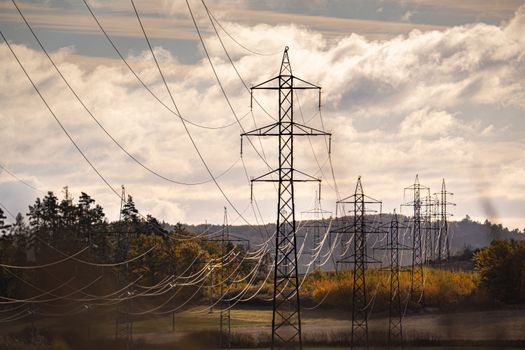
Electric pylons stretch across a picturesque autumn landscape, under a dramatic sky. Photo: Jiří Dočkal / Pexels
The US energy market is a complex landscape, particularly with the advent of deregulation in many states. For consumers seeking the best energy providers US reviews, understanding this fundamental shift is paramount. Historically, a single utility company owned the entire infrastructure – from power generation to transmission and distribution – and was your sole option for electricity. However, deregulation, initiated in the 1990s, aimed to foster competition, lower prices, and encourage innovation by separating these functions. In deregulated states, while the local utility still maintains the poles and wires (transmission and distribution), consumers have the power to choose their electricity supplier – the company that generates or purchases the electricity you use. This distinction is critical because it means you can shop around for the best rates, terms, and even renewable energy options, rather than being beholden to a single provider. This newfound choice can be empowering but also overwhelming. With dozens of providers vying for your business, each offering a myriad of plans, how do you cut through the noise to find truly the best energy providers US reviews? It begins with knowing your state's status. States like Texas, Pennsylvania, Ohio, New York, and Illinois are largely deregulated, offering a wealth of choices. Conversely, states like California, Florida, and most of the Mountain West remain regulated, meaning your local utility is still your only option for supply. Even within deregulated states, the degree of competition and the types of plans available can vary significantly by region and even by zip code. Understanding these nuances is the first step towards making an informed decision. When evaluating potential providers, it's not just about the lowest price per kilowatt-hour (kWh). Transparency in billing, customer service reputation, contract terms, and the availability of green energy options all play a crucial role in determining overall value and satisfaction. A provider might offer an attractive introductory rate, but hide numerous fees or have a notoriously difficult customer service line. This is where comprehensive reviews and comparison tools become invaluable, helping you see beyond the initial offer. Furthermore, the concept of a 'best' provider is subjective; what's ideal for a single-person apartment with low usage might be entirely unsuitable for a large family home with high energy demands. We'll delve deeper into these factors, equipping you with the knowledge to discern which providers truly stand out in the competitive US energy market. For more insights into how different energy sources impact your choices, check out our guide on understanding energy sources.

Key Factors When Comparing Top US Energy Providers

Three assorted LED and CFL light bulbs against a light blue background. Photo: Riki Risnandar / Pexels
When sifting through the numerous options to find the best energy providers US reviews, it's essential to look beyond just the advertised rate. A truly informed decision involves evaluating several key factors that collectively determine the value and suitability of an energy plan for your specific needs. **1. Rate Structure and Plan Type:** This is often the first point of comparison. * **Fixed-Rate Plans:** Offer price stability, locking in a per-kWh rate for the duration of your contract (e.g., 12, 24, 36 months). This protects you from market fluctuations but may come with early termination fees. These are excellent for budget predictability. * **Variable-Rate Plans:** The per-kWh rate changes monthly based on market conditions. While they can sometimes be lower than fixed rates during periods of low demand, they carry the risk of significant price spikes. They often have no cancellation fees, offering flexibility. * **Indexed Plans:** Rates are tied to a publicly available index, offering a degree of transparency but still subject to market swings. * **Time-of-Use (TOU) Plans:** Rates vary by the time of day, with higher prices during peak demand hours and lower prices during off-peak hours. These are beneficial if you can shift your energy consumption to off-peak times. **2. Contract Length and Terms:** Most plans come with a contract, typically ranging from 6 to 36 months. Understand the renewal process – does it automatically switch to a variable rate or renew at a new fixed rate? Crucially, investigate early termination fees. These can be substantial and negate any savings if you need to move or switch providers before your contract expires. **3. Renewable Energy Options (Green Plans):** Many providers now offer plans that source a percentage or even 100% of your electricity from renewable sources like solar, wind, or hydro. While sometimes slightly more expensive, the premium is often minimal and aligns with environmental values. Look for certifications like Green-e. **4. Customer Service and Reputation:** A low rate means little if you can't get assistance when you need it. Check reviews on independent sites, the Better Business Bureau (BBB), and state public utility commission complaints. Look for providers with high ratings for responsiveness, helpfulness, and ease of issue resolution. **5. Fees and Charges:** Beyond the per-kWh rate, scrutinize all other charges. These can include monthly service fees, minimum usage fees, connection fees, and late payment penalties. Some providers are more transparent about these than others. Always compare the 'Effective Rate' which includes all charges, not just the base energy rate. **6. Billing and Payment Options:** Evaluate the ease of understanding bills, online account management features, auto-pay options, and mobile apps. Some providers offer budget billing, which averages your payments over the year to prevent seasonal spikes. By meticulously comparing these factors, you can move beyond simple price comparisons and identify the best energy providers US reviews that truly meet your financial, environmental, and service expectations.

In-Depth Reviews of Leading Energy Providers Across the US

A modern two-story home with solar panels on its roof under a clear blue sky. Photo: Robert So / Pexels
To provide truly comprehensive best energy providers US reviews, we must examine some of the key players that consistently appear in top rankings across various deregulated markets. It's important to note that provider availability varies by state and even by specific utility service area, so always verify if a provider serves your location. **1. Reliant Energy (Texas):** As one of the largest retail electricity providers in Texas, Reliant offers a vast array of plans, including fixed-rate, variable-rate, time-of-use, and numerous renewable energy options. Their strong points often include a wide selection of plans to suit different lifestyles (e.g., plans with free nights or weekends), robust online account management, and a significant presence in the community. Customer service reviews are generally positive, though like any large provider, experiences can vary. They are often praised for their smart home integration and innovative energy management tools. However, some reviews mention potential complexity in choosing the right plan due to the sheer volume of options, and some of their more premium plans can be pricier. **2. Constellation Energy (Multiple States):** Operating in numerous deregulated markets including Texas, Pennsylvania, Ohio, Maryland, and Illinois, Constellation is a major player known for its diverse portfolio of plans. They are particularly strong in offering fixed-rate plans, providing price certainty, and have a significant focus on renewable energy options, including specific solar and wind plans. Their customer service often receives good marks for responsiveness and professionalism. Constellation also frequently provides energy management insights and tools to help customers reduce consumption. Potential downsides can include slightly higher rates on some plans compared to aggressive smaller competitors, and some customers have noted that their contract terms can be quite strict regarding early termination. **3. Direct Energy (Multiple States):** With a footprint across many deregulated states, Direct Energy is another prominent provider. They are known for their competitive pricing, especially for introductory fixed-rate plans, and a wide variety of product offerings, including specific plans tailored for electric vehicle owners or those seeking smart thermostat bundles. Direct Energy often provides attractive sign-up bonuses or incentives. Their online presence and mobile app are generally user-friendly. Customer reviews are mixed, with many praising their competitive rates, while some express concerns over billing clarity or the auto-renewal process if not carefully monitored. It's crucial to read their plan details meticulously. **4. Green Mountain Energy (Multiple States):** For environmentally conscious consumers, Green Mountain Energy is a standout choice. As one of the oldest and largest renewable energy retailers, they specialize exclusively in plans powered by 100% renewable sources like wind and solar. They operate in Texas, Pennsylvania, New York, and other markets. Their commitment to sustainability is unwavering, and they often engage in environmental advocacy. Customer service is generally well-regarded, focusing on transparency and support for green living. The primary consideration for some might be that their rates can sometimes be slightly higher than traditional fossil-fuel-based plans, reflecting the premium for renewable energy, though this gap has narrowed significantly. For those prioritizing environmental impact, Green Mountain consistently ranks high in best energy providers US reviews. For further reading on sustainable living, explore our article on eco-friendly home improvements. **5. Rhythm Energy (Texas):** A newer, tech-forward provider gaining traction, particularly in Texas. Rhythm Energy emphasizes transparent pricing, no hidden fees, and highly competitive fixed-rate plans, often with 100% renewable energy included by default. They boast a modern, easy-to-use digital platform and strong customer service, often highlighted in recent reviews for their helpfulness and quick resolutions. Their plans are often straightforward, avoiding complex structures. As a newer entrant, their service area is more limited, primarily focusing on Texas, and they may not have the same brand recognition as older, larger players. However, their customer-centric approach is making them a strong contender. When reviewing these providers, always remember to input your specific zip code on their websites to see the plans available in your area, as offerings can differ dramatically. Furthermore, check recent customer reviews specific to your region, as service quality can vary locally.

Avoiding Common Pitfalls When Choosing an Energy Provider

Love sign made of black plastic cubes with letters placed near magnifying glass on bright yellow background Photo: Ivan Babydov / Pexels
Selecting the best energy providers US reviews can be a straightforward process if you're well-informed, but it's also easy to fall into common traps. Being aware of these pitfalls can save you money, frustration, and ensure you truly get the best deal. **1. Focusing Solely on the Lowest Advertised Rate:** This is perhaps the most common mistake. A provider might advertise an incredibly low per-kWh rate, but this rate could be contingent on very specific usage tiers, subject to numerous hidden fees, or only applicable for the first month. Always look at the 'Effective Rate' which includes all charges, and read the Electricity Facts Label (EFL) or plan summary thoroughly. **2. Ignoring Contract Terms and Early Termination Fees:** Many attractive fixed-rate plans come with contract lengths of 12, 24, or 36 months. If you need to move or wish to switch providers before your contract is up, early termination fees (ETFs) can be hundreds of dollars. Understand these clauses before signing. Variable-rate plans often don't have ETFs, offering more flexibility, but at the cost of price certainty. **3. Not Understanding Variable Rate Risks:** While variable rates offer flexibility, they can lead to significant bill spikes during periods of high demand (e.g., hot summers, cold winters) or market volatility. If you opt for a variable plan, ensure you are comfortable with potential fluctuations and monitor market conditions. **4. Neglecting Customer Service Reviews:** A provider's customer service can make or break your experience. An issue with billing, service interruption, or account management can be incredibly frustrating if support is unresponsive or unhelpful. Check independent review sites, the Better Business Bureau (BBB), and state Public Utility Commission (PUC) complaint data. **5. Forgetting About Renewable Energy Options:** If environmental impact is important to you, don't assume all providers offer green plans. Actively seek out providers that source a percentage or 100% of their energy from renewables. The price difference for these plans has often become negligible. **6. Not Reading the Fine Print (Electricity Facts Label/Plan Summary):** This document, mandated in many deregulated states, provides a concise summary of the plan's key terms, including the average price per kWh at different usage levels, contract length, early termination fees, and renewable energy content. Always review it carefully before committing. **7. Failing to Re-evaluate at Contract End:** Many fixed-rate contracts automatically roll over into higher variable rates or new, less favorable fixed-rate terms if you don't actively renew or switch. Mark your calendar for a few months before your contract expires to shop around again. The competitive market means there's often a better deal to be found. By being diligent and avoiding these common pitfalls, you can confidently navigate the energy market and secure a plan that offers both savings and peace of mind.

Comparison

FeatureReliant Energy (TX)Constellation (Multi-State)Green Mountain Energy
Plan VarietyExtensive (fixed, variable, TOU)Diverse (strong fixed-rate focus)100% Renewable Focused
Renewable OptionsMany green plans availableStrong focus on green plansAll plans 100% renewable
Customer ServiceGenerally GoodGood, professionalGood, environmentally focused
Price CompetitivenessCompetitive, esp. with bundlesOften competitive for fixedSlightly higher premium for green (variable)
Contract FlexibilityVaries, check ETFsStrict ETFs often applyVaries, some no-ETF options
InnovationSmart home integrationsEnergy management toolsAdvocacy & green tech
Service AreaPrimarily TexasTX, PA, OH, MD, IL, etc.TX, PA, NY, IL, MA, etc.

What Readers Say

"After reading multiple best energy providers US reviews, I switched to Reliant and couldn't be happier. Their free nights plan works perfectly for my family, and my bills have significantly dropped. The app is also super easy to use."

Sarah J. · Houston, TX

"Constellation Energy provided the most straightforward fixed-rate plan with no hidden fees. I appreciate the predictability, especially after dealing with variable rates. Their customer support was very helpful during the transfer."

Mark D. · Philadelphia, PA

"Green Mountain Energy was my top choice among the best energy providers US reviews because of their 100% green energy options. My conscience is clear, and the rates are surprisingly competitive. It's a win-win for my budget and the planet."

Emily R. · Dallas, TX

"Direct Energy offered a great introductory rate, which was a huge saving initially. Just make sure to mark your calendar for contract renewal, as the rates can change if you're not vigilant. Otherwise, solid service."

David L. · Columbus, OH

"Rhythm Energy truly surprised me. Their transparent pricing and excellent customer service, which I found through best energy providers US reviews, made switching incredibly easy. No hidden fees and a great online portal."

Jessica M. · Chicago, IL

Frequently Asked Questions

How do I find the best energy providers in my specific US state?

To find the best energy providers in your US state, start by checking if your state is deregulated for electricity choice. Websites of your state's Public Utility Commission (PUC) or independent energy comparison sites (like PowerToChoose.org for Texas) are excellent resources. Always enter your specific zip code to see available plans and providers.

Are fixed-rate plans always better than variable-rate plans?

Not necessarily. Fixed-rate plans offer price stability and protection from market fluctuations, making budgeting easier. Variable-rate plans, while riskier due to potential price spikes, often have no early termination fees, offering flexibility if you anticipate moving or wanting to switch providers quickly. Your preference depends on your risk tolerance and need for predictability.

How do I switch energy providers in the US?

Switching is generally simple. Once you choose a new provider, you typically sign up directly with them. Your new provider will then coordinate with your old provider and the local utility to seamlessly transfer service, usually without any interruption to your electricity. Ensure you understand any early termination fees from your current contract.

What fees should I look out for beyond the per-kWh rate?

Beyond the base per-kWh rate, watch for monthly service fees, minimum usage fees (if you use less than a certain amount), connection or disconnection fees, late payment penalties, and early termination fees. Always review the Electricity Facts Label (EFL) or plan summary for a complete breakdown of all charges and terms.

Is choosing a renewable energy provider more expensive?

Historically, renewable energy plans sometimes carried a premium. However, with advancements in technology and increased competition, the cost difference has significantly narrowed, and in many cases, 100% renewable plans are competitive with or even cheaper than traditional plans. It's always worth comparing the rates in your area.

Who should actively research best energy providers US reviews?

Anyone living in a deregulated electricity market in the US should actively research and compare energy providers. This includes homeowners, renters, and small business owners who want to save money, find more predictable billing, or support renewable energy sources. Not comparing means potentially overpaying.

What if my new energy provider goes out of business?

In deregulated markets, if your retail energy provider goes out of business, your electricity service will typically revert to the local 'provider of last resort,' which is usually your utility company. Your power will not be cut off, and you'll have time to choose a new provider. Your state's Public Utility Commission oversees these transitions to protect consumers.

How will smart home technology impact my choice of energy provider?

Smart home technology, especially smart thermostats and energy monitoring devices, allows for more precise control over your energy consumption. This can make time-of-use (TOU) plans more appealing, as you can program devices to run during off-peak, cheaper hours. Some providers also offer specific plans or discounts for customers with smart home devices, making them a factor in your choice.

Armed with these best energy providers US reviews and insights, you're now equipped to make an informed decision. Don't settle for the default; take control of your energy bills today. Compare providers, find the perfect plan for your needs, and start saving money while enjoying reliable service.

Topics: best energy providers US reviewstop electricity companiescompare energy plansUS electricity ratesrenewable energy providers
Leo List

IE Escorts NO Escorts US Escorts NZ Escorts AU Escorts
Brampton weed
Adultwork EstrelaBet Vai de Bet R7 Bet Betão Galera Bet Rainbet Bet9ja Shop SportyBet BetKing Sisal Loto Foot Hollywoodbets YesPlay Odibets RushBet Jugabet BetWarrior BetCity MSport betPawa Fortebet