✓ The average upfront cost for a residential solar system in the US can range from $15,000 to $30,000 before incentives.
✓ The Investment Tax Credit (ITC) currently offers a 30% federal tax credit for systems installed by 2032.
✓ Solar loans allow homeowners to own their system outright, benefiting from all incentives and increased home value.
✓ Solar leases and Power Purchase Agreements (PPAs) often require no upfront cost but mean you don't own the system.
✓ Property Assessed Clean Energy (PACE) programs offer financing through property tax bills in certain areas.
How It Works
1
Assess Your Energy Needs & Home Suitability
Determine your average electricity consumption and if your roof receives adequate sunlight for solar panels. This initial assessment helps size your potential system.
2
Get Multiple Quotes from Reputable Installers
Contact several certified solar installers to get detailed proposals for system design, estimated production, and overall cost. Compare these thoroughly.
3
Explore Financing Options & Incentives
Once you have quotes, delve into the various financing models like loans, leases, and PPAs. Research federal, state, and local incentives that can significantly reduce costs.
4
Select Your Best Fit & Install
Choose the financing option that aligns with your financial goals and ownership preferences. Sign contracts, schedule installation, and begin generating your own clean energy.
Navigating the Landscape of Residential Solar Financing Options
Photo: Kindel Media / Pexels
The dream of powering your home with clean, renewable energy is more accessible than ever, thanks to a diverse array of residential solar financing options available to homeowners across the US. What once seemed like an unattainable luxury is now a tangible investment, often with immediate and long-term financial benefits. Understanding these options is the first crucial step towards making an informed decision that aligns with your financial situation and energy goals.
At its core, financing solar panels boils down to two main approaches: owning the system yourself or paying for the power it generates. Each path has distinct advantages and disadvantages, impacting everything from upfront costs and long-term savings to eligibility for incentives and potential increases in home value. For many, the initial sticker price of a solar energy system can be daunting, often ranging from $15,000 to $30,000 before any incentives are applied. This is where financing truly shines, transforming a large capital expenditure into manageable monthly payments or even no upfront cost at all.
Beyond just the financial mechanisms, the ecosystem of solar incentives plays a monumental role in making solar viable. The federal Investment Tax Credit (ITC), currently at 30% for systems installed through 2032, is arguably the most significant incentive, directly reducing the net cost of your system. But it doesn't stop there. Many states, counties, and even local utilities offer their own rebates, tax credits, or performance-based incentives (like Solar Renewable Energy Credits, or SRECs) that can further sweeten the deal. Navigating this landscape requires a bit of research, but the potential savings are well worth the effort. It's essential to understand how these incentives interact with different financing models; for example, if you lease your system, the leasing company typically claims the federal ITC, not you.
Choosing the right financing option isn't a one-size-fits-all decision. Factors such as your credit score, tax appetite, desired level of ownership, and how long you plan to stay in your home all come into play. For instance, homeowners with strong credit and a desire for maximum long-term savings might lean towards direct ownership via a solar loan or cash purchase. Conversely, those looking to avoid upfront costs and maintenance responsibilities might find solar leases or Power Purchase Agreements (PPAs) more appealing. This article will delve into each of these primary residential solar financing options, providing a comprehensive overview to help you determine the best fit for your unique circumstances. By understanding the nuances of each choice, you can confidently embark on your journey to energy independence and environmental stewardship. For more information on renewable energy's broader impact, consider exploring resources on sustainable energy solutions.
Direct Ownership: Solar Loans and Cash Purchases
Photo: RDNE Stock project / Pexels
For many homeowners, the ideal scenario is to own their solar energy system outright, maximizing long-term savings and taking full advantage of all available incentives. This path typically involves either an upfront cash purchase or securing a dedicated solar loan. Both options position you as the direct owner of the system, giving you complete control and the ability to reap all the financial benefits.
**Cash Purchase:** This is the most straightforward residential solar financing option. If you have the capital available, paying cash for your solar system eliminates interest payments, making it the most cost-effective solution in the long run. You immediately own the system, qualify for the federal Investment Tax Credit (ITC), and any state or local incentives. Furthermore, you benefit from all the electricity generated, directly reducing or eliminating your utility bill from day one. The return on investment (ROI) for a cash purchase is generally the highest, as you're not paying any financing fees. However, it does require significant upfront capital, which isn't feasible for everyone.
**Solar Loans:** For those who want to own their system but prefer not to pay cash upfront, solar loans are an excellent alternative. These loans are specifically designed for solar installations and can be secured or unsecured.
* **Secured Solar Loans:** These are often home equity loans or HELOCs (Home Equity Lines of Credit). They use your home as collateral, typically offering lower interest rates and longer repayment terms (up to 20 years or more). The interest on these loans may also be tax-deductible. While attractive, they tie your home to the loan, meaning default could risk your property.
* **Unsecured Solar Loans:** These are personal loans not backed by collateral. They usually have higher interest rates and shorter repayment periods (5-10 years) compared to secured loans. However, they don't put your home at risk. Many solar installers partner with specific lenders to offer competitive unsecured solar loan products with terms tailored for solar projects.
With a solar loan, you make monthly payments to the lender, similar to a car payment. You still qualify for the federal ITC and other incentives, which can significantly offset the loan principal or be used to pay down the loan faster. The electricity savings you achieve each month can often largely offset, or even exceed, your loan payment, leading to positive cash flow. Over the lifetime of the system, you'll typically save tens of thousands of dollars compared to paying utility rates. Additionally, owning a solar system can increase your home's value, a benefit not typically associated with leases or PPAs. When considering a solar loan, it's crucial to compare interest rates, loan terms, origination fees, and prepayment penalties from various lenders to find the best fit for your financial situation. This ownership model provides financial independence and long-term asset value.
Third-Party Ownership: Leases and Power Purchase Agreements (PPAs)
Photo: RDNE Stock project / Pexels
For homeowners who prefer to avoid the upfront costs and maintenance responsibilities of owning a solar system, third-party ownership models like solar leases and Power Purchase Agreements (PPAs) offer compelling residential solar financing options. In these scenarios, a third-party company (the solar provider) owns, installs, and maintains the solar system on your property. You, as the homeowner, simply pay for the electricity generated or a fixed monthly fee, much like a utility bill.
**Solar Lease:** With a solar lease, you pay a fixed monthly payment to the solar provider for the use of the solar panels on your roof. This payment is typically lower than what you would have paid to your utility company, resulting in immediate savings on your electricity bill. The lease agreement usually spans 15 to 25 years. The solar provider is responsible for all system maintenance, repairs, and monitoring, providing peace of mind. A major advantage of a lease is that there's often no upfront cost, making solar accessible to a broader range of homeowners. However, since you don't own the system, the solar provider claims the federal ITC and any other applicable incentives. While you save on electricity costs, you don't benefit from the increased home value that comes with owning the system outright, nor do you receive any SRECs if your state has such a program. At the end of the lease term, you typically have options to renew the lease, purchase the system at its depreciated value, or have the provider remove it.
**Power Purchase Agreement (PPA):** A PPA is similar to a lease in that a third party owns and maintains the solar system on your property, and you incur no upfront costs. However, instead of paying a fixed monthly lease payment, you agree to purchase the electricity generated by the solar panels at a predetermined rate per kilowatt-hour (kWh). This rate is typically lower than your utility's residential rate and often includes a fixed annual escalator (e.g., 2-3%) to account for inflation. Like a lease, the solar provider claims all incentives and is responsible for all system upkeep. PPAs also offer immediate savings on your electricity bill and predictability in your energy costs. The main difference from a lease is that your monthly payment fluctuates based on the actual electricity production of the system. In months with more sun, you might pay more, but you'll also be using less grid electricity. Conversely, in cloudier months, your payment might be lower, but you'll rely more on the grid. PPAs typically have contract lengths similar to leases (15-25 years) and similar end-of-term options. Both leases and PPAs are excellent choices for homeowners who want to go solar without the financial burden of ownership, prioritizing immediate savings and hands-off operation. For a deeper dive into the broader impacts of energy choices, explore how renewable energy initiatives are shaping the future.
Emerging Options and Key Considerations for Solar Financing
Photo: HYRLF meng / Pexels
Beyond the traditional solar loans, leases, and cash purchases, several other innovative residential solar financing options are gaining traction, offering even more flexibility for homeowners. Understanding these, along with critical considerations, will help you make the most informed decision for your solar journey.
**Property Assessed Clean Energy (PACE) Programs:** PACE programs are a unique financing mechanism available in certain states and localities. They allow property owners to finance energy efficiency, renewable energy, and water conservation upgrades, including solar panels, through a voluntary assessment on their property tax bill. The repayment obligation stays with the property, not the individual, meaning if you sell your home, the new owner assumes the remaining PACE obligation. This can be attractive because it doesn't typically require a credit check (as eligibility is tied to property equity), and repayment terms can be very long (up to 20-30 years). However, it's crucial to understand that PACE liens take priority over mortgages, which can sometimes complicate refinancing or selling your home. Always check with your mortgage lender before pursuing PACE financing.
**Community Solar:** While not a direct financing option for rooftop solar, community solar programs offer an alternative for those who cannot install panels on their own roof (due to shading, roof condition, or ownership type like renting). In a community solar model, you subscribe to a share of a larger, off-site solar farm and receive credits on your electricity bill for the power generated by your share. This allows you to support solar and save on electricity without needing to finance or install anything on your property.
**Important Considerations When Choosing Financing:**
* **Credit Score:** A good credit score will open up the best interest rates for solar loans and may be a requirement for leases/PPAs.
* **Tax Appetite:** If you have a significant tax liability, owning your system (cash or loan) allows you to claim the federal ITC, which can be a substantial benefit.
* **Home Ownership Tenure:** If you plan to move within a few years, a lease or PPA might be simpler to transfer or buy out than a loan. Owning a system can also increase home value, potentially aiding in a sale.
* **Maintenance & Warranty:** Understand who is responsible for maintenance and what warranties cover the system components and installation. With leases/PPAs, the provider handles this; with ownership, it's typically your responsibility.
* **Net Metering Policies:** Research your local utility's net metering policy. This determines how you are credited for excess electricity your solar system sends back to the grid, significantly impacting your savings.
* **Escalator Clauses:** For PPAs, be aware of any annual rate escalators. While typically modest, they should be factored into your long-term cost projections.
By carefully weighing these factors and exploring all available residential solar financing options, you can confidently choose the path that best suits your financial health and environmental aspirations, paving the way for a greener, more cost-effective future.
Comparison
Feature
Cash Purchase
Solar Loan
Solar Lease/PPA
Upfront Cost
High
Low to None
None
System Ownership
You
You
Third-party Provider
Federal ITC Eligibility
You (30%)
You (30%)
Provider
Maintenance Responsibility
You
You
Provider
Increased Home Value
✓
✓
✗ (or limited)
Long-Term Savings Potential
Highest
High
Moderate
Monthly Payment Type
None (after purchase)
Fixed loan payment
Fixed (lease) or per kWh (PPA)
Complexity of Transferring Upon Sale
Easy (asset)
Loan payoff/transfer
Requires transfer/buyout
What Readers Say
★★★★★
"We chose a secured solar loan for our system, and it was the best decision. The interest rate was low, and with the federal tax credit, our monthly payments are almost entirely offset by the energy savings. The process for residential solar financing options was smooth from start to finish."
Sarah J. · Austin, TX
★★★★★
"Opting for a solar PPA meant no money down, which was perfect for our budget. We love seeing our utility bills drop and knowing we're contributing to cleaner energy without the hassle of ownership. It's a great example of accessible residential solar financing options."
Mark D. · San Diego, CA
★★★★★
"After researching all the residential solar financing options, we went with a cash purchase. The upfront cost was significant, but we've already seen our electricity bill plummet to near zero, and the tax credit was a huge bonus. Our ROI is looking fantastic."
Emily R. · Boston, MA
★★★★★
"The solar lease was a good fit for us because we weren't sure how long we'd stay in our home. While we don't get the tax credit, the immediate savings on our monthly electricity bill are substantial, and we don't have to worry about maintenance. Just wish the lease terms were a bit more flexible."
David W. · Phoenix, AZ
★★★★★
"Our installer helped us navigate the various residential solar financing options, and we ended up with a fantastic unsecured loan. The application was straightforward, and we were approved quickly. Now we own our system, benefit from the ITC, and our home value has increased."
Jessica L. · Denver, CO
Frequently Asked Questions
What is the best residential solar financing option for me?
The 'best' option depends entirely on your financial situation, credit score, tax appetite, and desired level of ownership. If you have significant upfront capital and tax liability, a cash purchase or solar loan might be ideal to maximize long-term savings and incentives. If you prefer no upfront costs and minimal responsibility, a lease or PPA could be a better fit. It's crucial to compare quotes and terms from multiple providers and lenders to find the option that aligns with your specific goals.
Will solar panels increase my home's value?
Yes, studies consistently show that owning a solar energy system can significantly increase your home's resale value, often by thousands of dollars. This increase varies based on system size, local electricity rates, and market demand for solar. However, this benefit primarily applies to owned systems (cash or loan), as leased or PPA systems are not considered a permanent fixture of the property.
How do I apply for a solar loan?
Applying for a solar loan typically involves working with a solar installer who partners with specific lenders, or seeking out traditional financial institutions (banks, credit unions) that offer home equity loans or personal loans for solar. You'll need to provide financial documentation, and the lender will assess your creditworthiness. The process is similar to applying for other types of home improvement loans.
Are there any hidden costs with solar leases or PPAs?
While leases and PPAs often boast 'no upfront costs,' it's essential to scrutinize the contract for potential hidden fees or clauses. Look for annual escalator clauses in PPA rates, early termination fees, transfer fees if you sell your home, or potential fees for system removal at the end of the term if you don't renew or purchase. Always read the fine print and ask your provider to clarify any unclear terms.
How do residential solar financing options compare to traditional utility bills?
Residential solar financing options aim to provide a more predictable and often lower monthly energy cost than traditional utility bills. With owned systems, you're essentially paying for your electricity in advance (cash) or through a fixed loan payment, often less than your previous utility bill. Leases and PPAs offer fixed or per-kWh rates that are typically below utility rates. Unlike utility bills, which are subject to unpredictable rate hikes, solar financing can lock in or stabilize your energy expenses for years, offering long-term financial security.
Who should consider a solar lease or PPA?
A solar lease or PPA is ideal for homeowners who want to go solar without any upfront cost, prefer to avoid the responsibility of system maintenance and repairs, or do not have the tax liability to fully utilize the federal Investment Tax Credit. It's also a good option for those who plan to move within a relatively short timeframe, as these agreements can sometimes be easier to transfer than a solar loan (though transfer fees may apply).
What happens if my solar panels don't produce as much electricity as expected?
Most reputable solar installers and providers offer production guarantees, especially with leases and PPAs. If the system underperforms due to factors like faulty equipment or poor installation, the provider may compensate you for the lost generation. With owned systems, the risk of underperformance is primarily yours, though panels come with performance warranties from the manufacturer. Always review these guarantees and warranties carefully before signing any agreement.
What are the future trends in residential solar financing options?
Future trends in residential solar financing options are leaning towards greater integration of battery storage financing, more flexible loan products with performance-based incentives, and increased accessibility through community solar programs. We're also seeing a rise in 'solar-as-a-service' models that combine financing with comprehensive energy management, and potentially more localized green bond initiatives to fund residential projects. The goal is to make solar even more accessible and financially attractive.
Embarking on your solar journey is a significant step towards energy independence and environmental stewardship. By thoroughly understanding the various residential solar financing options, you can make a choice that not only fits your budget but also maximizes your long-term savings and contributes to a sustainable future. Don't let the upfront cost deter you; explore these pathways and unlock the power of the sun for your home today.

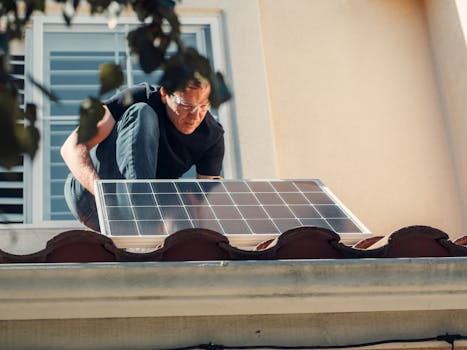 Photo: Kindel Media / Pexels
 Photo: RDNE Stock project / Pexels
 Photo: RDNE Stock project / Pexels
 Photo: HYRLF meng / Pexels